-1-1024x1024.webp)
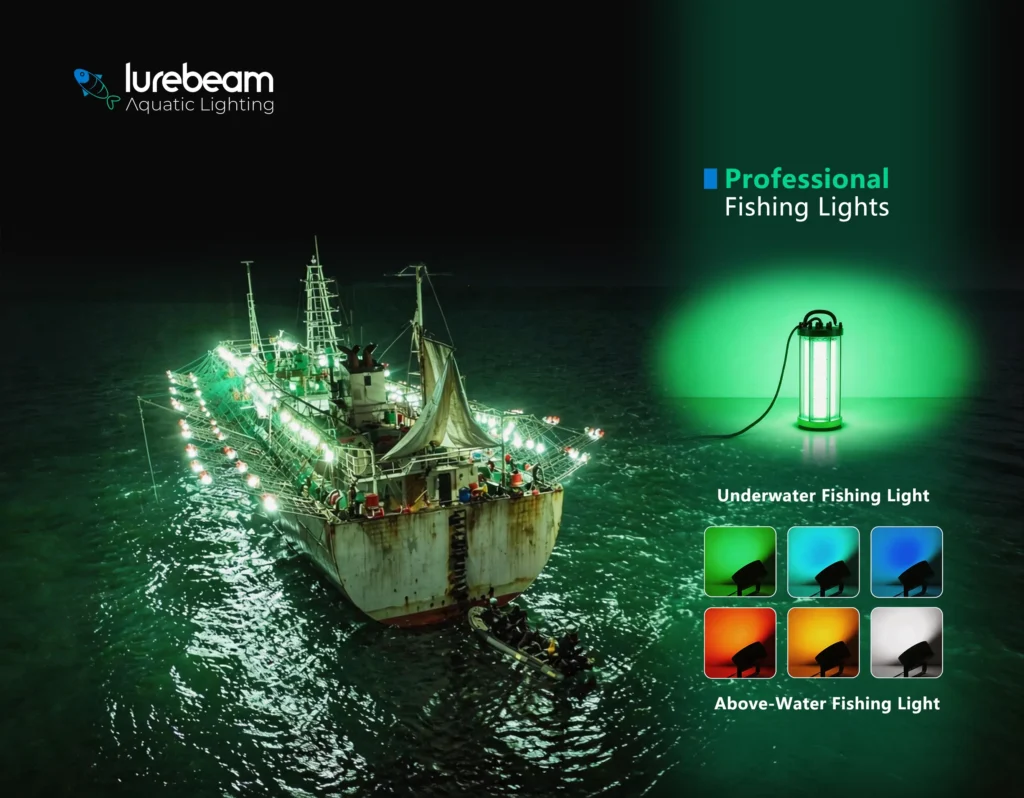
Night fishing has relied on artificial light for decades. Whether targeting squid, sardines, anchovies, or other baitfish species, fishing lights help attract marine life by creating a concentrated feeding zone around a vessel. Today, LED technology has made fishing lights more efficient, durable, and versatile than ever before. However, many fishermen, distributors, and boat owners still wonder: should you choose surface fishing lights or underwater fishing lights?
What Are Surface Fishing Lights?
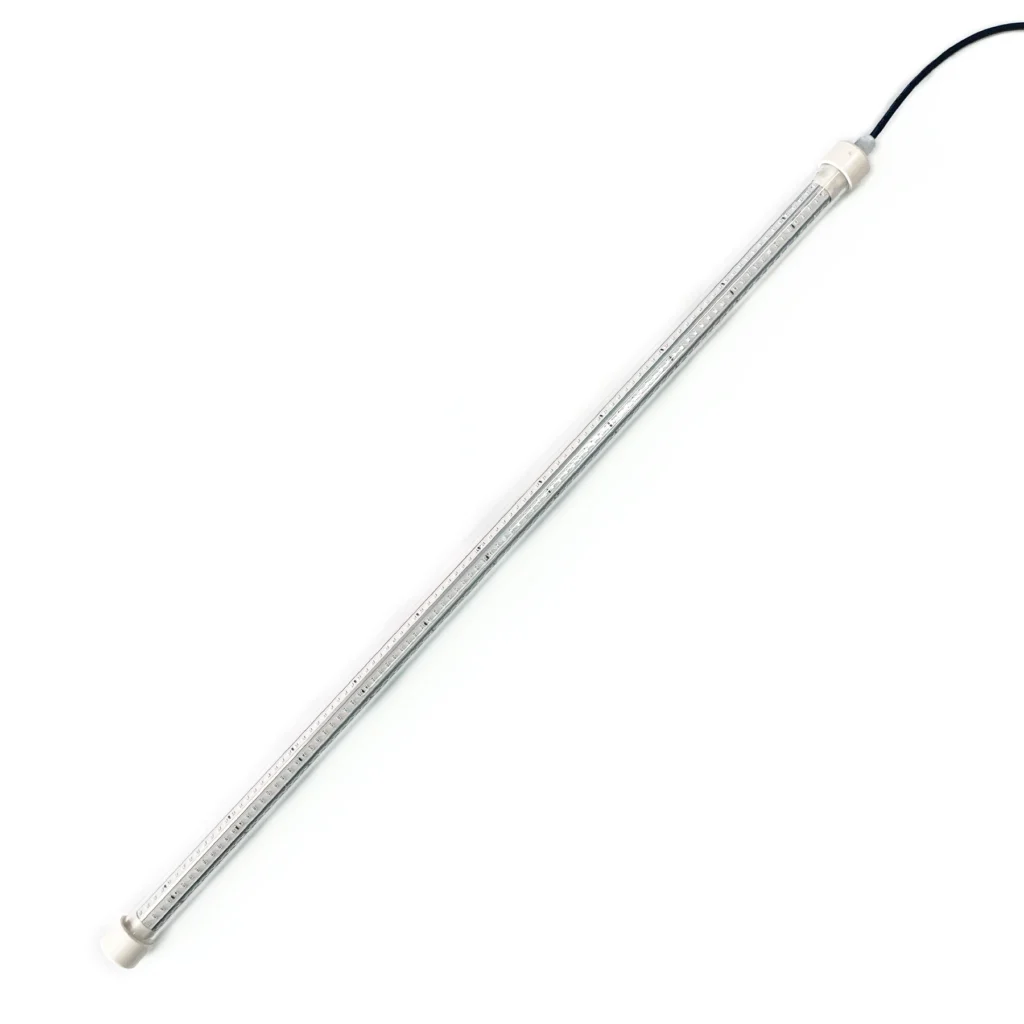
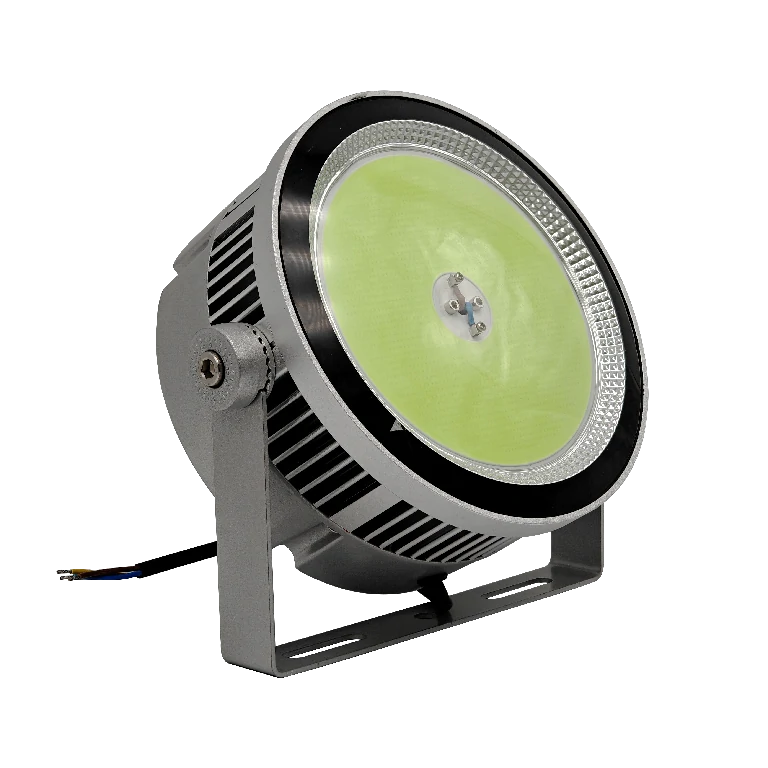
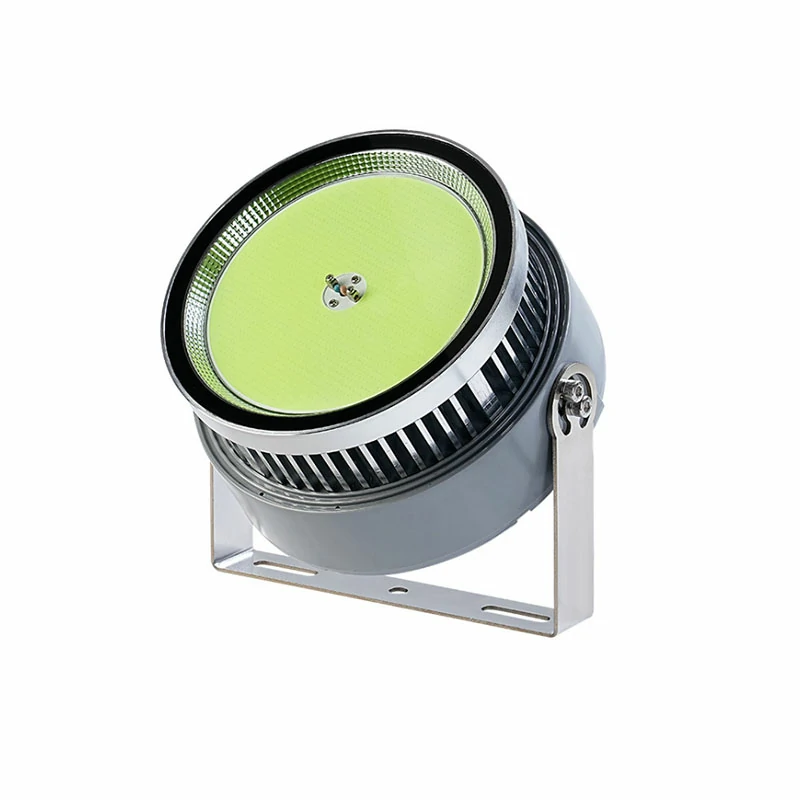
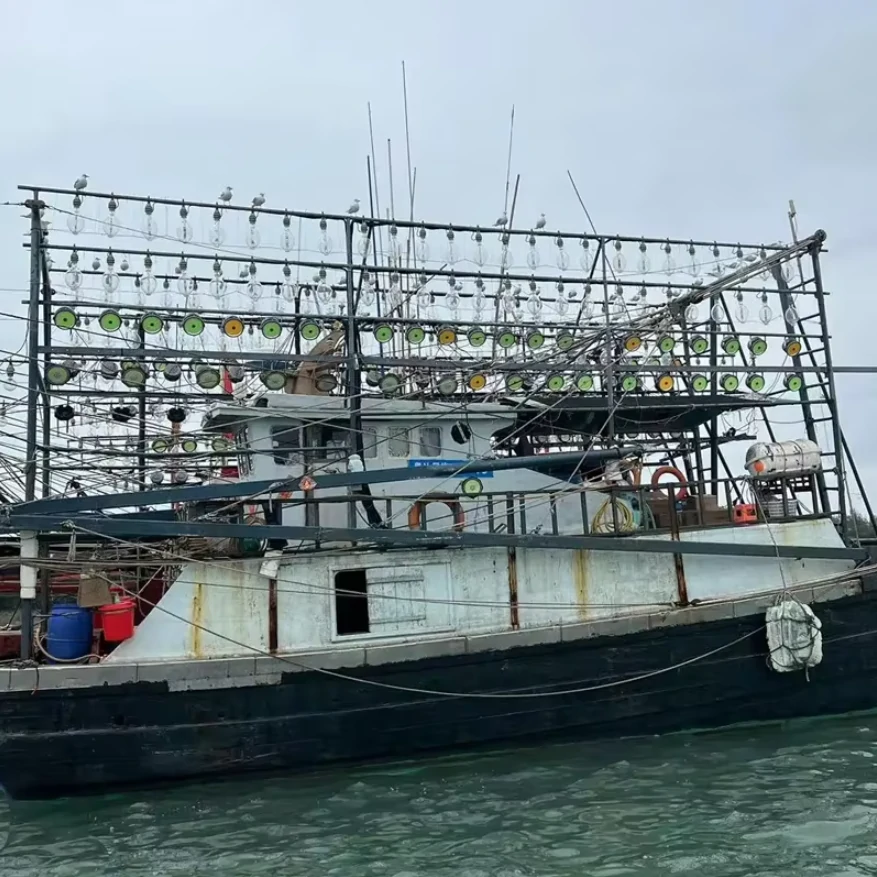
Surface fishing lights, also known as above-water fishing lights, are installed on a vessel’s mast, light frame, deck, or other elevated positions. The light shines downward onto the water surface and illuminates the surrounding area.
Their primary purpose is to attract plankton, baitfish, squid, and other marine species over a wide area. As small organisms gather around the illuminated zone, larger predatory fish often follow, creating a productive fishing environment.
Common Applications of Surface Fishing Lights
Surface fishing lights are widely used on squid fishing vessels, purse seine boats, commercial fishing vessels, and recreational fishing boats. They are also commonly seen on docks, piers, and coastal fishing platforms.
One of the biggest advantages of surface fishing lights is convenience. Installation is relatively simple, and operators can start or stop the lights instantly without deploying equipment into the water.
In commercial fishing applications, surface fishing lights are commonly available in power ranges between 500W and 1500W. Their high mounting position allows them to illuminate a large area around the vessel, making them effective for attracting fish from a distance.
What Are Underwater Fishing Lights?
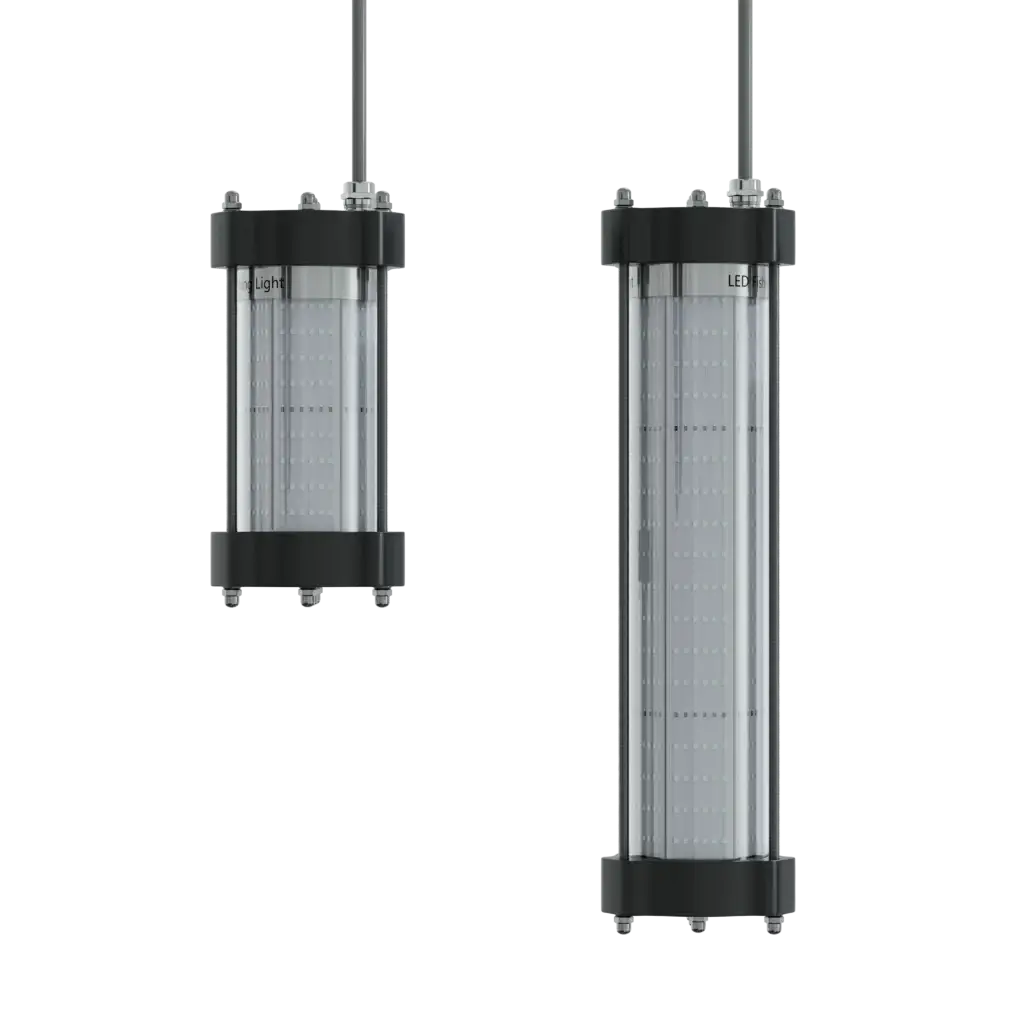
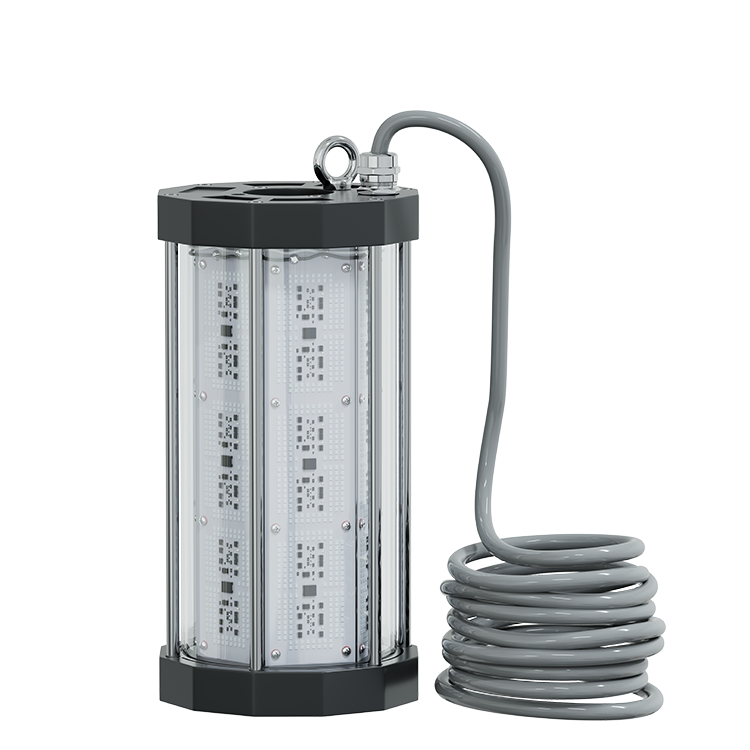
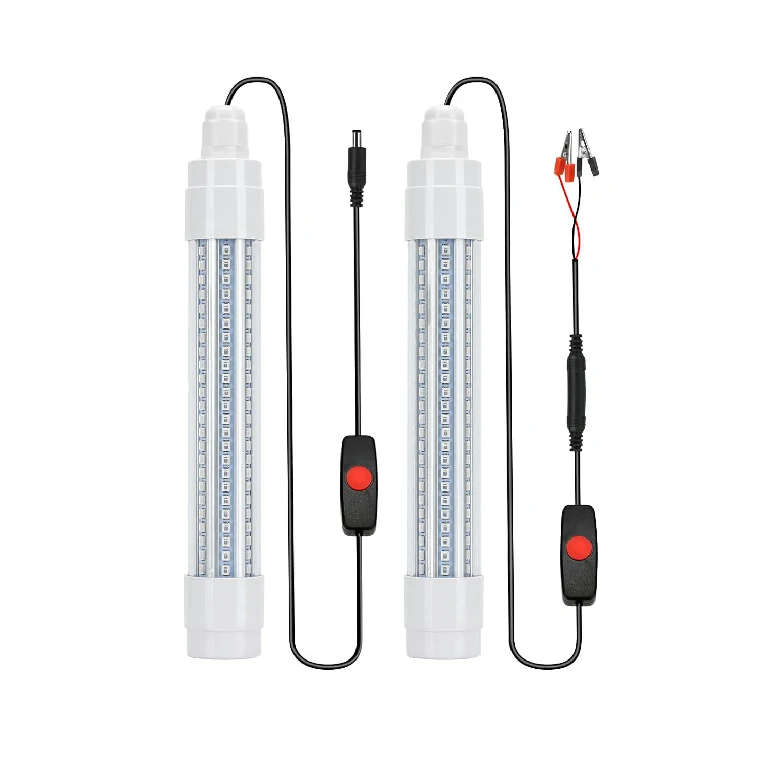
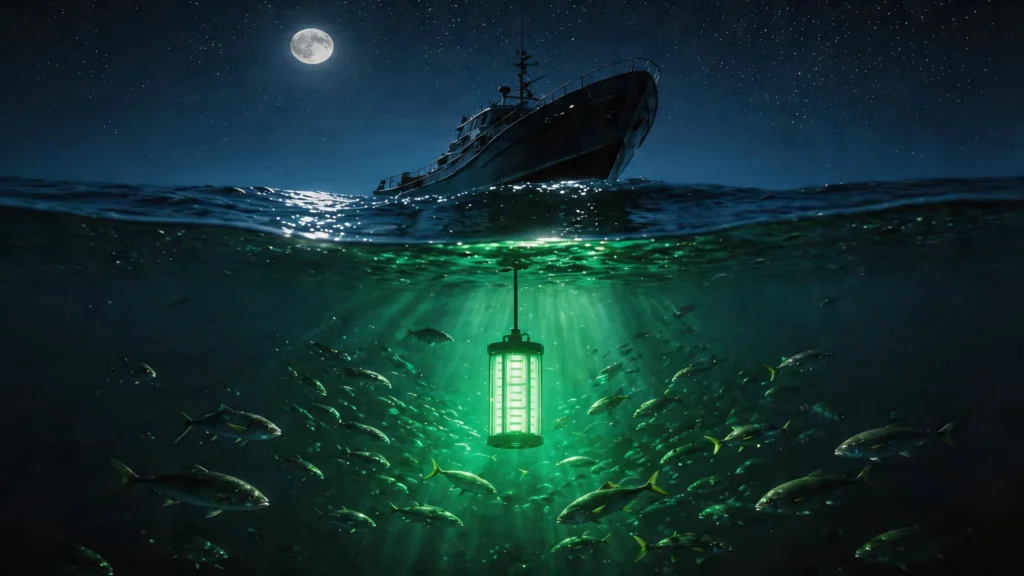
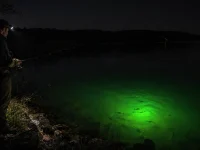
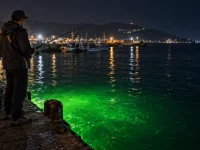
Underwater fishing lights are designed to operate completely submerged beneath the water surface. Instead of projecting light from above, they place the light source directly inside the water column.
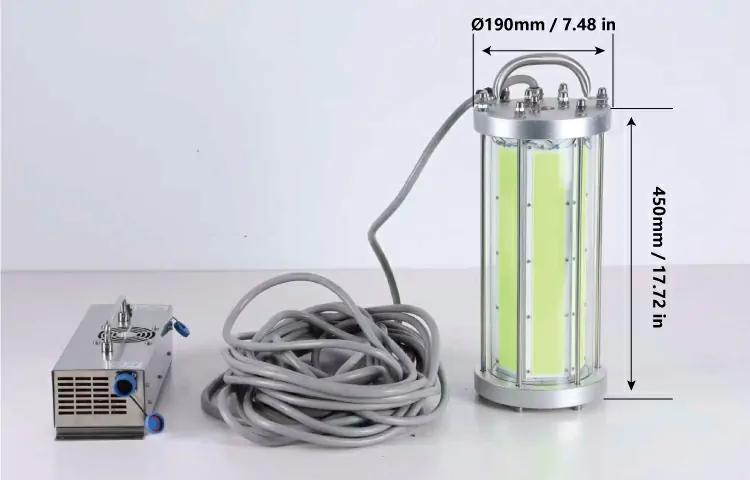
Underwater fishing lights are designed to be lowered directly into the water during operation. Most models are supplied with power cables ranging from 10 to 30 meters in length, while longer cable options may be available for specific applications. To prevent damage, the power cable should not be used to support, lift, or retrieve the light. Instead, a separate rope or suspension line should be attached to the fixture when deploying and recovering the unit.
Because underwater lights use surrounding water as a cooling medium, manufacturers can often design higher-power systems. In today’s market, underwater fishing lights commonly range from 1000W to 5000W, while some specialized models are advertised at 7000W or even higher.
Common Applications of Underwater Fishing Lights
Underwater fishing lights are frequently used in commercial fishing operations, offshore fishing vessels, sport fishing boats, and deep-water fishing environments.
Since the light source is already below the water surface, underwater fishing lights reduce reflection losses and deliver light directly into the target depth zone. This often results in better effective light penetration and improved visibility in deeper or more turbid water conditions.
Some high-power underwater fishing lights may influence fish activity across a wide area, potentially extending 100–200 meters under favorable water conditions. Actual performance depends on factors such as water clarity, deployment depth, current conditions, and power output.
Why Water Surface Reflection Matters
When a fishing light is mounted above the water, part of the emitted light is reflected back by the water surface before entering the water column. The amount of reflection varies depending on wave conditions, beam angle, and water movement.
Because underwater fishing lights place the light source directly inside the water, they can reduce these reflection losses and deliver more usable light to the target depth.
Surface Fishing Lights vs Underwater Fishing Lights
| Feature | Surface Fishing Lights | Underwater Fishing Lights |
|---|---|---|
| Installation | Mounted above water | Deployed underwater |
| Typical Power Range | 500W–1500W | 1000W–5000W+ |
| Setup Speed | Fast and convenient | Requires deployment and retrieval |
| Coverage Area | Wide surface coverage | More concentrated underwater coverage |
| Reflection Loss | Higher | Lower |
| Maintenance | Easier access | More demanding |
| Cooling Method | Air cooling | Water-assisted cooling |
| Best Use | Large-area attraction | Target-depth attraction |
Why Many Modern Fishing Operations Use Both
In many commercial fishing operations, surface fishing lights and underwater fishing lights are not competing technologies. Instead, they are often used together.
Surface fishing lights can first attract fish from a broader area around the vessel. Once fish begin gathering nearby, underwater fishing lights can be deployed to concentrate fish closer to the desired depth and fishing zone.
This combination strategy is commonly used by professional fishing operators seeking greater control over fish behavior and concentration.
How to Choose the Right Fishing Light
If ease of installation, wide-area illumination, and operational simplicity are your priorities, surface fishing lights may be the better option.
If your goal is to deliver light directly into deeper water, reduce reflection losses, or improve effectiveness in turbid conditions, underwater fishing lights are worth considering.
The best choice ultimately depends on your target species, fishing method, vessel type, and operating environment.
Conclusion
Surface fishing lights and underwater fishing lights are designed for different purposes rather than directly replacing one another. Understanding how each system works can help fishermen, distributors, vessel owners, and fishing enthusiasts select the right solution for their specific needs.
As fishing technology continues to evolve, choosing the right lighting strategy is becoming just as important as selecting the right fishing gear.

-1024x1024.webp)