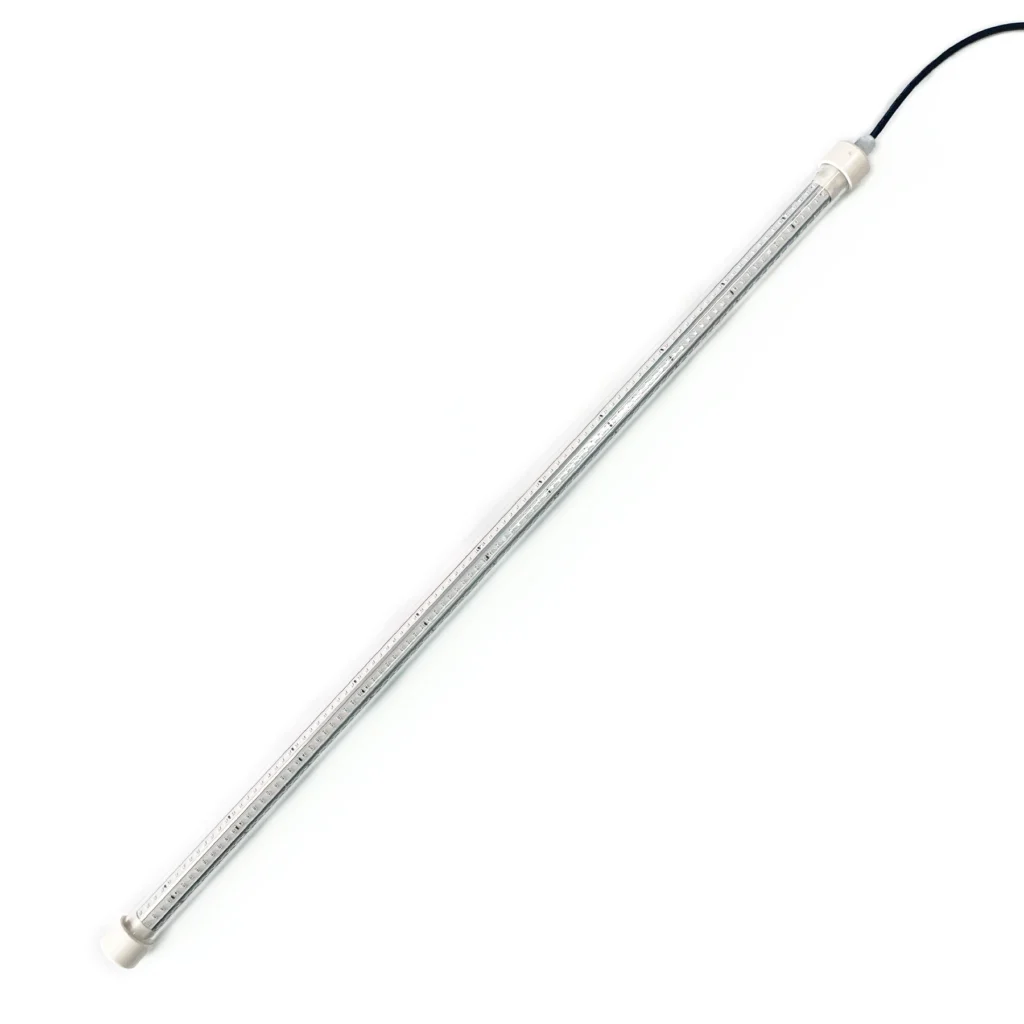
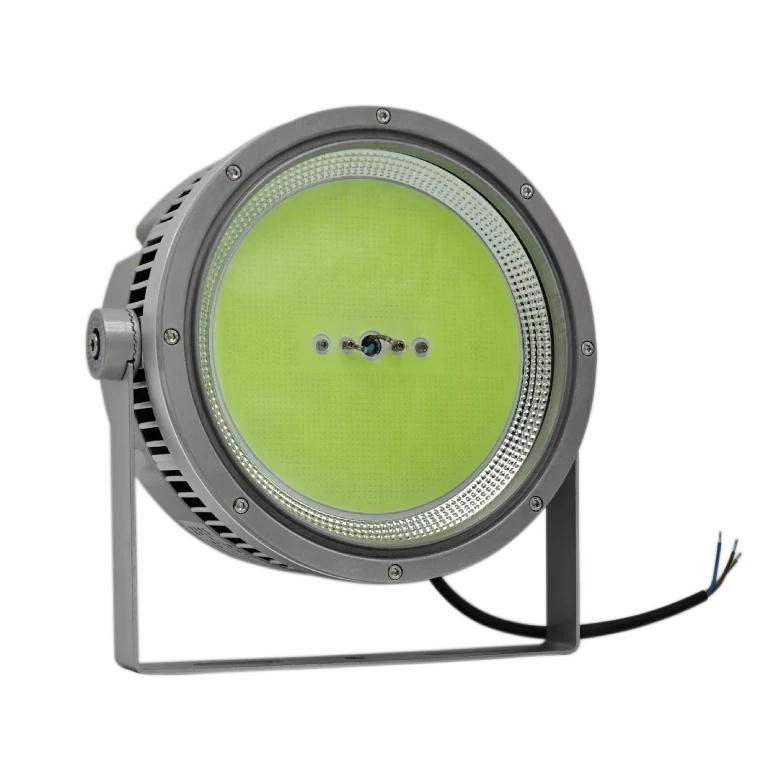
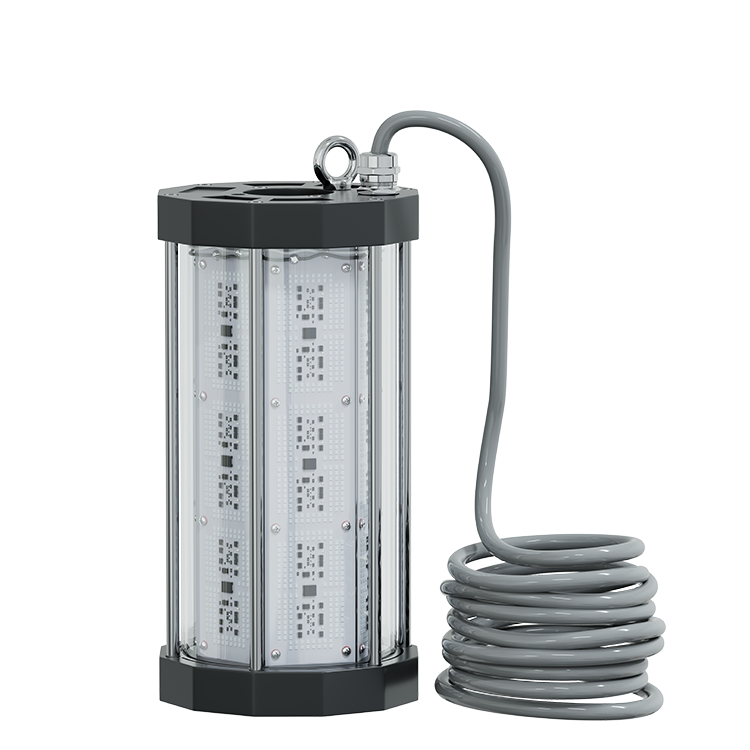
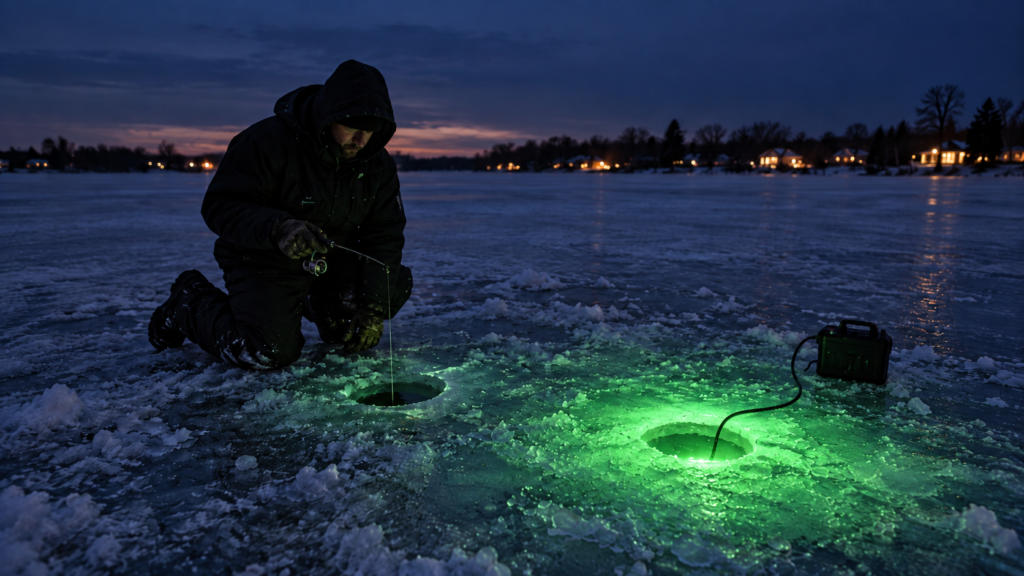
Use a separate hole for the green ice fishing light in most ice-fishing setups. Place the light hole about 0.6–1 m (2–3 ft) from the fishing hole, then suspend the light roughly 30–60 cm (12–24 in) below the underside of the ice. This arrangement keeps the cable out of the hook-and-landing path while allowing the illuminated water to overlap the area you are fishing.
Those distances are practical starting points, not universal rules. Hole diameter, water clarity, ice thickness, fishing depth and the size of the light field all affect the final position. The key decision is simple: the fishing hole should remain a clear vertical route for the line and fish, while the underwater ice fishing light creates an attraction zone beside it.
Why the Fishing Hole Should Stay Clear
A fishing hole has three jobs. It must let the lure travel freely, allow the angler to control the line, and provide a clear opening for landing a fish. Putting the green ice fishing light and its cable in that same hole introduces a fixed obstruction into all three operations.
The problem becomes most obvious when a fish reaches the underside of the ice. A fish can turn around the cable, push the line against the light body, or force the hook toward the ice edge. Even if the fish does not wrap the cable, the angler may have to move the light at the worst possible moment. A separate light hole removes that conflict before fishing begins.
How Far Should the Light Hole Be from the Fishing Hole?
Start with 0.6–1 m (2–3 ft) of center-to-center spacing. This is usually close enough for the two underwater zones to overlap, yet far enough to keep the power cable outside the normal landing path. Position the light hole to the side of the angler rather than directly between the seat and the fishing hole. Route the cable behind the seat or along a shelter wall so boots, rods and a moving fish cannot catch it.
Do not treat 2–3 ft as a promise that every LED fishing light will produce the same underwater pattern. In very clear water, the useful light field may extend well beyond that distance. In stained water, snow-covered ice or dense suspended particles, the brightest usable area may be smaller. If the fishing hole sits in darkness, move the light hole closer. If the fishing hole is inside the harsh central glare and fish stay outside it, increase the spacing slightly.
How Deep Should a Green Ice Fishing Light Hang?
Measure depth from the underside of the ice, not from the top surface. A good starting position is 30–60 cm (12–24 in) below the ice bottom. For example, if the ice is 40 cm (16 in) thick and you want the light 45 cm (18 in) below the underside, the top reference point is not 45 cm from the surface; it is about 85 cm (34 in) below the top of the ice.
This position keeps the light completely in the water and away from the ice cylinder. It also reduces the chance that the light freezes into slush near the top of the hole. Never operate a submersible fishing light partly out of the water unless its manufacturer specifically permits that use, because many underwater lights depend on surrounding water for heat transfer.
Lowering the light much deeper is not automatically better. A deep light may create an attraction zone below the depth where you intend to present the bait, especially over steep breaks or deep basins. Begin just below the ice, observe where baitfish appear, and then lower the light in small steps only when the target depth requires it.
Where Should the Lure Sit Relative to the Light?
Do not assume the hook belongs directly beside the brightest part of the fish light. The center of the illuminated area can hold small plankton or baitfish, but larger fish often approach along the transition between bright and darker water. That boundary gives predators access to concentrated prey without forcing them to remain in the most exposed part of the light field.
Begin with the lure in the same general depth band as the visible bait activity, but offset from the cable and the brightest central area. If small fish gather around the light but your target fish do not bite, move the lure toward the outer edge before changing the light position. Change only one variable at a time—lure depth, horizontal position or light depth—so you can tell which adjustment mattered.
Remember that a fishing light attractor concentrates attention; it does not guarantee a strike. Species, prey availability, water temperature, oxygen conditions and fishing pressure still influence how fish use the illuminated zone.
When Can the Light and Fishing Line Share One Hole?
One hole can work for a short, simple setup when the light is very compact, the hole is wide, the cable is secured against one side, and the angler is targeting small fish that can be lifted straight through the opening. It may also be the only practical option when local rules, limited shelter space or unusually thick ice make another hole difficult.
Even then, one hole is a compromise. Secure the cable so it cannot drift across the center, keep the lure on the opposite side, and be prepared to remove the light before landing a larger fish. If the cable repeatedly touches the line, the setup has already shown that a separate hole is the better choice.
Three Placement Mistakes to Avoid
Placing the Light Hole Between the Angler and the Fishing Hole
This forces the cable across the area where the angler stands, kneels and moves the rod. Put the green ice fishing light to the side or slightly behind the fishing position, then lead the cable away from foot traffic.
Leaving the Light Inside the Ice Cylinder
A light suspended within the drilled ice passage is not yet positioned in open water. The ice walls can restrict the light pattern, slush can collect around the body, and the cable remains exposed to sharp ice edges. Lower the light below the underside of the ice before judging its coverage.
Dropping the Light to the Bottom Without Checking Depth
A bottomed-out light can stir sediment, snag debris or place the attraction zone below the lure. Keep the light suspended unless its instructions specifically call for bottom placement, and maintain clearance from vegetation, rocks and the lakebed.
A Simple Setup Sequence
First, drill the fishing hole. Confirm the water depth and the position you want to fish. Second, drill the light hole 0.6–1 m (2–3 ft) to the side. Keep it outside the route used to enter the shelter or land fish. Third, lower the underwater ice fishing light 30–60 cm (12–24 in) below the ice bottom. Secure the cable at the hole so the light cannot slide deeper. Fourth, route the power cable away from feet and wet slush. Keep connectors and any non-submersible power components dry. Finally, fish the transition zone. Start the lure away from the cable and adjust depth or spacing only after observing how baitfish use the light.
Check the Rules and the Ice Before Drilling
Hole limits, shelter rules and permitted fishing methods vary by location, so check the current regulations for the specific lake or jurisdiction before drilling an extra hole. Ice thickness is never uniform: currents, springs, vegetation, structures and recent weather can weaken one area while nearby ice appears solid. Follow local ice-safety guidance, use suitable protective equipment and do not rely on the presence of other anglers as proof that the ice is safe.
Conclusion
For most anglers, the better arrangement is one fishing hole and one separate light hole. Begin with the green ice fishing light 0.6–1 m (2–3 ft) to the side and 30–60 cm (12–24 in) below the underside of the ice. Then adjust the spacing to match water clarity and fish behavior. The separate-hole layout protects the fishing line, preserves a clean landing path and lets the LED fishing light do its job without becoming an obstacle.
Frequently Asked Questions
Does the Light Hole Need to Be Inside the Ice Shelter?
No. It can be just outside the shelter if the cable is protected and the hole is clearly marked. Inside placement is more convenient in severe weather, but it should not reduce walking space or create a trip hazard.
Can Two Fishing Holes Share One Green Ice Fishing Light?
Yes, when both fishing holes fall within the useful illuminated area. Place the light between and slightly behind the two holes rather than directly in the path used to land fish. Increase the separation if either angler’s line can reach the light cable.
Should the Ice Fishing Light Touch the Lake Bottom?
Usually not. Suspended placement keeps the light clear of sediment, vegetation and debris. Bottom placement should be used only when the product instructions and the fishing situation specifically support it.
Does a Separate Hole Make the Green Light Brighter?
No. It does not increase the light’s output. It improves the working layout by separating the attraction equipment from the line and landing path, which makes the useful lighted area easier to fish.


-1024x1024.webp)