-1024x1024.webp)
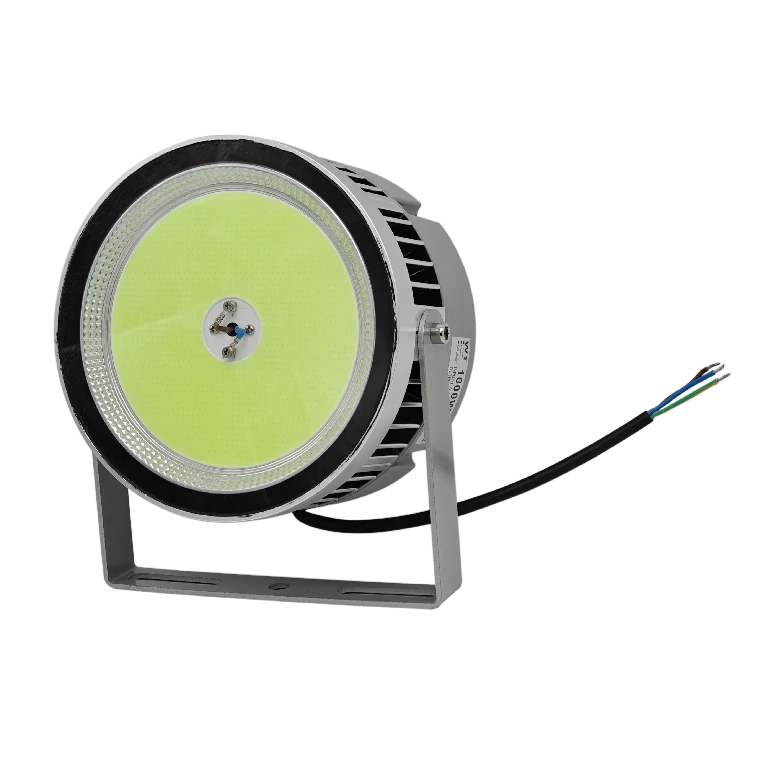
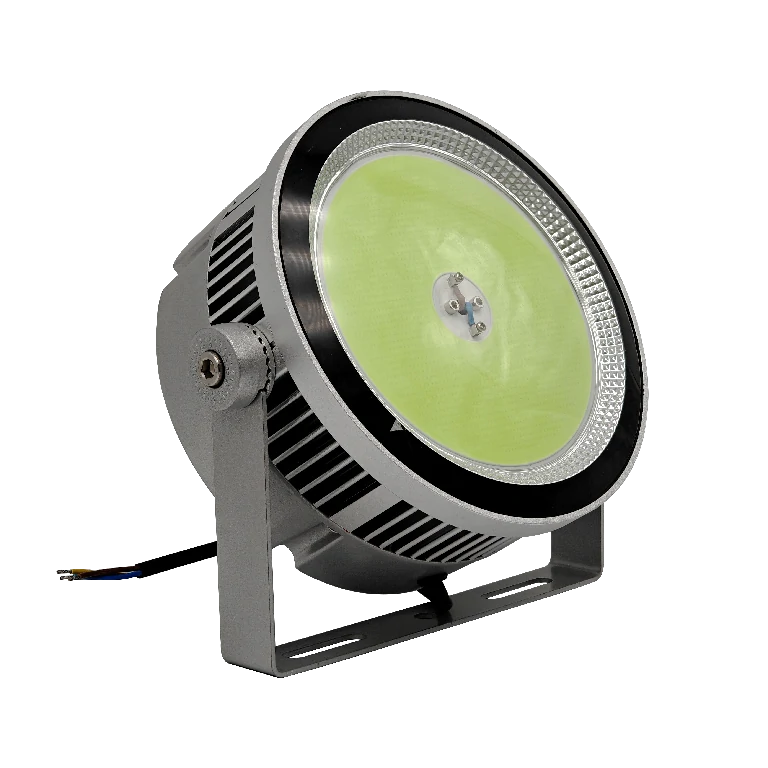
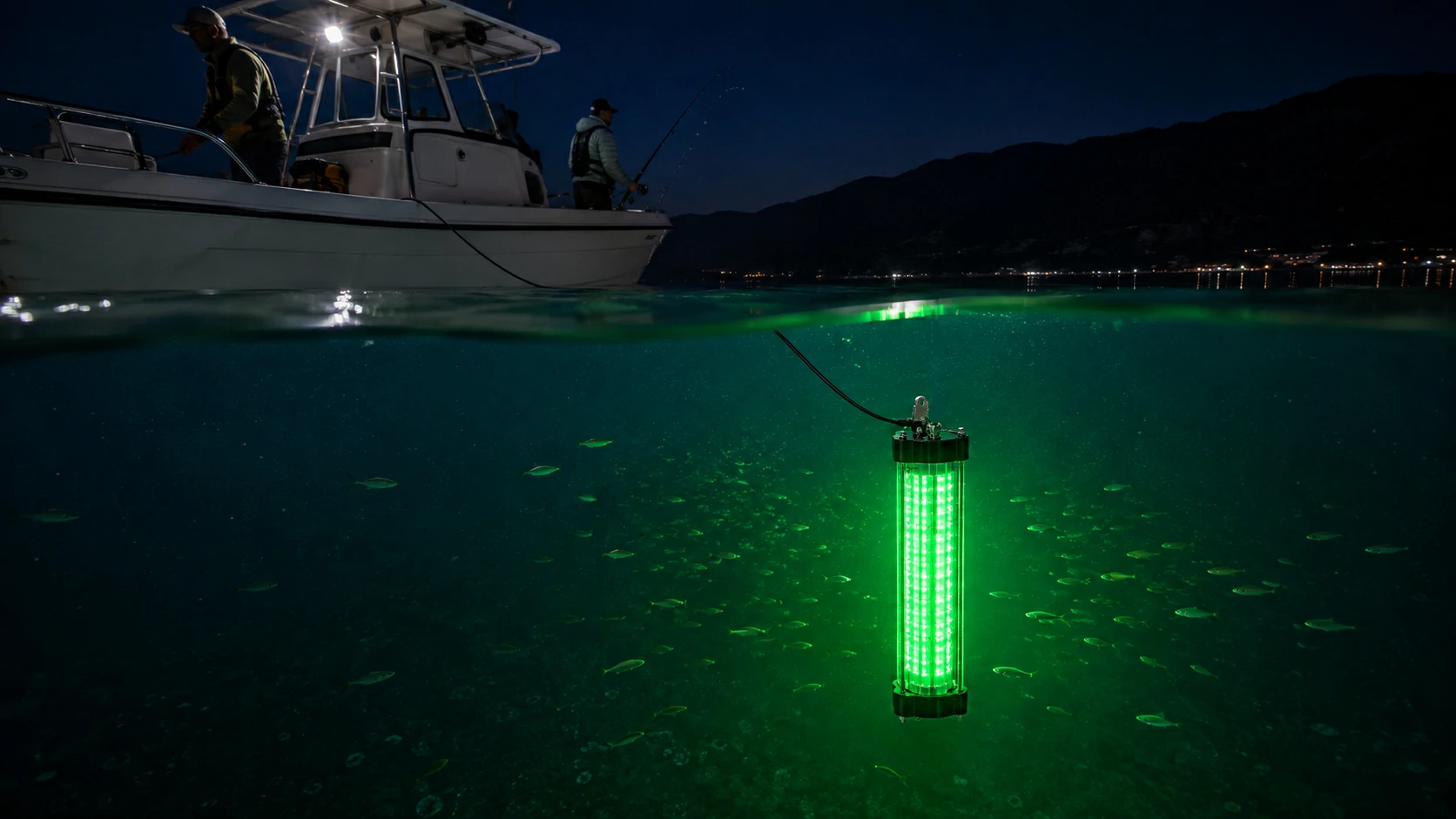
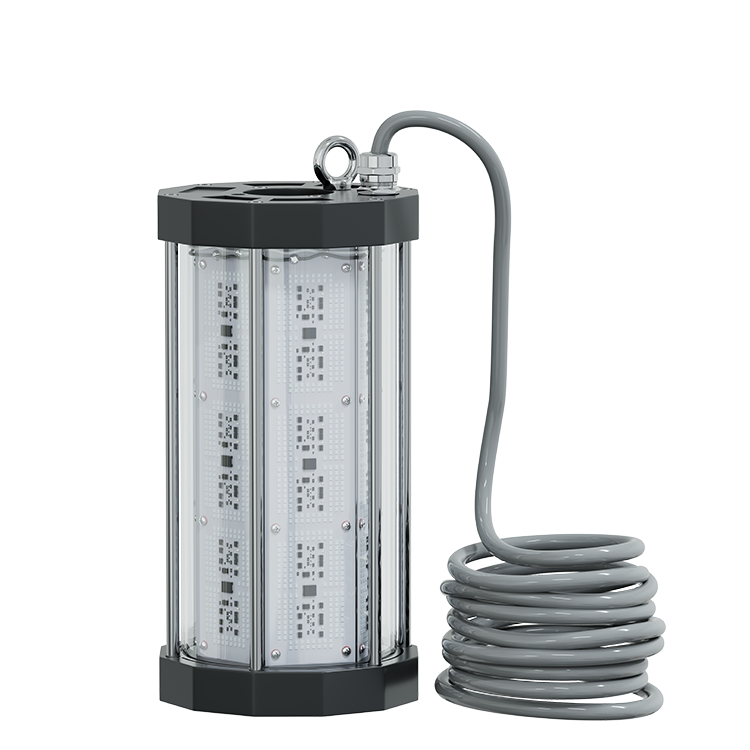
The safest general answer is: do not run a submersible fishing light in air unless the instructions for that exact model expressly allow it. Some compact, low-power lights may tolerate a brief functional check, while other designs depend on surrounding water to remove heat from the housing. Wattage, IP rating and appearance alone cannot tell you which type you have.
If the manual does not state an allowable dry-test procedure or time, do not invent one. Test the light while it is fully submerged in a controlled container, using the correct power source and suitable electrical protection. This checks basic operation under the environment for which the light was designed.
Why Dry Operation Can Damage a Submersible LED Light
An LED converts only part of its electrical input into visible light. The remainder must leave the LED junction and driver as heat. The housing, circuit board and any internal thermal interface form a path that carries this heat into the surrounding environment.
The U.S. Department of Energy’s guide to LED thermal management identifies drive current, the thermal path and ambient temperature as the main factors controlling LED junction temperature. It also explains that higher operating temperature can accelerate lumen depreciation and shorten useful life.
For a light engineered to operate underwater, the surrounding water may be part of that thermal path. Remove the water and the housing may no longer reject heat at the rate assumed by the designer. The LED junction or driver can therefore become much hotter even when the exterior initially feels only warm.
IP68 Does Not Authorise Dry Running
IP ratings describe enclosure protection. The first digit concerns access and solid particles; the second concerns water ingress. The official IEC 60529 page identifies the standard as the IP Code for protection provided by enclosures. A NEMA explanation of IEC enclosure ratings likewise states that the second numeral describes protection against harmful water ingress.
That information is important, but limited. IP68 does not specify whether a lamp needs water for cooling, how long it may operate in air, its maximum case temperature, or whether its driver will reduce power when it overheats. It also does not automatically cover every connector, switch and power supply used with the lamp; the complete setup is only as suitable as its least-protected component.
Therefore, “IP68” answers “how is the enclosure protected against ingress under stated test conditions?” It does not answer “may I leave this energized on a workbench?”
Use This Decision Rule Before Switching the Light On
The instructions explicitly permit an air test
Follow the stated limit exactly, including the permitted duration, output setting, orientation and ambient-temperature range. Permission for one model does not apply to another model in the same product category.
The instructions say “submerge before energising” or “water-cooled”
Do not power the light in air. Submerge it to the required level before switching it on, and isolate the supply before removing it from the water.
The instructions do not mention dry operation
Treat dry running as unapproved. Ask the manufacturer for a model-specific answer or use a submerged test. Do not substitute an online comment, another brand’s manual or a guessed five-second limit for the missing specification.
A Safer Way to Test the Light Before a Fishing Trip
This is a functional check, not a waterproof-certification test. Do not open the housing, loosen a cable gland or deliberately pressurise the lamp.
- Inspect it while disconnected. Check the housing, lens, cable jacket, strain relief, plug, switch and connector for cracks, cuts, loose parts, corrosion or moisture inside the optical chamber. Stop if damage or internal moisture is visible.
- Confirm the electrical requirements. Match the specified voltage, AC or DC supply, polarity where applicable, and fuse or circuit protection. Never assume that two connectors with the same shape use the same voltage or polarity.
- Prepare a stable test container. Use enough clean water to cover the entire part that the manufacturer requires to be submerged. Keep the battery, driver, plug joints and controls outside the water unless each component is specifically rated for that location.
- Support the light correctly. Lower and retrieve it with its designated lifting point or a separate support line. Do not suspend the lamp’s weight from the electrical cable unless the manufacturer expressly designed it for that load.
- Apply appropriate shock protection. For mains-powered equipment, use the protection required by the local electrical rules and have commercial or high-power systems handled by a qualified person. The UK Health and Safety Executive recommends an RCD in wet or damp locations; Safe Work Australia likewise says equipment used in hostile conditions must be suitable for them and discusses RCD protection and competent testing. In North America, the corresponding term is commonly GFCI. These devices reduce risk but do not make damaged equipment safe.
- Use the correct sequence. With the supply off, submerge and secure the light. Energise it without placing hands in the water. Observe only long enough to confirm the required function or for the period specified by the manufacturer. Switch off and isolate the supply before touching the water, connector or lamp.
- Inspect again after removal. After isolation and any specified cooling period, look for internal condensation, water entry, a changed seal position, discoloration or an unusual odour.
Low voltage reduces some electrical risks, but it does not prevent short circuits, overheated conductors, battery faults or connector damage. Keep exposed battery terminals protected and keep polarity-controlled connections dry.
What the Test Result Does—and Does Not—Prove
A steady light confirms only that the lamp, supply and connections operated during that test. It does not prove the original IP rating is still intact, predict service life or guarantee that a damaged seal will remain dry at fishing depth.
Stop and isolate the system if the light flickers, repeatedly shuts down, trips protective equipment, produces an unusual smell, shows internal moisture or causes a connector or cable to heat abnormally. Do not keep resetting a tripped RCD/GFCI or fuse. A protective device that operates is reporting a condition that requires investigation.
Brightness may also appear different in a bucket than in open water because the container is small and reflective. That observation cannot be used to judge fish-attracting range or field performance.
Wattage Alone Cannot Decide Whether Dry Testing Is Safe
A lower-power light generally produces less total heat than a high-power light, but neither receives a universal safe dry-run time. Temperature also depends on power density, housing area, internal thermal resistance, ambient temperature and thermal protection. Never convert “lower wattage” into “safe to run dry.”
Conclusion
Do not use IP68, low wattage or a successful previous test as permission to operate an underwater fishing light in air. Use the exact model instructions. If they do not expressly allow dry operation, perform a controlled submerged test: inspect first, match the supply, keep non-submersible connections dry, use appropriate circuit protection, energise only after submersion and isolate power before retrieval.
That procedure answers the question that matters—whether the light functions in its intended environment—without gambling on an unsupported dry-run limit.
Frequently Asked Questions
Does IP68 mean an underwater fishing light can run out of water?
No. IP68 describes enclosure protection against dust and water ingress under specified conditions. It does not define cooling requirements or permission to operate in air.
Is a one- or two-second dry test always safe?
There is no universal safe time. Thermal response varies by model, and electrical faults can occur immediately. Use only a duration expressly authorised by the manufacturer; otherwise test the light while submerged.
Can I test a submersible fishing light in a bucket?
A stable container can be used for a basic functional check if the manufacturer permits that test arrangement. Fully cover the required part of the lamp, keep all non-submersible components dry, use the correct supply and protection, and never touch the water while the system is energised.
What should I do if the light shuts itself off during a dry test?
Disconnect it and allow it to cool according to the instructions. Do not repeatedly restart it. Shutdown may indicate thermal protection, a power problem or a fault, and the correct next step depends on the model documentation or manufacturer’s diagnosis.
Does a successful bucket test prove the light is waterproof at depth?
No. A brief, shallow test does not reproduce the pressure, duration, temperature cycling, cable strain or seal condition of real service. It is a function check, not a certification or pressure test.
-1-1024x1024.webp)