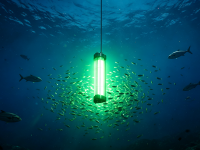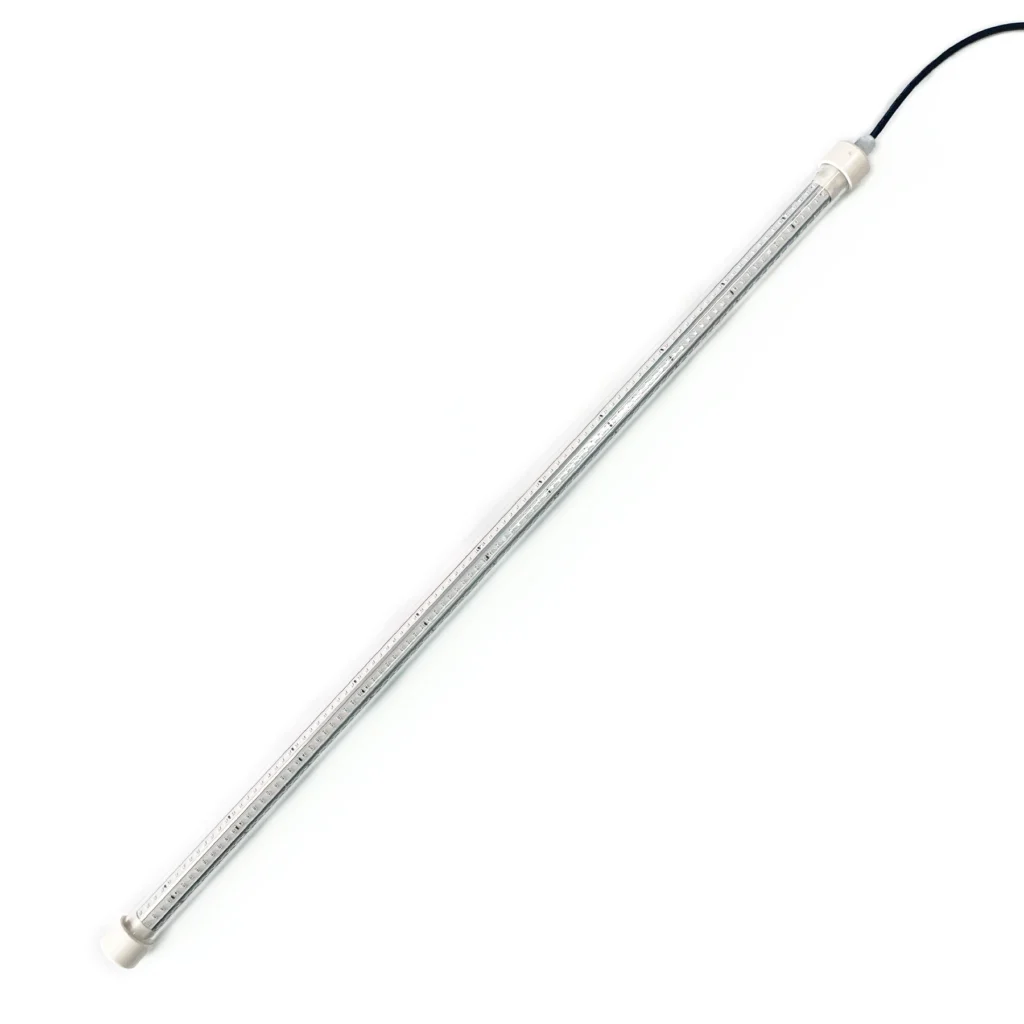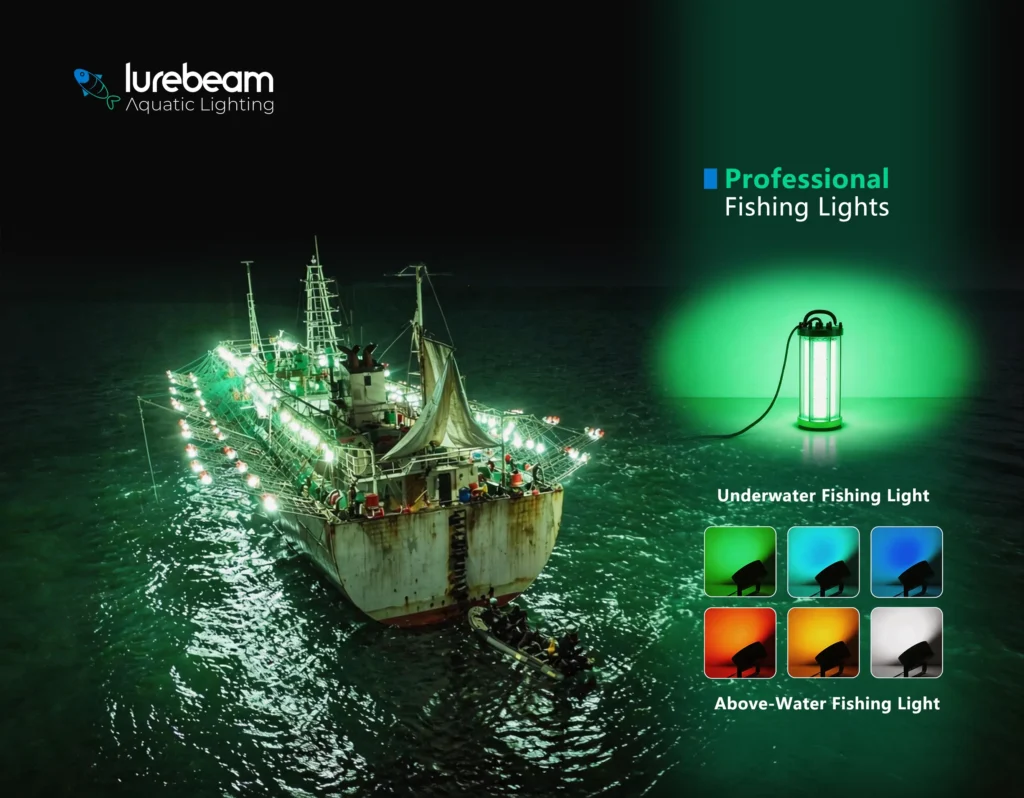
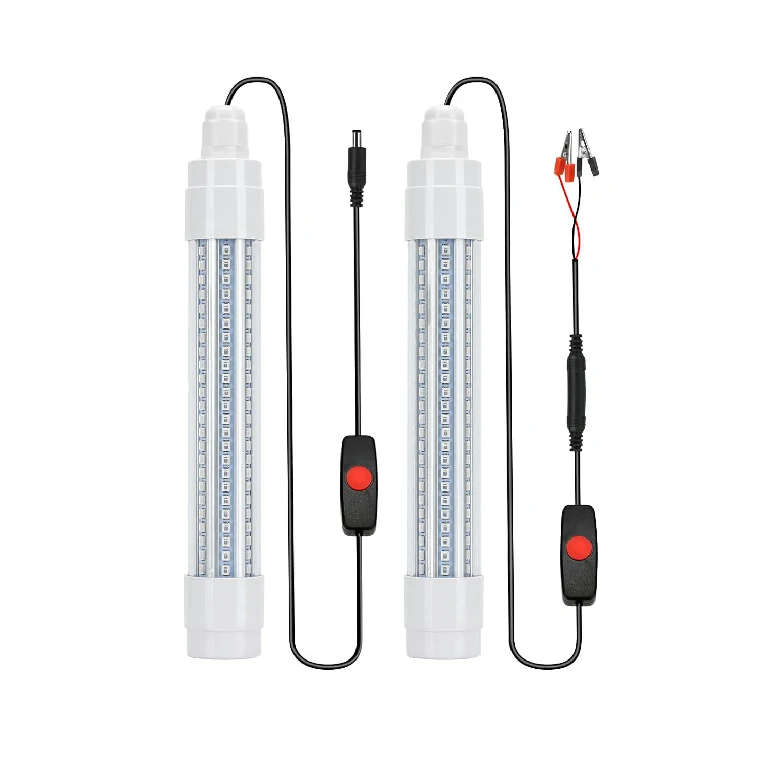
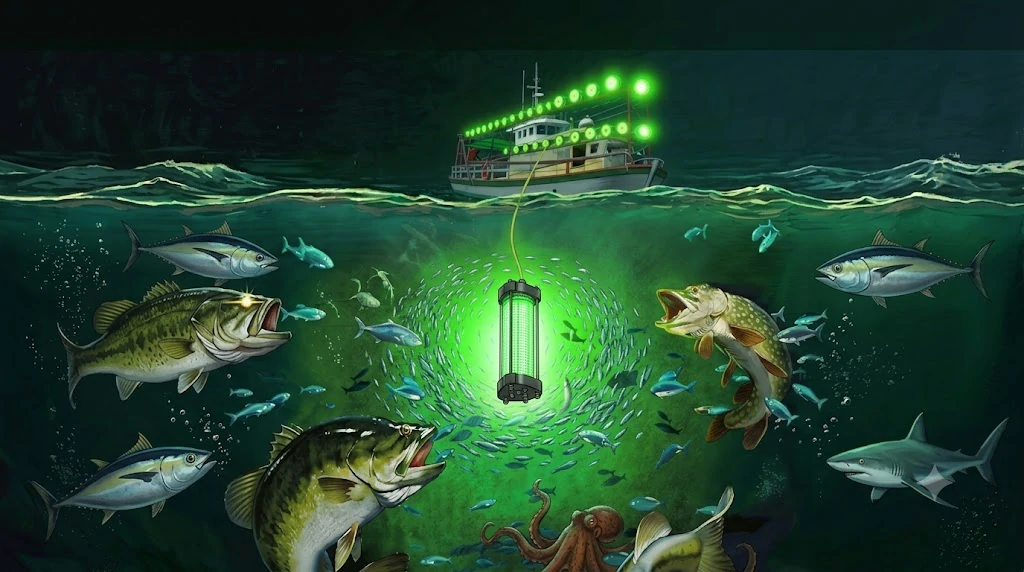
Many anglers buy underwater lights for fishing and immediately lower the lamp to the full cable length. That is not always the most effective setup. The right depth depends mainly on where the baitfish and target fish are holding, not on how much cable is supplied with the light.
For most small fishing lights for night fishing, start around 1–3 m (3–10 ft) below the surface. A higher-power boat fishing light can usually start deeper, while a commercial underwater fishing light may be deployed tens of metres below the vessel.
This guide provides specific starting depths for crappie, largemouth bass, walleye, striped bass, recreational boats and commercial fishing. These are practical starting points. Adjust them when sonar, water clarity or fish activity indicates that the target layer is deeper or shallower.
Quick Answer: Recommended Underwater Fishing Light Depths
Use the following depths as your initial setup:
| Fishing situation | Recommended starting light depth | Main fishing zone |
|---|---|---|
| Dock or shallow-water fishing | 1–2 m (3–6 ft) | 2–4 m |
| Crappie fishing | 1.5–2.5 m (5–8 ft) | 3–4.6 m |
| Largemouth bass at night | 1–2 m (3–6 ft) | 2–4 m |
| Summer walleye | 2–3 m (6–10 ft) | 3.7–4.6 m |
| Striped or hybrid bass | 2–3 m (6–10 ft) | 3.7–5.5 m |
| Small submersible fishing light | 1–3 m (3–10 ft) | Upper water column |
| 200–300 W boat fishing light | 3–10 m (10–33 ft) | Medium-depth fish layer |
| Commercial underwater fishing light | 10–20 m to start | Adjust with sonar |
| Deep commercial fishing | 20–50 m when required | Deep target layer |
The lamp does not normally need to be at exactly the same depth as the fish. Start above or near the target layer so the illuminated zone can gather baitfish while leaving darker surrounding water where predatory fish can approach.
Recommended Depth for Crappie Lights
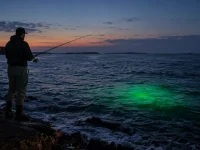
When using crappie lights for night fishing, start with the lamp approximately 1.5–2.5 m (5–8 ft) below the surface. Present the bait or lure deeper, usually around 3–4.5 m (10–15 ft), and search both beneath the lamp and along the edge of the illuminated area.
According to the Missouri Department of Conservation’s Crappie fishing guide, summer crappie commonly stay around brush in 15–20 ft of water, with the fish often holding about 10–15 ft (3–4.6 m) below the surface. The guide also recommends floating or submersible lights for summer night fishing.
A crappie fishing light should therefore create an attraction zone above the fish rather than being placed directly inside the school. If the fish remain below the baitfish on sonar, lower the lamp gradually in 1 m steps.
Recommended Depth for a Bass Light at Night
For a bass light used from a boat or dock at night, start around 1–2 m (3–6 ft) below the surface. Concentrate your lure around the outer edge of the light field and through the 2–4 m water layer rather than keeping it directly beside the brightest part of the lamp.
A radio-tracking study available through the U.S. Geological Survey found that largemouth bass selected depths of approximately 2–4 m at night, compared with 4–7 m during the day.
Keeping the lamp above the main bass layer allows baitfish to gather around the light while bass approach from the darker water surrounding it. When the fish move closer to the surface after sunset, keep the lamp shallow instead of lowering it automatically.
Recommended Depth for Walleye
For summer walleye fishing, start the LED fishing light around 2–3 m (6–10 ft) below the surface. Fish the bait deeper than the lamp and concentrate near the thermocline or the fish layer shown by sonar.
According to the Tennessee Wildlife Resources Agency’s Normandy Reservoir fishing guide, summer walleye commonly suspend near the bottom of the thermocline at approximately 3.7–4.6 m (12–15 ft). The guide also describes night fishing over the main river channel using lights to attract baitfish.
If sonar shows walleye and baitfish remaining near 4–5 m, lower the lamp gradually toward that layer. If baitfish begin rising and gathering above the thermocline, keep the light shallower and position the bait below the illuminated zone.
Recommended Depth for Striped and Hybrid Bass
Start around 2–3 m (6–10 ft) when fishing reservoirs at night.
According to New Jersey Fish & Wildlife’s Striped Bass Hybrid guide, during summer stratification, hybrid striped bass commonly suspend just above the thermocline at depths of approximately 3.7–5.5 m (12–18 ft). Near sunset and after dark, they may move to the surface while chasing herring.
If baitfish rise toward the surface, keep the light shallow. If both bait and predators remain deep on sonar, lower the lamp toward them. Boat night fishing lights should follow the fish layer rather than remaining at one fixed depth throughout the night.
How Water Clarity Changes the Right Depth
In clear lakes or reservoirs, begin at the shallower end of the recommended range. Clear water allows the light field to extend farther, so a submersible fishing light does not need to be positioned immediately beside the target fish.
In stained or turbid water, move the lamp closer to the baitfish layer. Suspended sediment, plankton and algae shorten the effective visibility of the light, especially when the target fish are several metres below the lamp.
In strong current, the amount of cable released is not the same as the lamp’s vertical depth. The current can push the light sideways, so use a suitable weight or support rope and estimate the actual position of the lamp before making further adjustments.
Recommended Depth by Fishing Light Type
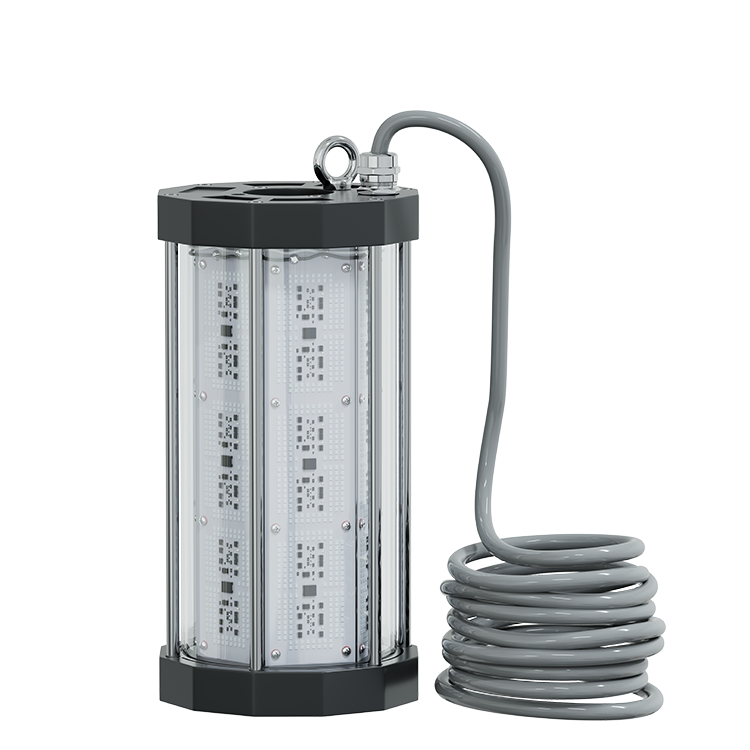
Small Submersible LED Fishing Light
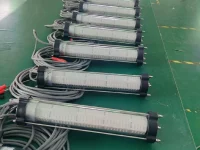
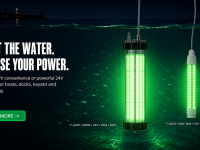
A small submersible LED fishing light used from a dock, kayak or recreational boat should normally start around 1–3 m (3–10 ft). This range is suitable for shallow night fishing, crappie fishing and situations where baitfish are already active in the upper water column.
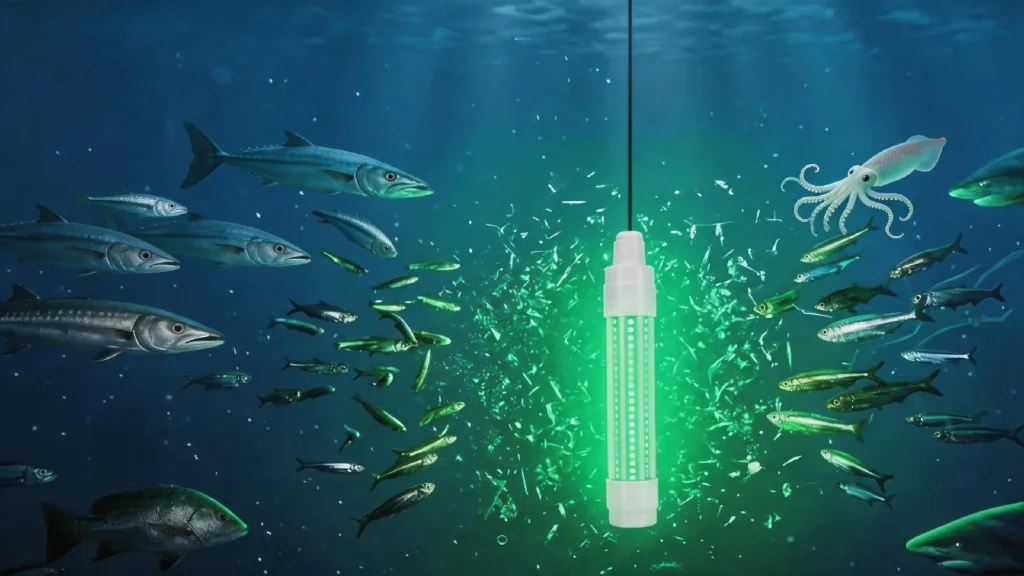
Related Product → F-UD01 Portable Underwater Fishing Light
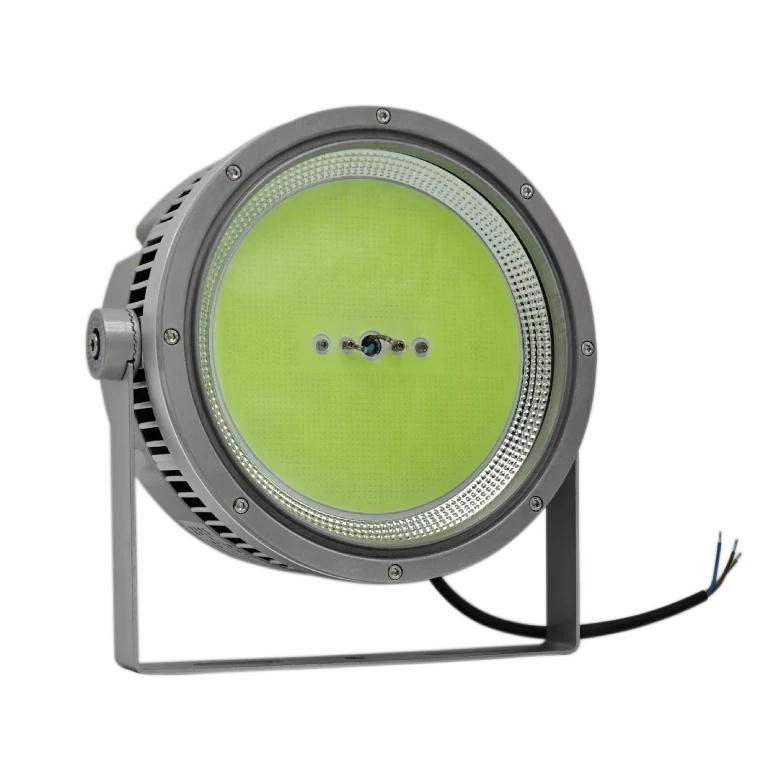
200–300 W Boat Fishing Light
For a higher-power boat fishing light, start around 3–5 m when baitfish are relatively shallow. Increase the depth gradually toward 5–10 m when sonar shows the active fish layer deeper in the water.
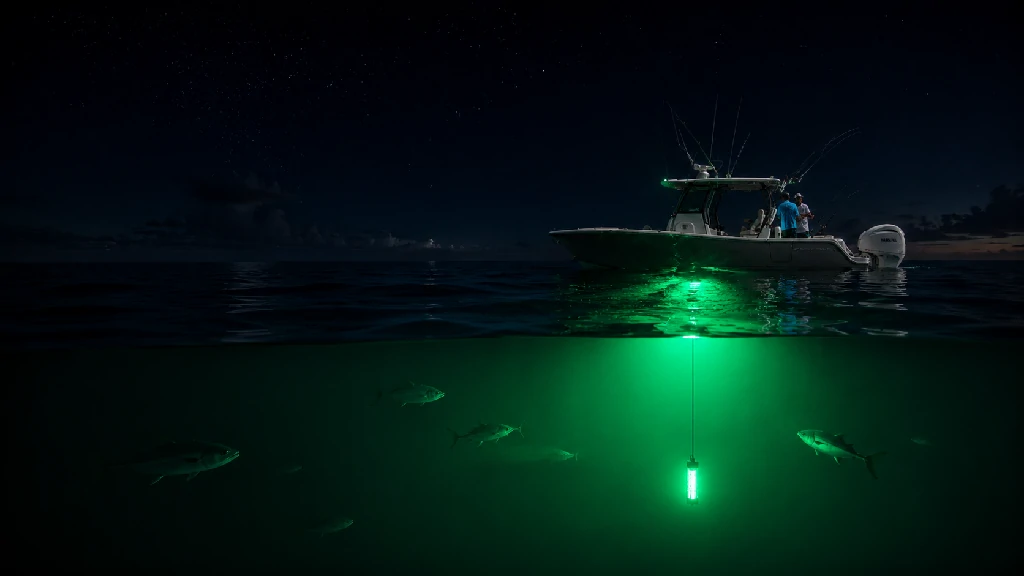
Related Product → F-UA01 200W–300W Underwater Fishing Light
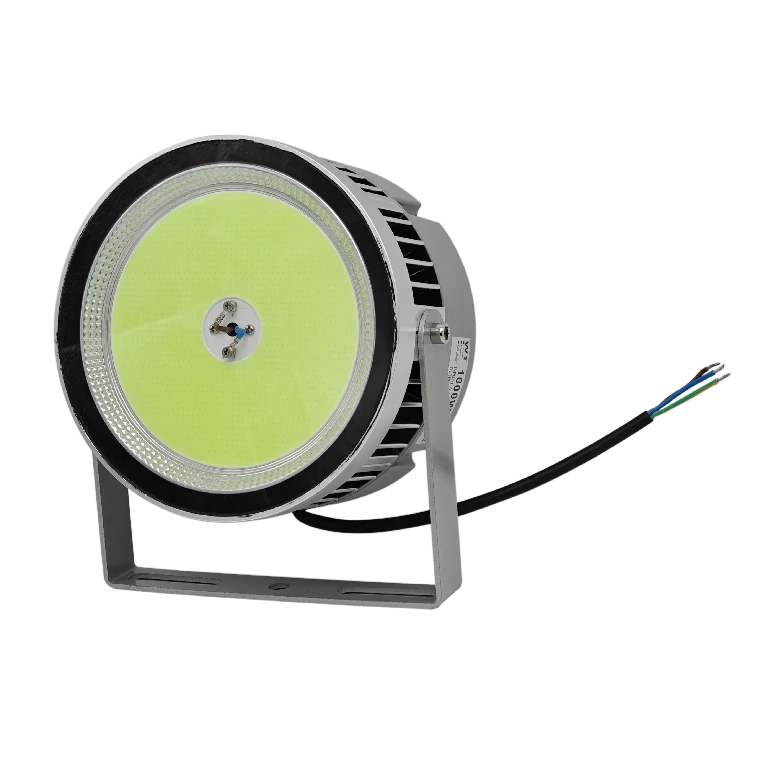
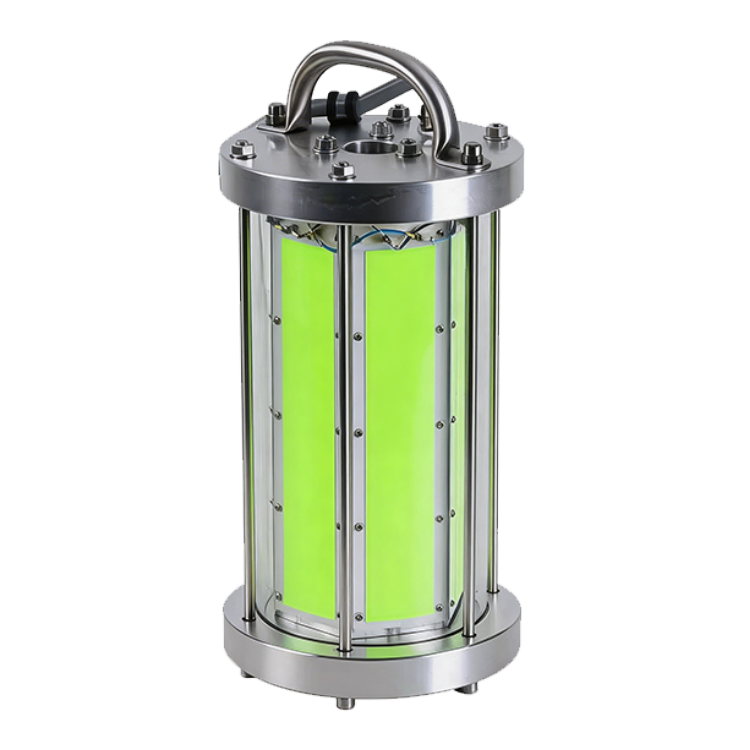
Commercial Underwater Fishing Light
For commercial fishing, start around 10–20 m and then adjust according to the target fish layer. High-power commercial lights may be deployed at 20 m, 30 m or around 50 m when the fishing method, water depth and sonar readings require deeper placement.
Do not lower a commercial lamp simply because a longer cable is available. The purpose is to place the useful light field around the working fish layer, not to reach the greatest possible depth.
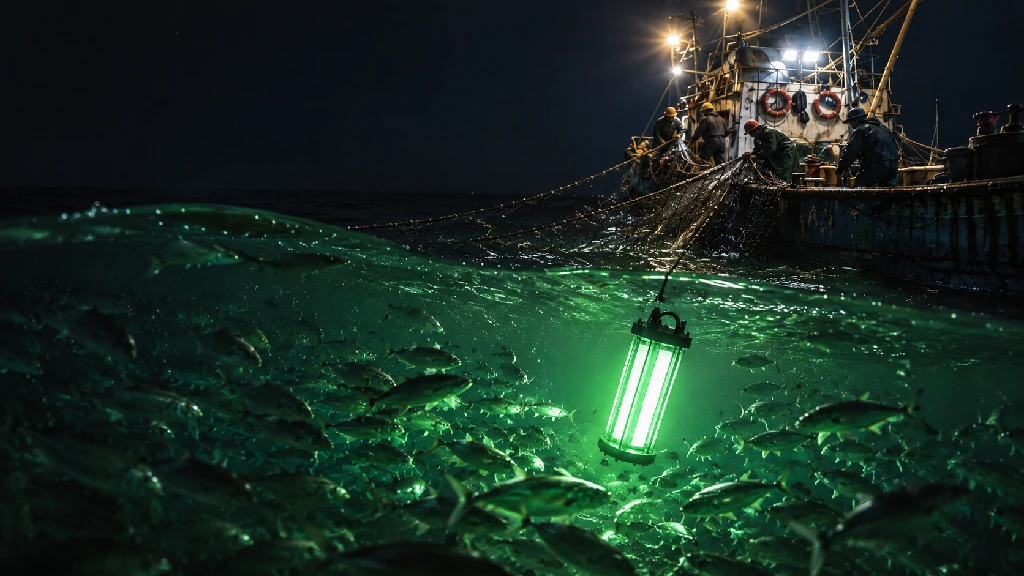
Related Product → F-UC01 High-Power Commercial Underwater Fishing Light
How to Adjust the Light Depth While Fishing
Use sonar to locate the baitfish or target fish before lowering the lamp. Place the light above or near that layer, switch it on and allow time for baitfish to respond.
If the baitfish remain deeper, lower the lamp by approximately 1–2 m and observe again. Avoid changing the depth repeatedly within a few minutes because the attraction zone needs time to develop.
When baitfish begin gathering around the light and predatory fish appear along the outer edge of the illuminated area, keep the lamp at that depth. Move it again only when the fish layer changes or the current shifts the lamp away from the intended position.
Without sonar, use 1–2 m for shallow dock fishing, 2–3 m for general reservoir night fishing, 3–5 m for higher-power recreational lights and 10–20 m for commercial underwater lights.
Final Recommendation
For most recreational night fishing lights, 1–3 m is the most practical starting range. Crappie, largemouth bass, walleye and hybrid striped bass may hold several metres deeper, so fish below the lamp and around the edge of the light field.
For 200–300 W boat lights, start around 3–5 m and move toward 10 m only when the baitfish layer is deeper. For commercial underwater fishing lights, begin around 10–20 m and use sonar to decide whether the lamp should remain there or move toward 30–50 m.
The correct depth is not the deepest position the cable can reach. It is the depth that places the attraction zone close enough to the baitfish and target fish to influence their movement.