-1-1024x1024.webp)
-1024x1024.webp)
Introduction
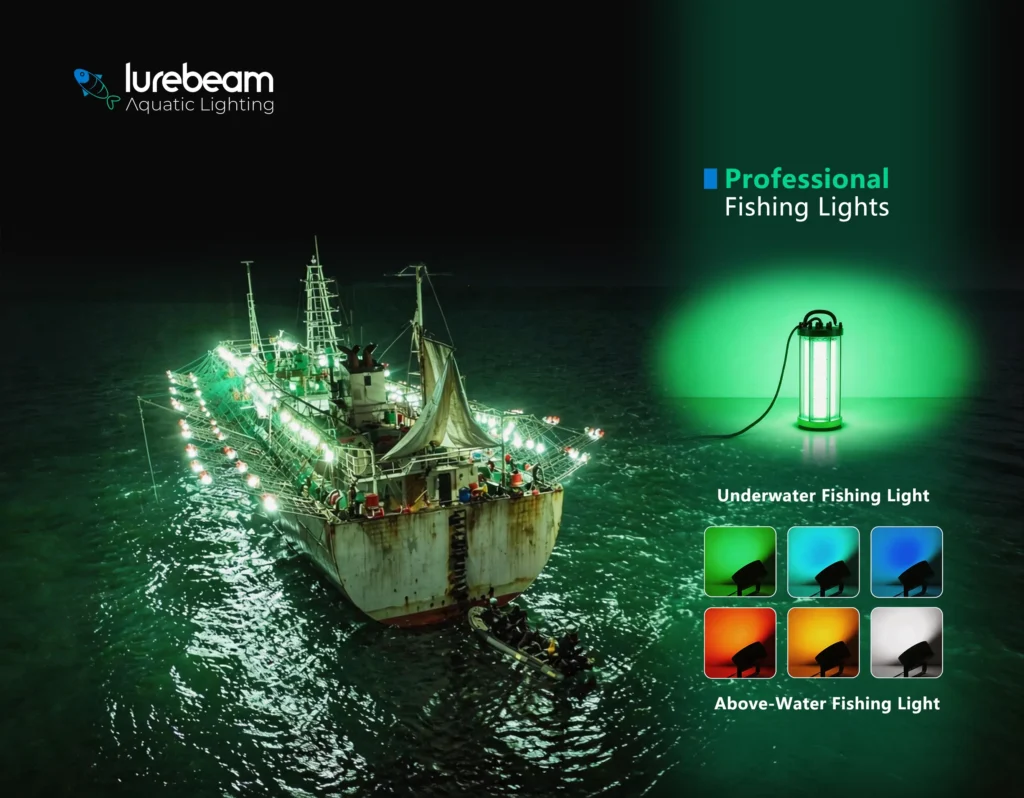
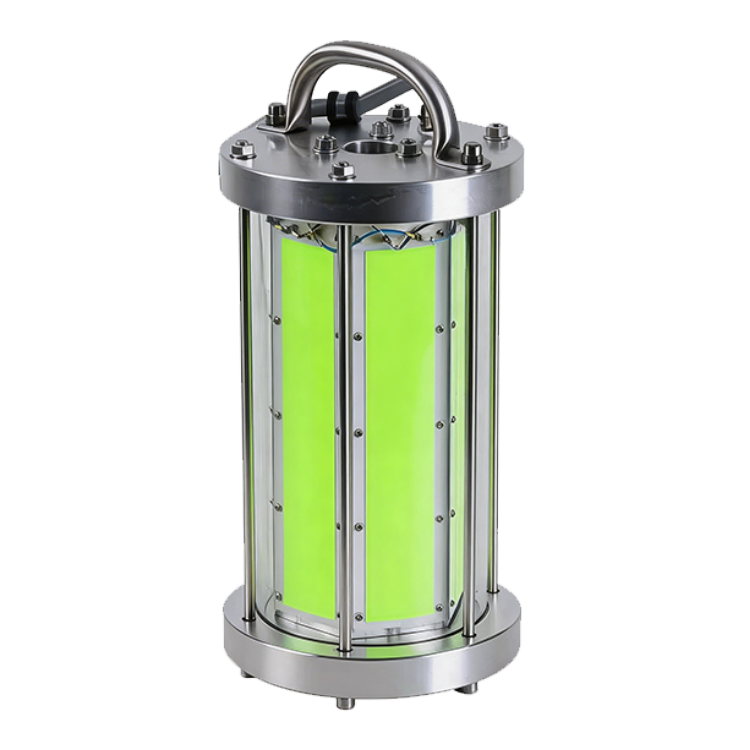
When choosing an fishing light, most anglers focus on brightness, wattage, and waterproof performance. While these factors are important, many people overlook one of the biggest factors affecting fishing success: light color.
Different colors behave differently underwater. Some travel deeper through the water column, while others are more effective at attracting plankton and baitfish. Understanding how each color works can help anglers choose the right fishing light for their target species and fishing environment.
In this fishing light color guide, we’ll explain the advantages and limitations of green, blue, white, red, and UV fishing lights, helping you determine which color is best for your next fishing trip.
Why Does Fishing Light Color Matter?
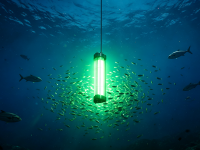
Many people assume fish are attracted directly to light. In reality, the process is usually more complex. Fishing lights create a feeding zone by attracting plankton and small baitfish. Once baitfish gather around the light, larger predator fish often follow.
Because different colors interact with seawater differently, the amount of marine life attracted to the area can vary significantly. This is why experienced fishermen often pay close attention not only to brightness but also to light color.
- Light attracts plankton.
- Plankton attracts baitfish.
- Baitfish attract larger predator fish.
Green Fishing Lights: The Most Popular Choice
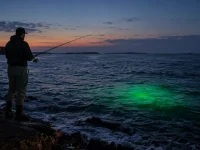
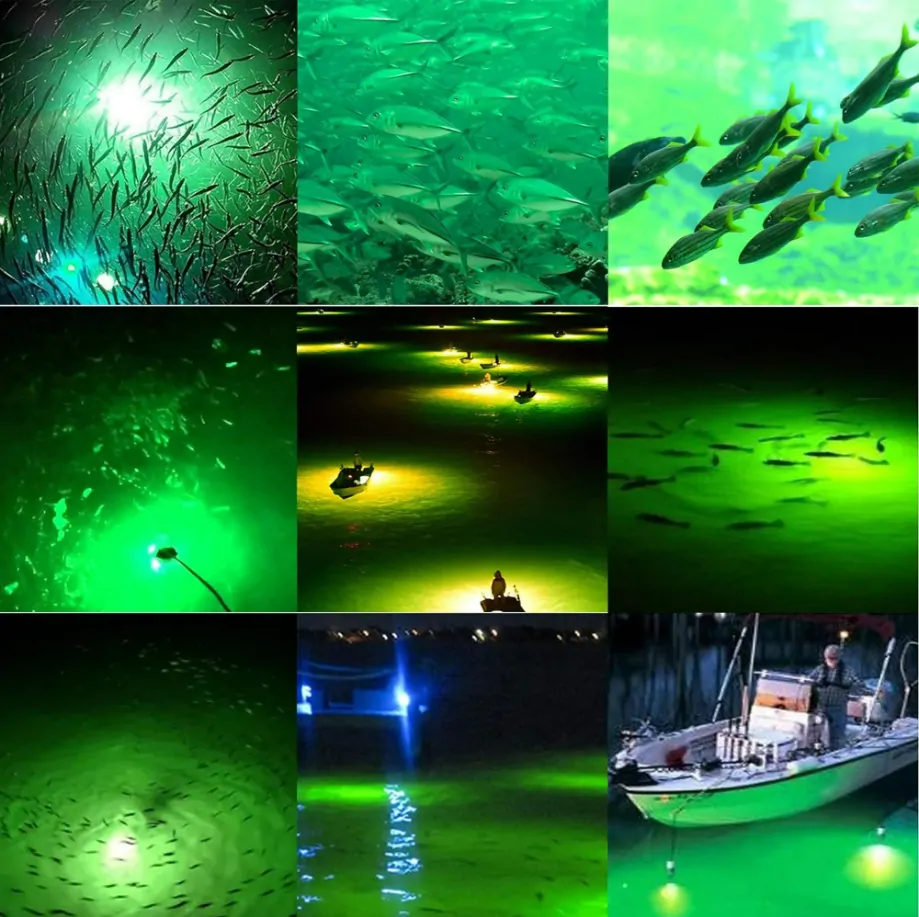
Green fishing lights are widely considered the most versatile option for saltwater fishing. They are especially effective in coastal waters, bays, harbors, and other nearshore environments.
One reason green lights are so popular is their ability to attract plankton and baitfish quickly. As baitfish gather, larger game fish often move into the area to feed. This makes green lights a favorite among recreational anglers and commercial fishermen alike.
Green lights are often recommended for:
- Coastal fishing
- Dock fishing
- Pier fishing
- Baitfish attraction
- General-purpose fishing
If you’re buying your first underwater fishing light and are unsure which color to choose, green is usually the safest option.
Blue Fishing Lights: Better for Deep and Clear Water
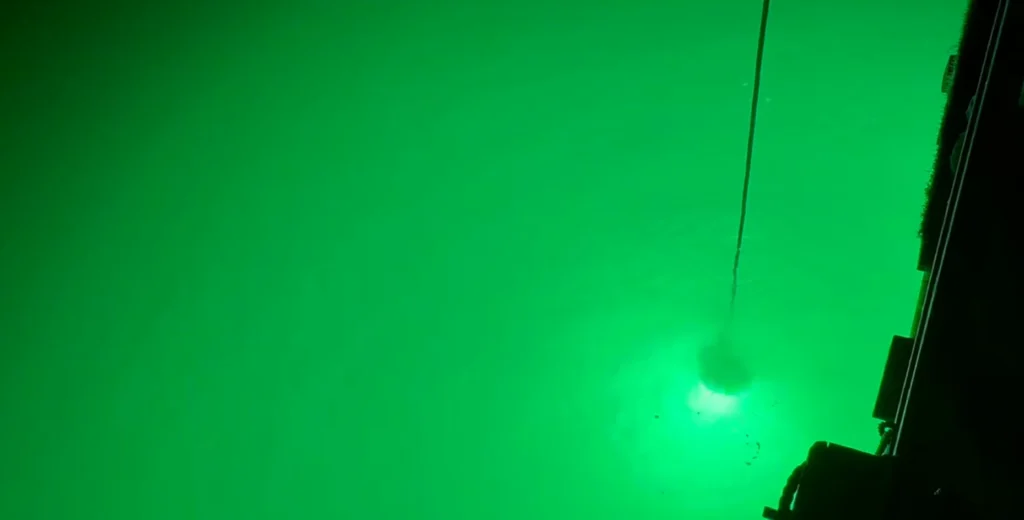
Blue light is known for its excellent water penetration. Compared with many other visible colors, blue wavelengths can travel deeper into clear seawater.
Because of this characteristic, blue fishing lights are commonly used for offshore fishing, deep-water applications, and squid fishing operations. In clear ocean environments, blue lights can create a larger effective fishing zone beneath the boat.
Although blue lights may not always attract baitfish as quickly as green lights, they often perform better when fishing in deeper water.
Blue lights are commonly used for:
- Offshore fishing
- Deep-water fishing
- Squid fishing
- Tuna fishing
- Clear ocean environments

White Fishing Lights: Maximum Brightness and Visibility
White fishing lights produce the brightest appearance because they contain multiple wavelengths. They are often used when fishermen need to illuminate a large area around the vessel.
White lights can attract a wide variety of marine life and provide excellent visibility for nighttime operations. However, in very clear water, excessive brightness may sometimes make certain species more cautious.
For this reason, many commercial operators combine white lights with green or blue lights rather than relying on white light alone.
Red Fishing Lights: Fish Stabilizing and Netting Support Light
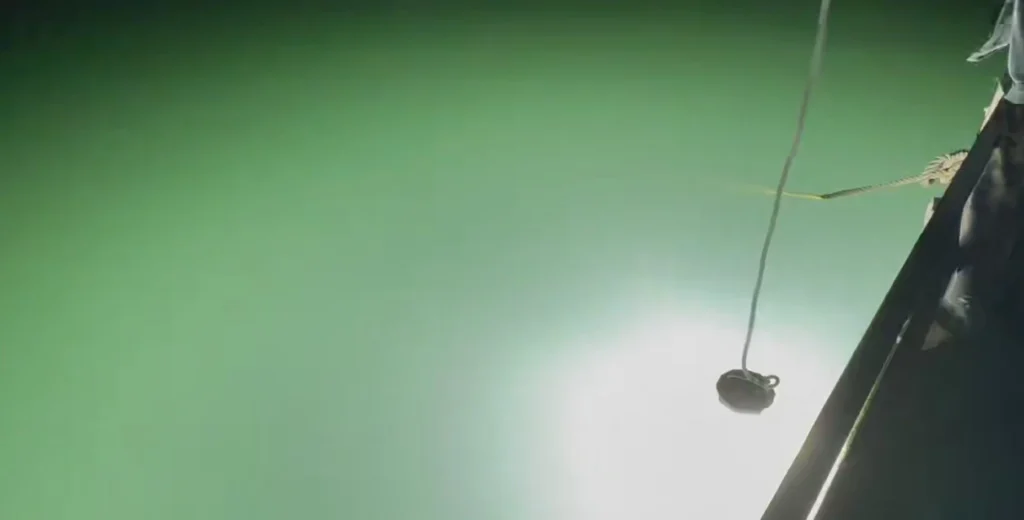
Red fishing lights behave differently from green and blue lights because red wavelengths are quickly absorbed by seawater and do not penetrate deeply. This makes red light less effective for long-distance attraction, but very useful in close-range fishing operations.
In practical fishing applications, red light is often used as a fish-stabilizing and net-handling light during the final stage of harvesting. Many commercial fishermen find that red light creates a calmer visual environment underwater, which can help reduce sudden escape behavior in fish when they are already gathered near the net.
Red light is especially useful in shallow-water fishing and near-surface schooling species operations. It is commonly used in targeting upper-layer fish such as saury and other species that respond to surface or near-surface lighting conditions.
Another important function of red fishing light is supporting bait concentration and fish holding. In some fishing environments, red light can help maintain a stable aggregation of fish around the working area, making it easier to complete net lifting and catch collection without scattering the school.
Overall, red light is not a primary long-range attractor, but it plays an important supporting role in commercial fishing, especially in net-based harvesting operations where fish stability is more important than attraction distance.
How Water Clarity Affects Fishing Light Color
Water clarity can have a major impact on fishing light performance.
In murky or nutrient-rich coastal waters, green lights often perform exceptionally well because they effectively attract plankton and baitfish.
In clear offshore water, blue lights frequently gain an advantage because their wavelengths penetrate deeper and remain visible over greater distances.
This is why experienced fishermen often choose their light color based on both fishing location and water conditions rather than following a single rule.
Green vs Blue Fishing Lights: Which One Should You Choose?
If your fishing activities mainly take place in coastal waters, around docks, harbors, or nearshore structures, green lights are usually the better choice.
If you regularly fish offshore, target squid, or operate in deeper water, blue lights may provide better results.
For many commercial fishing operations, using a combination of green and blue lights offers the best balance between bait attraction and deep-water coverage.
Frequently Asked Questions
Do fish prefer green or blue light?
There is no universal answer. Green lights often attract baitfish more quickly, while blue lights usually perform better in deeper and clearer water.
What color light attracts squid?
Blue fishing lights are among the most commonly used options for squid fishing, especially in offshore environments.
Is white light better than green light?
Not necessarily. White lights provide greater brightness, but green lights often attract baitfish more effectively.
Can red light attract fish?
Red light is not primarily used to attract fish from a distance. Instead, its main role in commercial fishing is during the netting and harvesting stage, where it helps reduce fish stress response and keeps the school more stable. Because red light is less likely to trigger sudden escape behavior, it is often used as a “stabilizing light” when fish are already gathered around the net, helping prevent scattering and improving catch efficiency during lifting operations.
Conclusion
There is no single fishing light color that works best in every situation. Green lights remain the most versatile choice for general saltwater fishing, while blue lights excel in deep and clear offshore environments. White lights provide maximum brightness, and red lights serve useful operational purposes.
Understanding how different colors behave underwater will help you select the right fishing light and improve your overall fishing success.