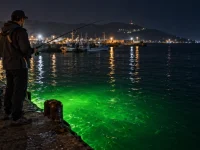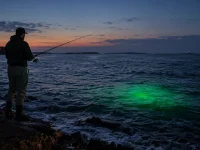

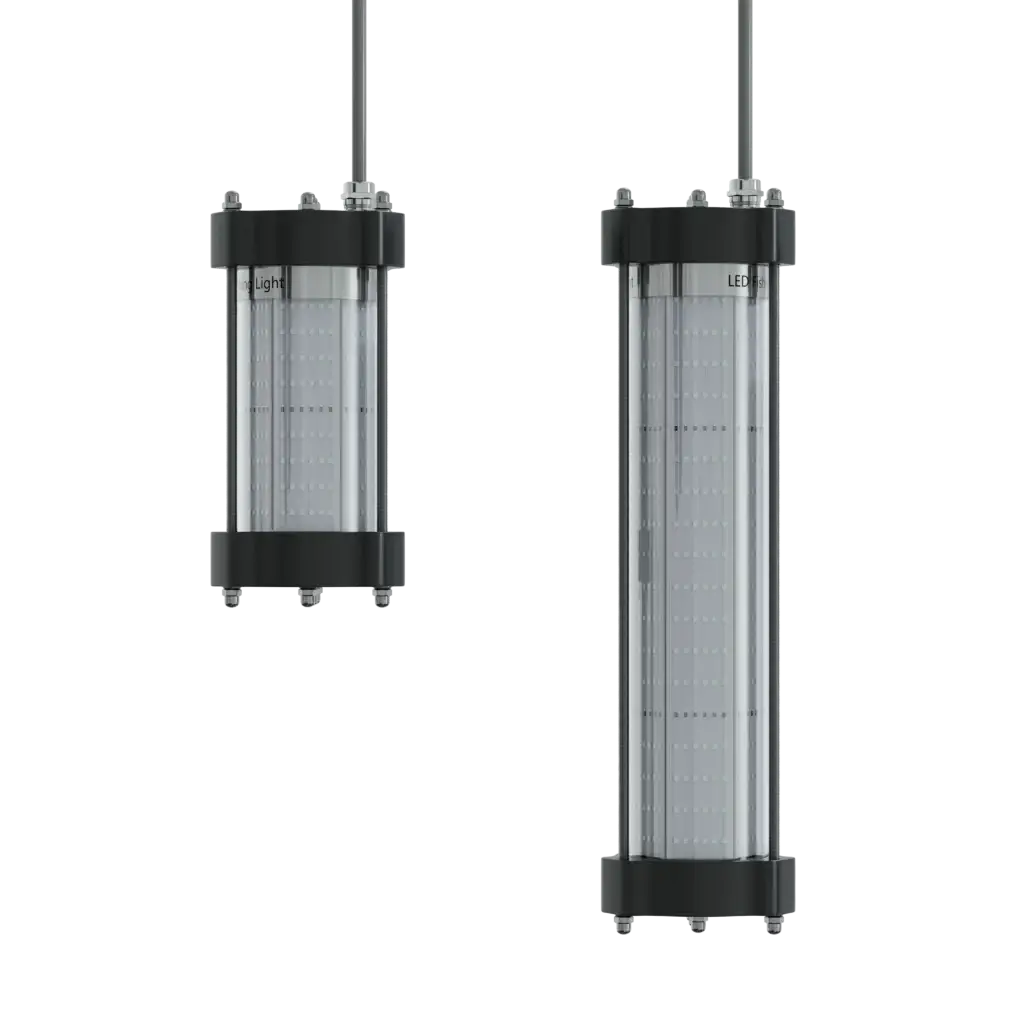

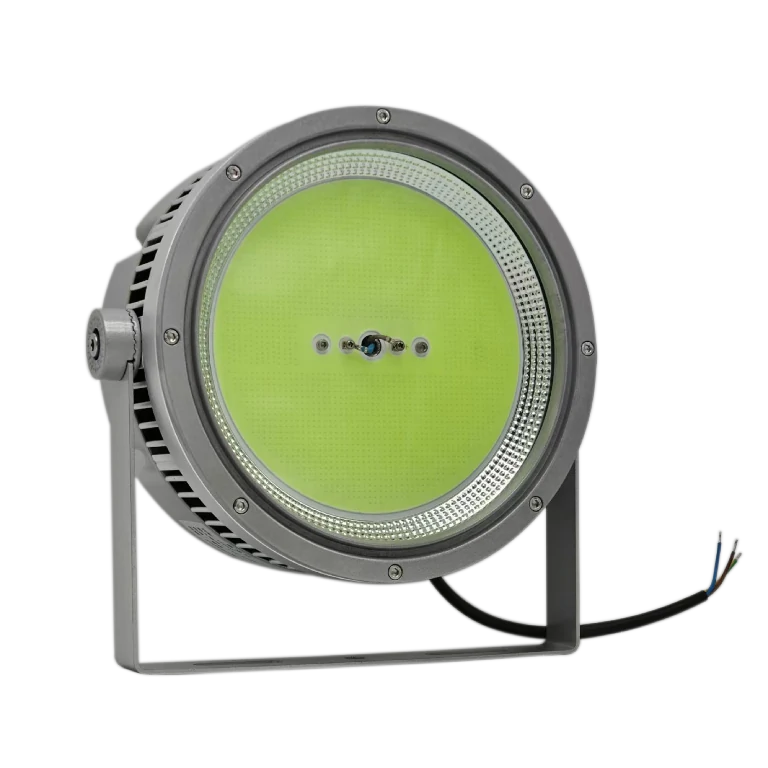
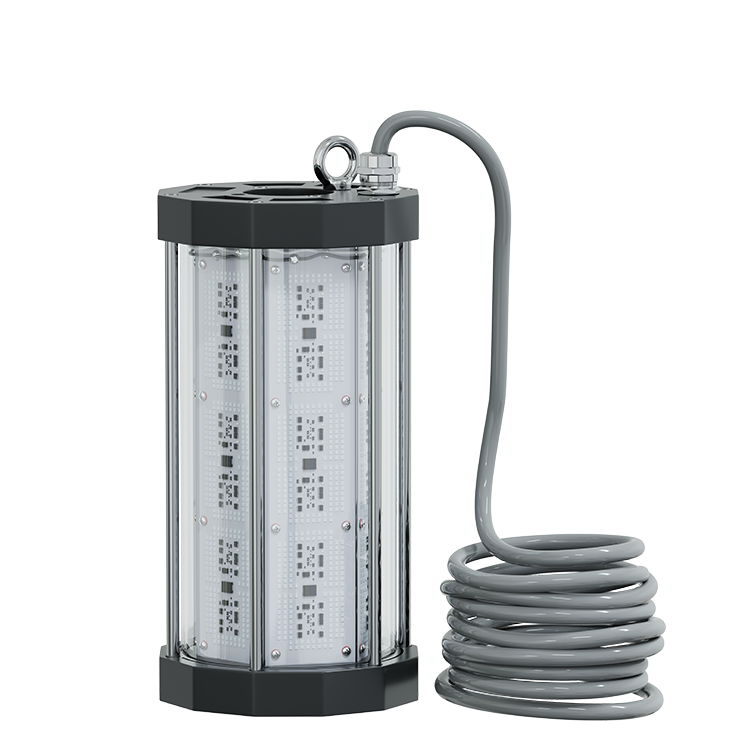
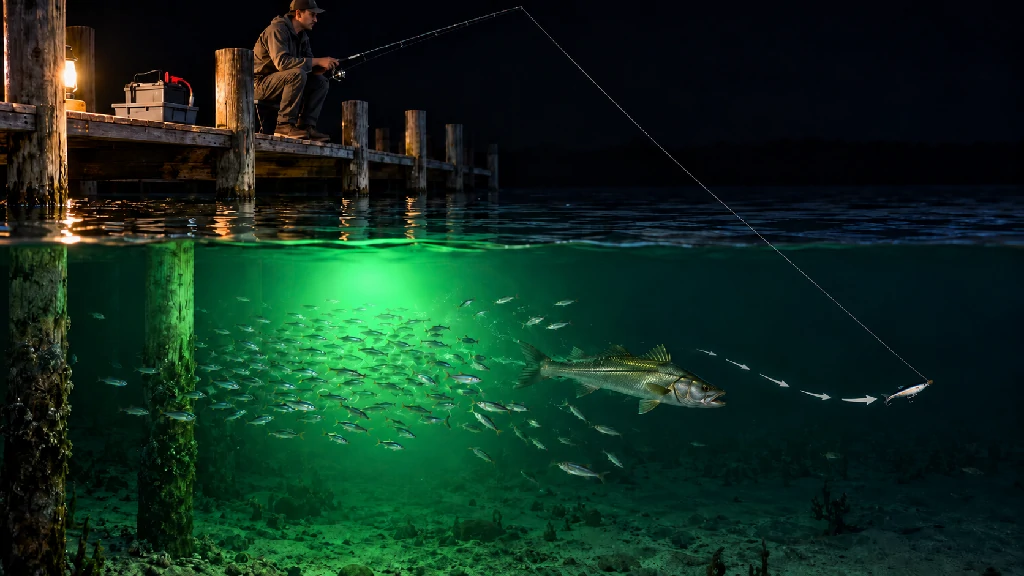
Use an artificial lure when you can see larger fish chasing the baitfish gathered around your underwater fishing light. Use legal live bait when larger fish repeatedly hold or cruise through one spot but will not pursue a moving lure. If you see only baitfish and no sign of a predator, changing from a lure to live bait does not solve the main problem: the fish you want to catch have not yet shown themselves.The light establishes a feeding area; your hook still has to reach a predator in a form it will take. Research has documented changes in predator presence and predation under artificial light, but it does not establish that either live bait or lures always catch more fish at a fishing light. The choice below is a practical way to match your presentation to what you can observe—not a guaranteed catch formula. Source: NOAA-hosted field study on artificial light and predation.
Choose a Lure When Fish Are Actively Chasing
Watch the baitfish before making a cast. If the school suddenly compresses, scatters or breaks the surface while a larger fish passes through, a moving lure lets you put an imitation directly across that fish’s route. Start with a baitfish-shaped lure close to the size of the prey you can see. If the attacks are near the surface, keep the lure in that layer; if the larger fish pass below the school, use a lure you can work at that lower depth.
Cast beyond the activity and retrieve along the route of the passing fish, without pulling the lure across the lamp’s power cable or repeatedly dropping it into the middle of the bait school. Control depth and speed before cycling through colours. This is an operating recommendation: you are using the lure’s repeatable path to reach an actively hunting fish. It is not a claim that fast retrieves always work. Texas Parks and Wildlife, for example, describes jigs as effective for spotted seatrout feeding under lights at night and advises varying their action and fishing depth. Source: Texas Parks and Wildlife spotted seatrout guide.
Choose Live Bait When You Need to Hold a Presentation in One Lane
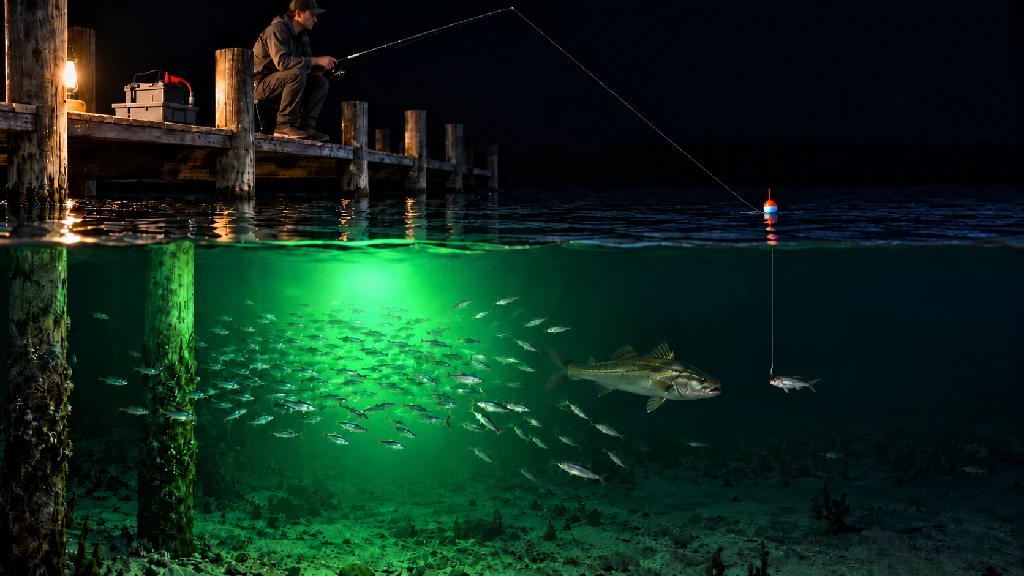
If a larger fish keeps passing the same point but does not chase your lure, the useful change is not necessarily a different lamp or a brighter lure. A legal live baitfish or shrimp can be held near that route for longer than a lure on a retrieve. Use a float or a lightly weighted rig to keep the bait at the depth where the larger fish passes. Place it beside the bait school’s path, not automatically in the brightest centre.
Keep the bait under control. A live baitfish that swims into the lamp cable, under a dock or beyond the visible fishing lane has stopped serving the purpose for which you selected it. Reel in and reset the rig rather than leaving it tangled or fishing at an unknown depth. Florida’s Fish and Wildlife Conservation Commission gives a species-specific example: when targeting snook at a dock light, it recommends presenting shrimp at the edge of the light. That is useful guidance for that fishery, not a rule that every species holds at the edge. Source: Florida Fish and Wildlife Conservation Commission snook guidance.
Make the Choice Before You Change the Lamp
Use this short decision:
- Baitfish are being chased: present a similarly sized lure through the predator’s route.
- A larger fish holds in one lane but ignores a moving lure: hold legal live bait at that fish’s depth in the same lane.
- Only baitfish are visible: look for predator activity outside or below the school before spending the night changing bait types.
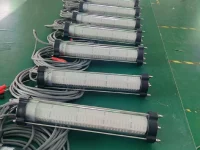
Keep the underwater fish light in a stable position while making that choice. The light’s cable and the fishing line need separate paths. If the boat must move, retrieve the light and its full cable before using propulsion. Source: Lurebeam’s existing cable-management guide.
FAQs
Is live bait always more effective than a lure under a fishing light?
No. Live bait is useful when you need to hold a presentation in one place; a lure is useful when you need to pass repeatedly through an active fish’s route. Catch results also depend on the target species and fishing method. Do not treat either as the universal winner.
Can I use baitfish caught around the light as live bait?
Check the rules for that exact water and species first. Restrictions on catching, using and transporting live bait vary by location. Do not release unused bait into the water; doing so can spread non-native species or disease. Source: Maine baitfish rules and Maryland guidance on unused live bait.
What if I intend to release the fish?
Check local hook rules before fishing. When using natural bait, a suitable circle hook can reduce deep hooking in many fisheries; it does not eliminate injury or replace prompt, careful handling. Source: NOAA Fisheries catch-and-release guidance.