-1-1024x1024.webp)
-1024x1024.webp)
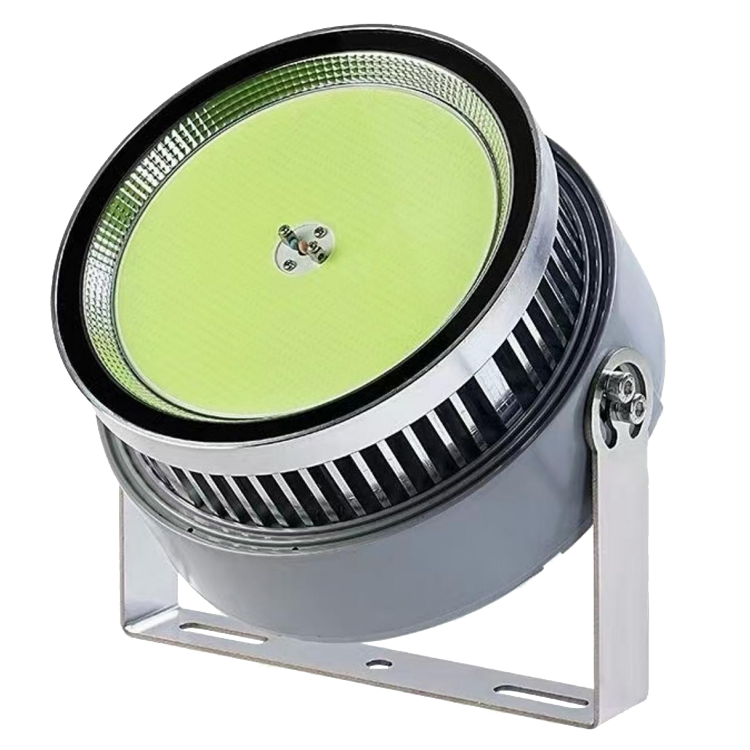
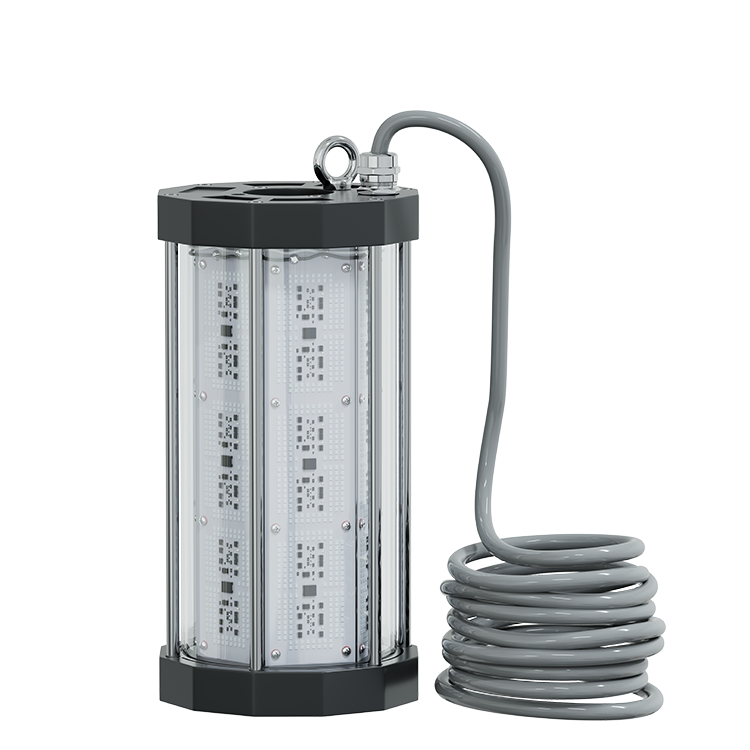
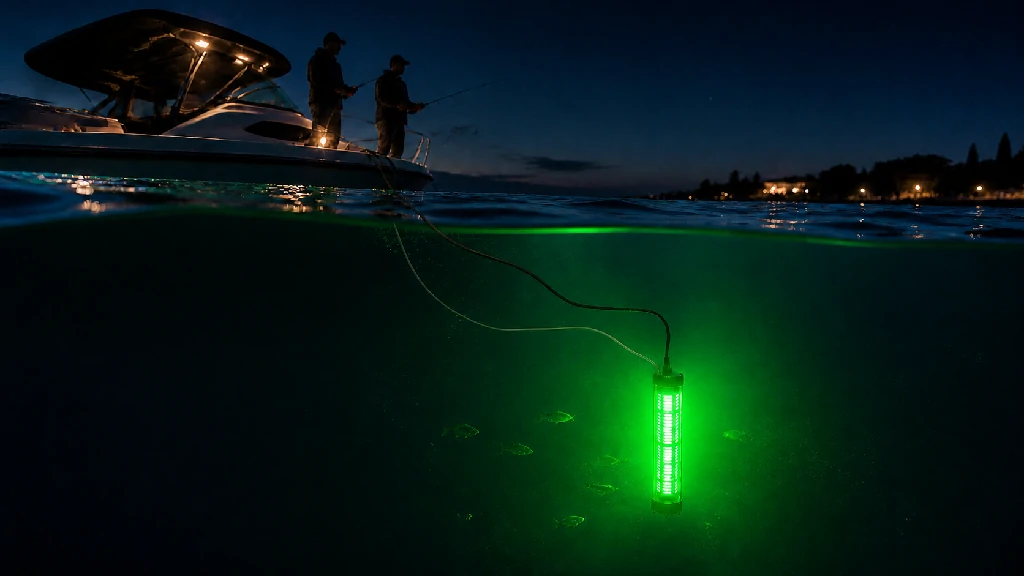
Separate four systems before anything enters the water: the anchor rode, the fishing area, the light cable and support tether, and the propulsion zone. Anchor first, shut propulsion down, deploy the light from a dedicated point outside the other three paths, and recover the complete light system before using the engine or trolling motor again.
No universal distance makes a cable safe. Boat swing, current, depth, anchor scope and motor position change the geometry. The real test is whether the paths can cross during the session—not whether they look separate at deployment.
Treat the Boat as Four Moving Zones
An anchored boat can yaw as wind and current change. The rode’s underwater angle is not visible; fishing lines move with casts, hooked fish and current; and an outboard, sterndrive or trolling motor sweeps an area when it turns, tilts or is lowered.
Before deploying the light, point to each zone and answer four questions:
- Where does the anchor rode leave the boat, and which sector does it occupy below the surface?
- Where will anglers cast, jig, net fish and bring hooked fish alongside?
- From which single point will the light and its tether travel down into the water?
- Could any propulsion component touch that path if it were turned, lowered or started?
A possible small-boat arrangement is the anchor from the bow, fishing from one side or the stern, and the light from the opposite beam but forward of the propeller. It is only an example. If the rode or fishing lines sweep across that point as the boat yaws, choose another.
Let a Tether Carry the Load and the Cable Carry Power
Attach a dedicated tether to a manufacturer-approved lifting point. Do not suspend or retrieve the light by its electrical cable unless it was explicitly designed for that purpose. The U.S. Occupational Safety and Health Administration states that flexible cords connected to equipment must not raise or lower equipment or be fastened in ways that damage the jacket. The rule covers U.S. workplaces, but its cable-protection principle is relevant here.
The tether and cable should descend as one controlled run, not two large underwater loops. If the manufacturer permits them to be retained together, use smooth retainers that do not crush the cable and preserve strain relief. Never staple the cable, cinch its jacket or attach the light tether to the anchor rode.
Control Slack Instead of Guessing a Safe Distance
Feed out only the length needed to reach the chosen depth while allowing modest movement without pulling on the fixture or connector. Contain the unused length on board so it cannot spill across the deck, enter the water or form a loop around a foot, rod holder or control lever. Follow the manufacturer’s instructions on how unused cable may be arranged during operation.
Slack is dangerous because it can travel farther than expected. A UK Marine Accident Investigation Branch case recorded a ferry’s slack mooring line entering the water and becoming entangled in its propeller; later trials indicated that about 10 m of slack had entered the water. That figure describes one accident, not a safety threshold. The lesson is that a line does not need to begin beside a propeller to reach it.
After the boat is holding at anchor, watch the actual direction of the rode, the light tether and any test fishing line. Turn the steering fully with propulsion shut down and confirm that the motor’s swept area still cannot reach the light system. If the geometry cannot be confirmed, recover the light before any manoeuvre.
Use This Deployment Order
- Anchor and verify that the boat is holding. Transport Canada’s Safe Boating Guide advises lowering an anchor gently rather than throwing it, because throwing can cause tangling, and it advises anchoring from the bow. Use the anchor, rode and scope appropriate to the boat, depth and conditions.
- Make propulsion unavailable. Put controls in neutral, shut down the engine and trolling motor, and follow the equipment maker’s method for preventing an accidental start. A visible “LIGHT IN WATER” reminder at the helm is a useful procedural control.
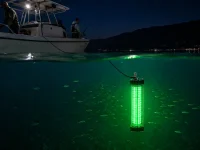
- Choose the light station. Keep it outside the anchor-rode sector, the fishing and landing lane, and the complete propulsion sweep. Assign one person to control the light system.
- Inspect before lowering. With power isolated, check the jacket, strain relief and connectors, plus the tether and lifting point. The Australian Maritime Safety Authority notes that moisture increases short-circuit and corrosion risks and recommends regular inspection of vessel wiring and connections for wear and corrosion.
- Lower—never throw—the light. Support it with the tether and feed the cable in a controlled manner. Do not allow loops to slide overboard.
- Secure and contain. Secure the tether to a suitable point, remove unnecessary slack, contain unused cable aboard, and keep non-submersible connections in the dry location required by the product instructions.
- Observe before fishing. Check how the boat, rode and light move together. Only then put fishing lines into the water, keeping casts and hooked-fish recovery outside the light-cable lane.
Recover the Light Before the Boat Moves
Use the reverse order at the end of the session: stop fishing and recover all hooks and lines; switch off and isolate the light power; retrieve the fixture by its tether while guiding the cable; place the light, tether and full cable length on board; then recover the anchor. Only after one person confirms “light and cable aboard” should propulsion be made available.
Do not use the engine to change position, reset the anchor or “straighten” a drifting cable while the light is deployed. The U.S. Coast Guard’s propeller-safety guidance emphasises the danger of a spinning propeller. For cable management, the practical control is stronger than simply selecting neutral: keep propulsion shut down and account for the entire light system before starting.
What to Do If Something Becomes Tangled
If a fishing line, anchor rode or light cable crosses another line, stop adding tension. Do not pull harder and do not engage forward or reverse to unwrap anything.
- Shut propulsion down and prevent accidental starting.
- Stop fishing and warn everyone about hooks, loaded rods and loops of line.
- Isolate the fishing-light power without handling wet, energised connectors.
- Stabilise the boat if this can be done without using the fouled propulsion system.
- Identify which line is carrying load before cutting or releasing anything. Cutting an anchor rode can set the boat adrift; pulling a cable can damage insulation or pull a person off balance.
- If material is on the propeller or shaft, do not enter the water beside an unsecured boat and do not test the engine. Arrange qualified assistance or a suitable recovery service.
- After recovery, remove a cable from service if it is cut, flattened, abraded, kinked at the entry point, or has exposed conductor. Do not energise it merely to see whether it still works.
If the boat is drifting toward immediate danger, protecting people and controlling the vessel take priority. The skipper should use the safest available emergency action and request assistance when the light system cannot be cleared without creating a greater risk.
Final Takeaway
Give the light one controlled path, keep the anchor rode and fishing activity in different sectors, eliminate loose cable, and confirm “light and cable aboard” before using propulsion. This repeatable sequence is safer than trying to solve crossed lines in the dark.
Frequently Asked Questions
Can I tie the underwater fishing light cable to the anchor rope?
No. Keep the light system independent. The anchor rode changes angle and tension as the boat moves, and anchor recovery can drag, crush or unexpectedly lift the light cable. Use a dedicated manufacturer-approved support point and tether for the light.
Should I deploy the fishing light from the stern?
Not if the stern location allows the cable to reach the propeller, sterndrive, rudder or trolling motor. A position forward of the propulsion system and outside the fishing lane is often easier to control, but the correct point depends on the boat’s layout and how it swings at anchor.
How much slack should an underwater fishing light cable have?
Use only enough to reach the selected depth and accommodate ordinary boat movement without loading the connector or light. There is no universal number. If slack forms a free loop, reaches the propulsion zone, crosses the anchor rode or spills onto the deck, there is too much.
Can I start the engine while the fishing light is still in the water?
The safer operating rule is no: recover and account for the light, tether and entire cable first. If an emergency makes immediate vessel movement necessary, protect people, isolate the light if possible and follow the skipper’s safest emergency option rather than treating normal deployment advice as more important than an immediate hazard.