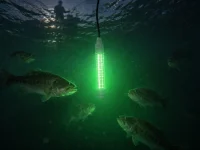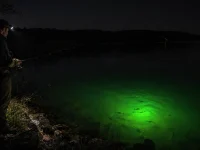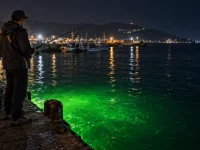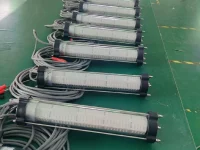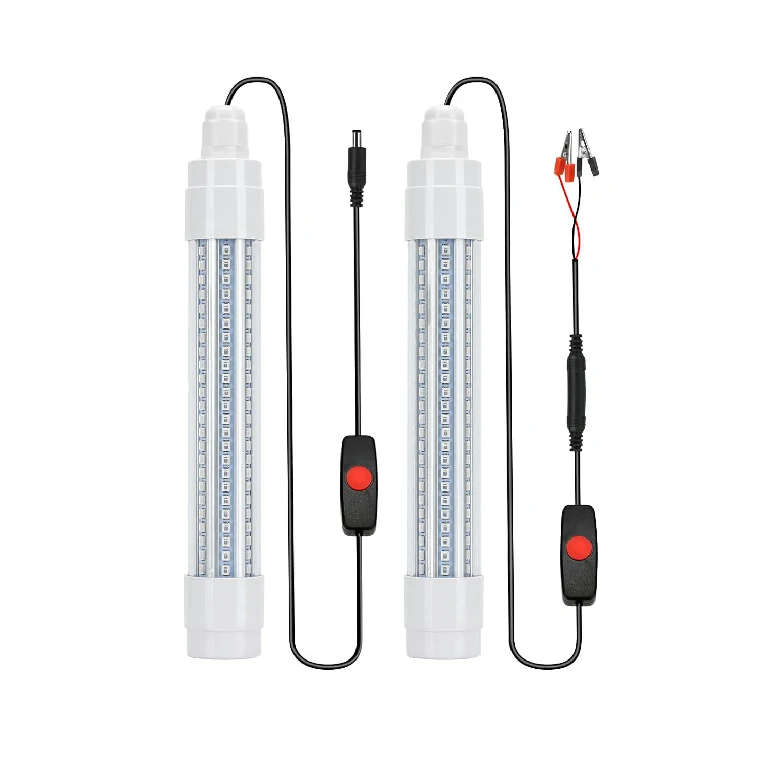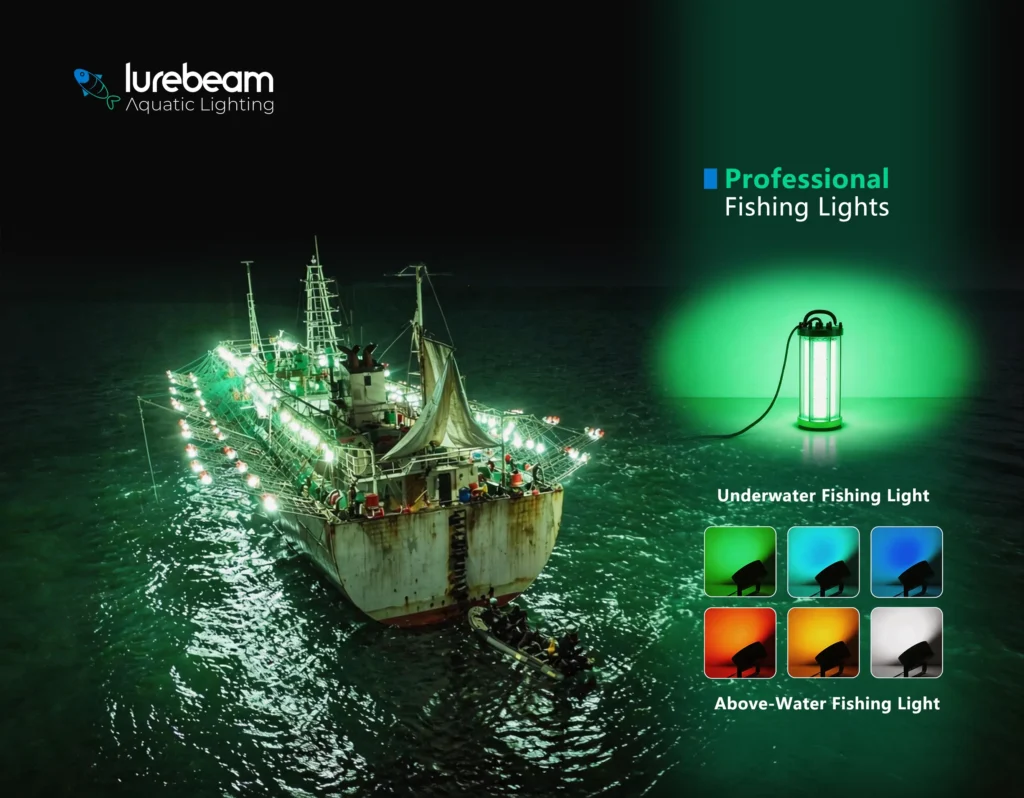
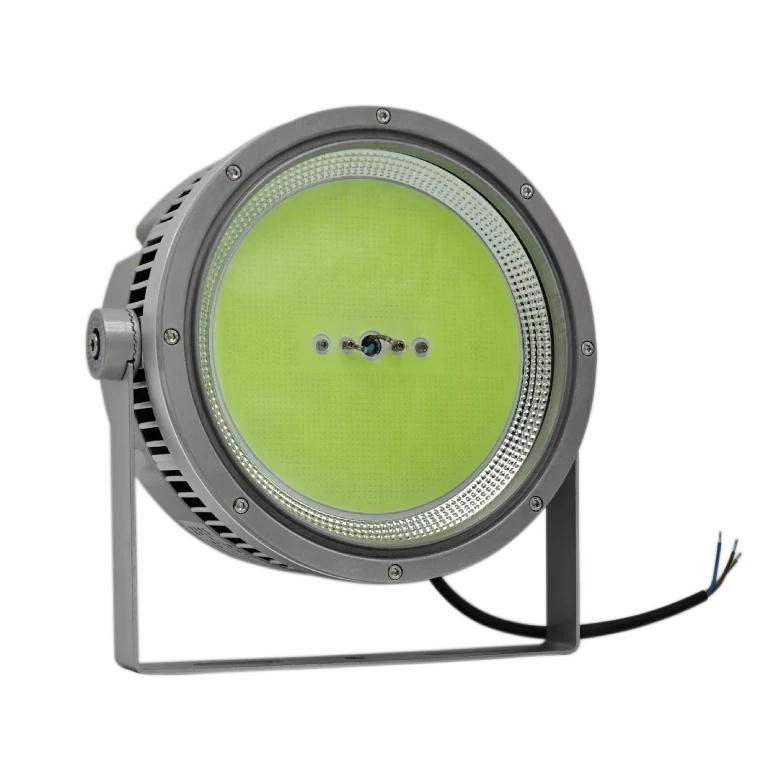
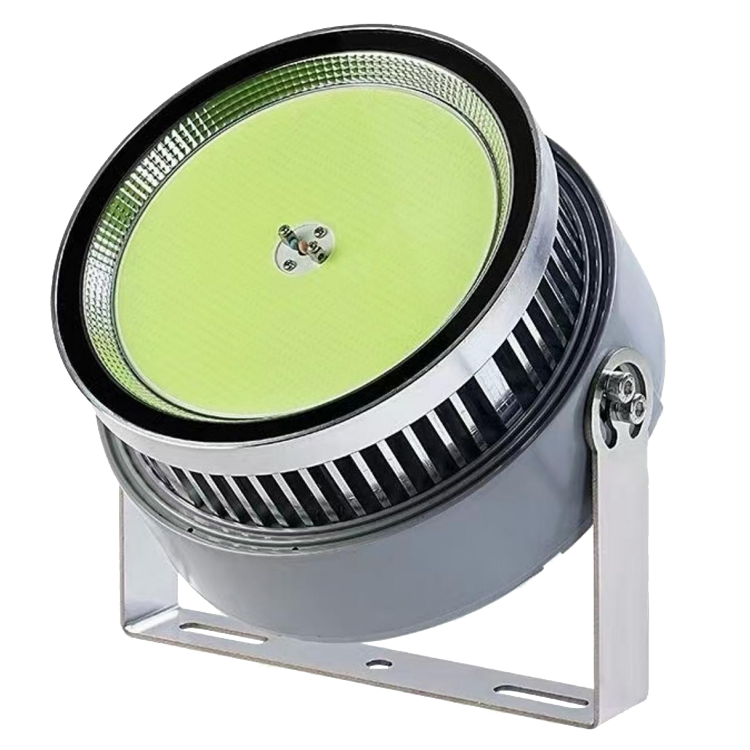
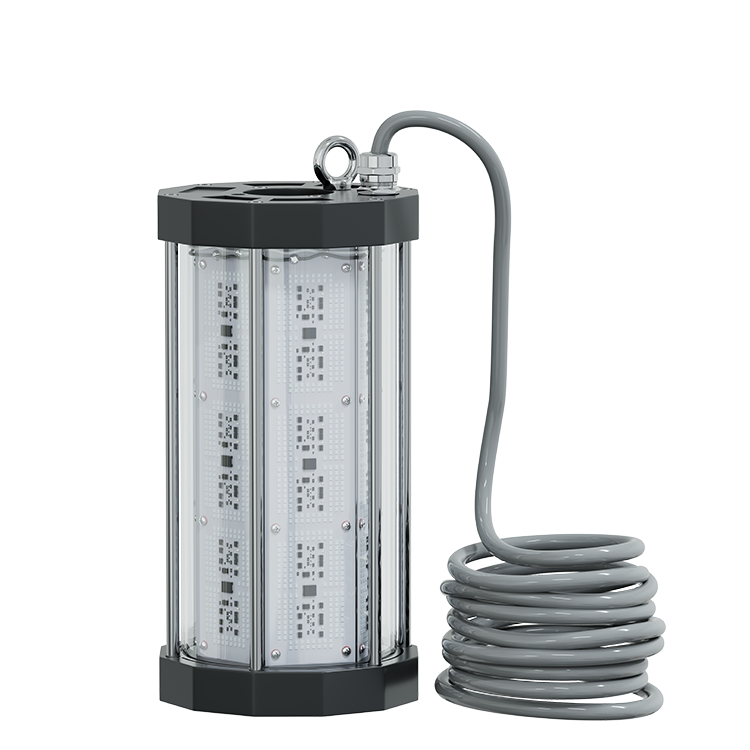
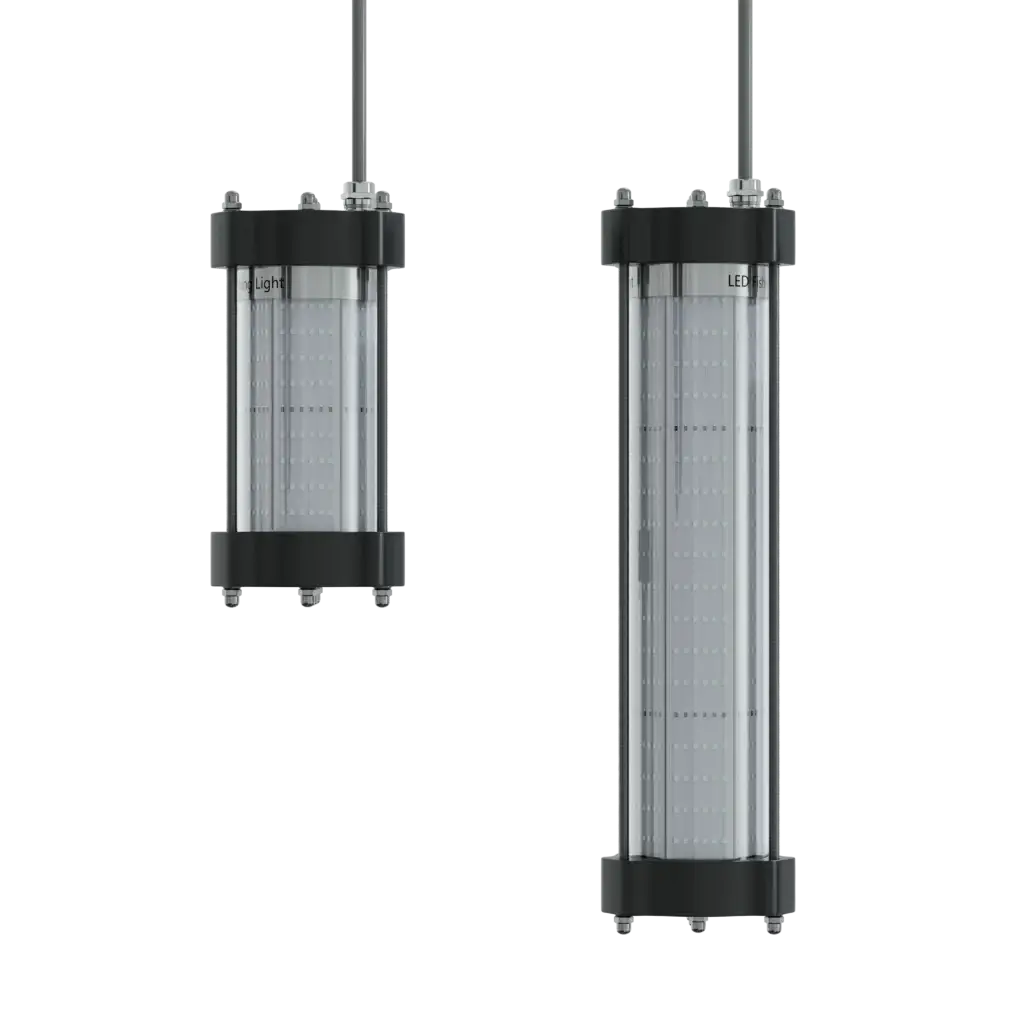
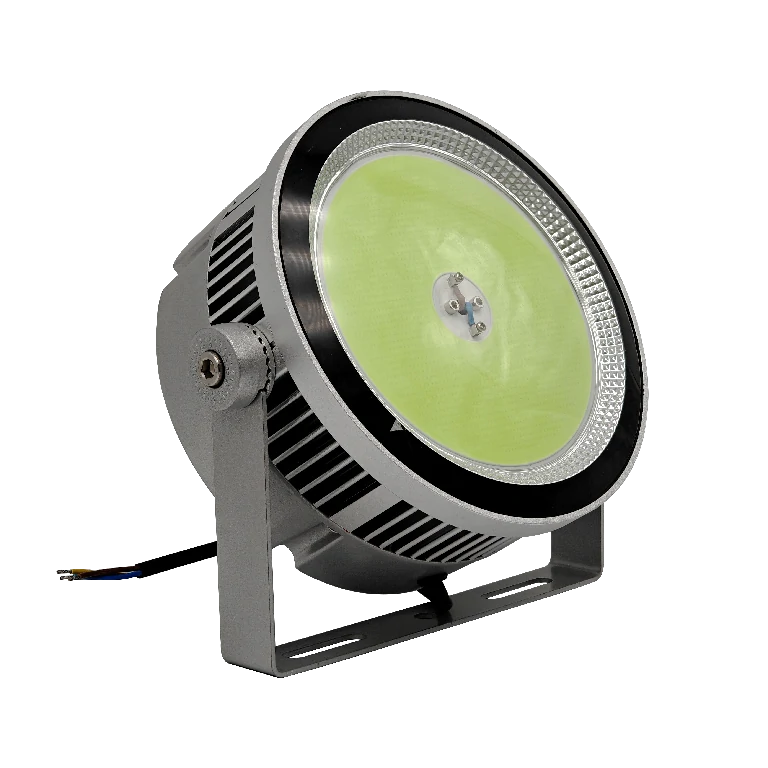
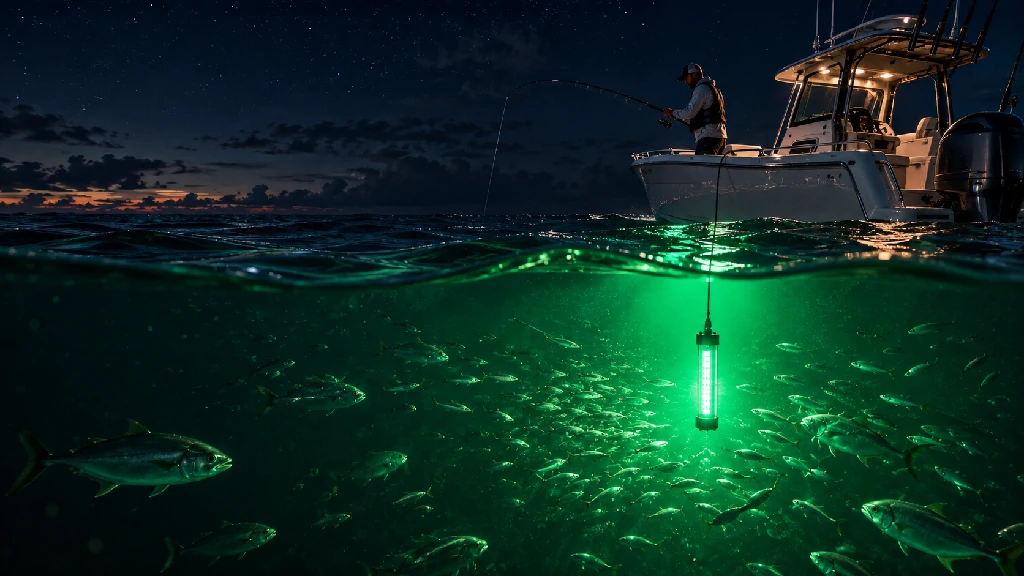
No—a portable underwater fish light should not be placed inside the active breaker line. Repeated wave impact moves the light, drags the cable through sand and continually changes the illuminated area. Breaking waves also suspend sand that scatters and absorbs light. The result is an unstable, shortened light field and a deployment that can become difficult to recover safely.
A fish light can still be used near a beach when it is lowered into genuinely sheltered water: inside a protected harbour, behind an appropriate breakwater, beside a pier where no waves are breaking, or in a calm estuary entrance. The deciding factor is not whether the location is called a beach. It is whether the underwater fishing light, cable, power source and angler can remain outside the active surf system for the entire session.
Why Breaking Surf Defeats a Portable Fish Light
1. The Light Cannot Maintain a Stable Attraction Zone
Inside the surf zone, water does not simply travel toward the beach. Breaking waves push water shoreward; the accumulated water then returns through feeder currents and seaward-flowing channels. NOAA explains that rip currents originate in the surf zone and can form wherever waves break, including near piers, jetties and gaps in sandbars. Foam, seaweed or discoloured water moving offshore can indicate that flow.
For a suspended fish light, this produces alternating loads. One wave pushes the light toward shore, the return flow pulls it seaward, and a longshore current moves it along the beach. The cable repeatedly tightens and slackens while the illuminated area shifts.
The practical conclusion is direct: if the light cannot hold one controlled position, it cannot create a predictable attraction zone around which you can place bait or lures. Do not try to correct active surf by adding an improvised weight. A heavier assembly can still move, while becoming harder to retrieve and more likely to bury or snag.
2. Suspended Sand Shortens the Useful Light Field
Breaking waves lift sand and fine sediment from the seabed. The U.S. Geological Survey explains that suspended particles scatter light and reduce light penetration. Increasing lamp power does not remove those particles.
This explains a common visual result in sandy surf: the water immediately around the LED fish light may look intensely bright, yet the useful light boundary extends only a short distance. Much of the output is scattered back toward the observer or absorbed within the suspended material.
Do not judge performance by how bright the sand cloud appears. Look for water where the beam forms a stable, visible field rather than an intensely glowing patch around the housing. If each wave creates a new cloud of sand around the light, move to cleaner, protected water.
3. The Cable and Recovery Route Become the Main Hazard
A cable laid across the swash zone is moved, buried and uncovered by every wave cycle. It can cross an angler’s footing, enter another person’s route or pull a battery, connector or switch toward the water. A submersible light housing does not make the entire power system suitable for immersion.
The breaker line also changes with tide and wave sets. The UK Met Office notes that longer-period swell generally breaks with greater force and that tide height can change access along a beach. A position that looks manageable at the start of night fishing may be inside the shorebreak or cut off later.
The RNLI’s coastal angling guidance warns that the sea can change unpredictably and recommends appropriate flotation for coastal anglers. For fish-light deployment, add one strict rule: never wade into breaking surf at night to place, adjust or recover electrical equipment.
Where a Fish Light Can Work Near a Beach
The correct location is separated from the breaker line, not merely a few metres farther along the same exposed beach. Suitable possibilities include:
- the protected side of a harbour wall where the water surface remains calm;
- a pier position over water where waves are not breaking;
- a sheltered cove outside the path of incoming swell;
- a calm estuary or marina entrance with a clear retrieval route; or
- a protected tidal basin that remains accessible through the planned fishing period.
A structure does not automatically make the water safe. NOAA identifies piers, jetties and natural rocks as locations where water can collect and form seaward-flowing currents. Observe the water from an elevated position before choosing a deployment point. Reject any area showing moving foam lines, strong lateral flow, repeated surging or a return current carrying sand and debris offshore.
The underwater fish light should hang clear of the seabed, remain in approximately one position and be recoverable from stable ground. The cable should leave the water directly toward the operator instead of running along the beach or across public access.
Use This Go-or-No-Go Check Before Night Fishing
Approve the site only when every answer below is “yes”:
- The light position remains outside the breaker line through the full tide window. Check the local surf forecast, wave period and tide—not only the water visible when you arrive.
- The light can be lowered and recovered without entering the water. Deployment must be controlled from stable ground.
- The light remains suspended and clear of sand, rocks and weed. It must not roll, bounce or disappear into a sediment cloud.
- The cable has a protected route. No wave, pedestrian, vehicle, fishing line or public access route crosses it.
- The power source and all non-submersible components remain dry. Follow the product instructions and applicable local electrical requirements.
There is no useful universal wave-height limit for portable fishing lights. A small shorebreak on a steep beach can strike the equipment directly, while larger offshore waves may leave a protected harbour position calm. The operational boundary is simpler: if breaking water reaches the light, cable route or retrieval position, do not deploy.
What to Do When the Beach Is Fully Exposed
Do not throw a portable fish light beyond the breakers. You would lose control of its landing position, cable route and recovery. The light may bury in sand, return toward shore with a wave or move into a rip channel.
Move to protected water or continue surf fishing without an underwater attraction light. Using a submersible fishing light from the bank requires controlled placement and retrieval. Underwater lights for fishing are tools for creating controlled light fields; they are not suitable for every shoreline.
Recover the Light in the Correct Order
Stop fishing and remove hooks and lines from the water first. Switch off and isolate the power as instructed. Retrieve the light using its approved support or lifting point, keeping tension away from plugs and unsupported connections. Good underwater fishing light cable management keeps the retrieval path clear. Finally, move the complete system away from the waterline.
If a wave or current carries the light beyond controlled reach, do not enter the surf to chase it. Personal safety takes priority over recovering equipment.
Conclusion
A portable underwater fish light is not suitable inside active breaking surf. Waves prevent stable placement, suspended sand reduces useful light penetration, and the moving cable creates an avoidable recovery hazard.
Use the fish light only where a protected position remains outside the breaker line for the entire session. If no such position exists, change locations or fish without the light.
Frequently Asked Questions
Can I solve the problem by attaching a heavier weight?
Not inside active surf. Extra weight increases recovery load and can make the assembly bury or snag. Use only the support and weighting arrangement permitted by the product instructions. If that arrangement cannot hold the light in protected water, reject the location.
Does green light penetrate sandy surf better than white light?
Green can travel efficiently through some water conditions, but it does not eliminate scattering caused by dense suspended sand. High turbidity reduces useful penetration for every visible colour. Moving to cleaner water is more effective than changing colour while leaving the green fishing light inside the sediment cloud.
Can I use a fish light from a pier above breaking waves?
Only if the light itself can hang in water where waves are not breaking and the cable remains clear of pilings, anglers, boats and return currents. A high platform does not make the water below suitable. Piers can also influence rip-current formation, so inspect the actual water movement.
Can I throw the fish light beyond the breakers?
No. Throwing removes control over depth, orientation, cable position and recovery. It can also subject the cable entry and connectors to impact. Use a controlled lowering method from a suitable position.
Is a calm low tide enough to approve the location?
No. Check the tide and surf conditions for the entire planned session. An incoming tide can move the breaker line landward, cover the cable route and remove the dry recovery area. Approve the position only when it remains controllable through retrieval.