-1024x1024.webp)
Introduction
f you are looking for a commercial fishing light, you have probably noticed that most modern products are built around either SMD or COB LED technology. At first glance, the difference may seem purely technical. However, the choice between SMD and COB can affect maintenance costs, spectrum customization, heat management, and even the long-term operating costs of your fishing equipment.
Understanding these differences can help distributors, fishing companies, vessel owners, and OEM buyers choose the right solution for their specific applications.
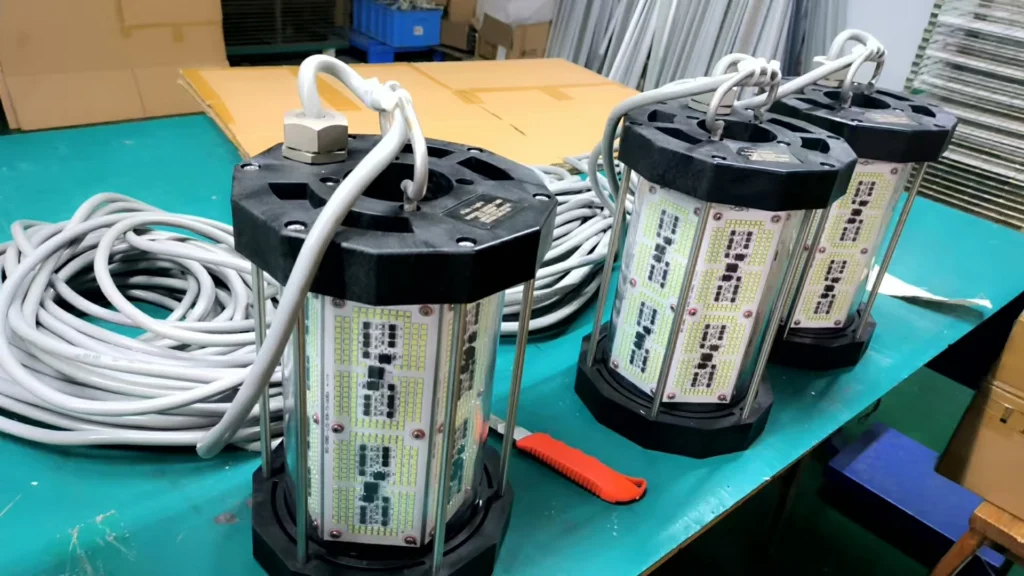
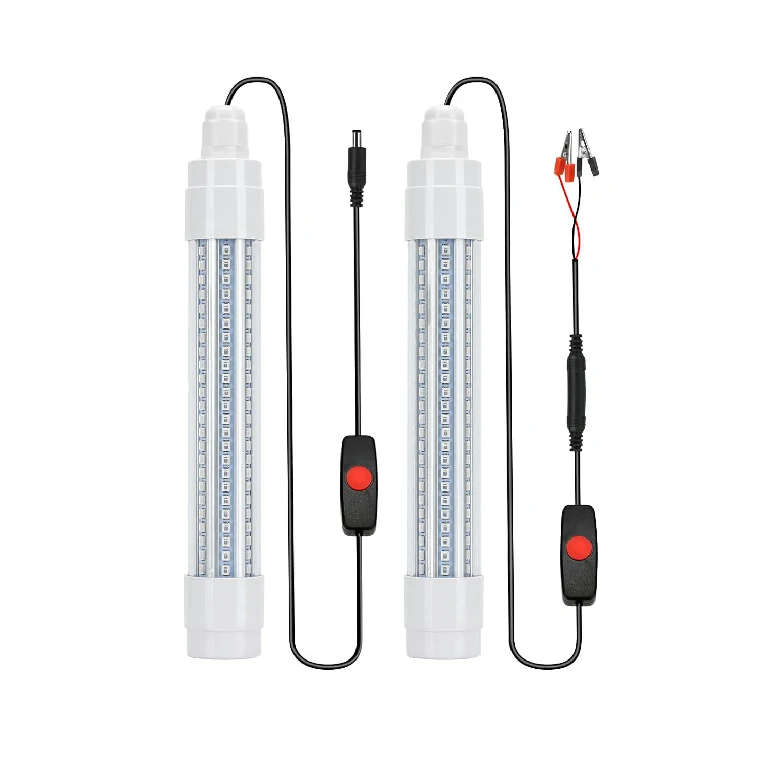
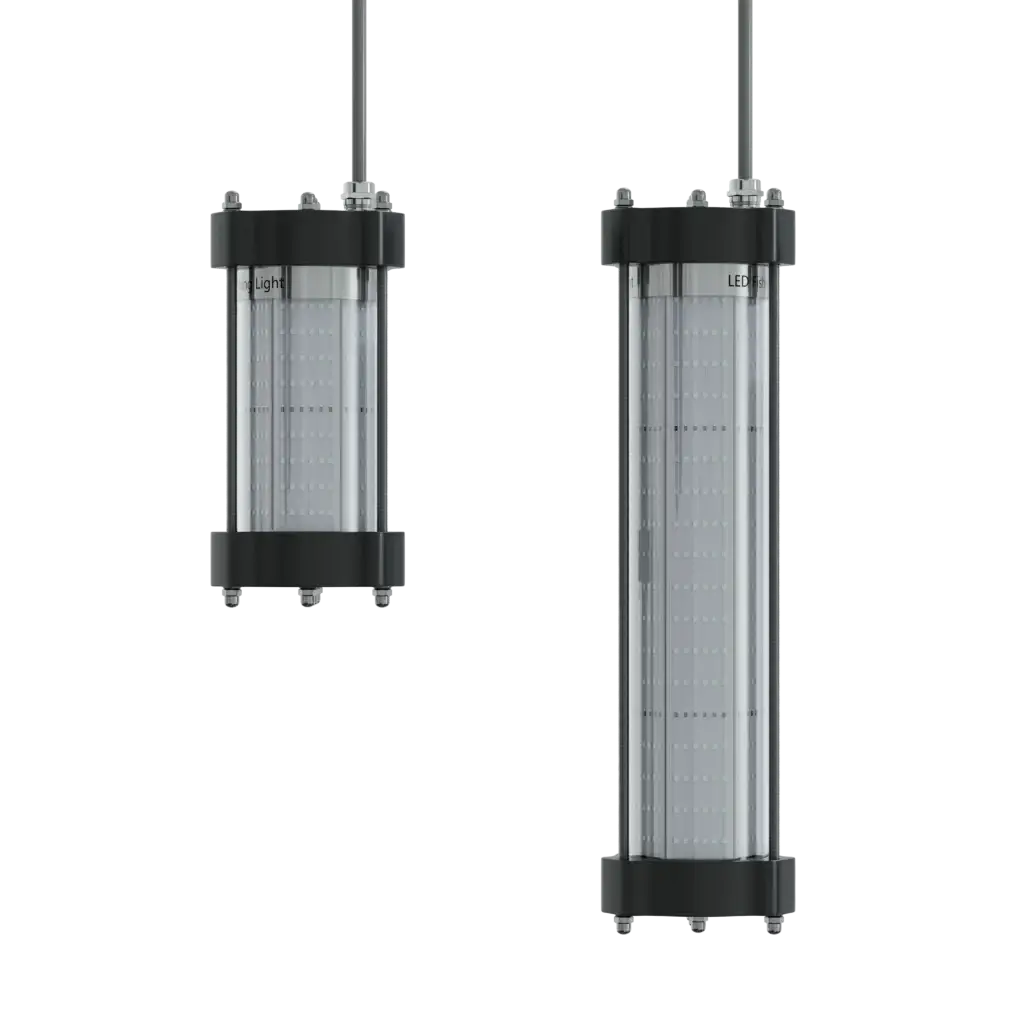
SMD Light Source Underwater Fishing Light Details
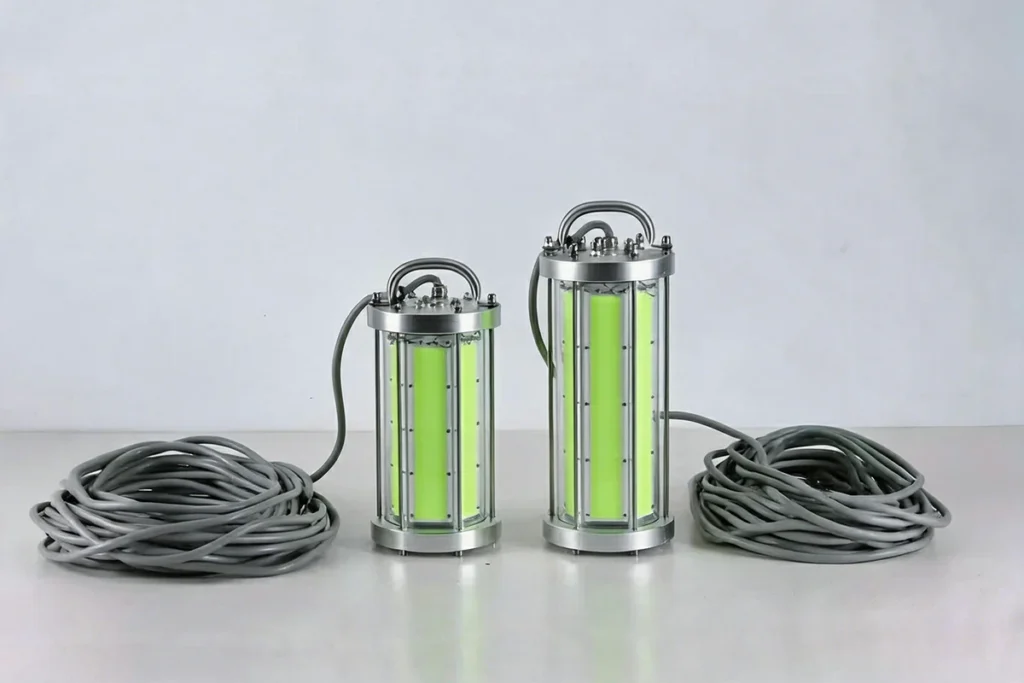
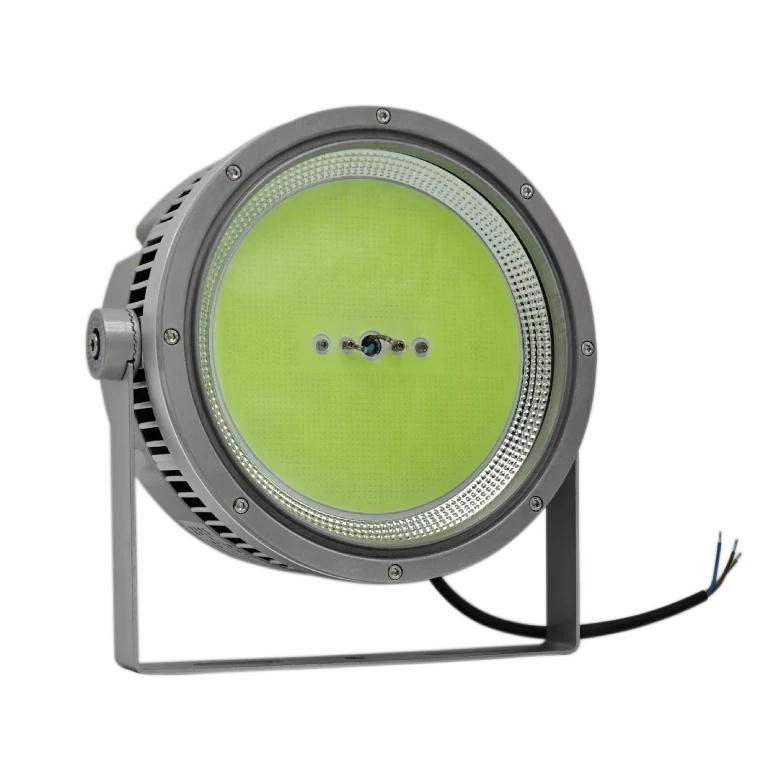
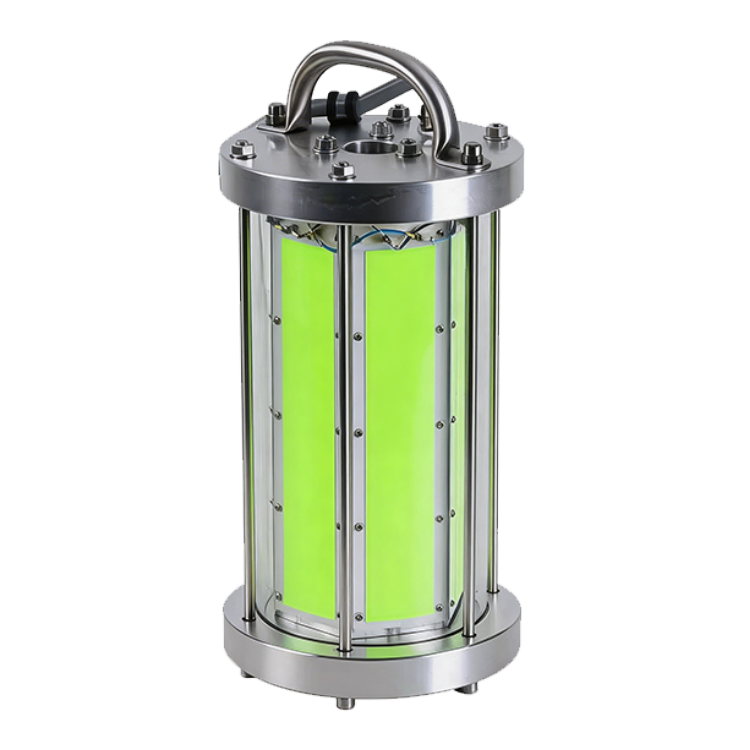
COB Light Source Underwater Fishing Light Details
What Is the Difference Between SMD and COB Fishing Lights?
The fundamental difference lies in how the LED chips are packaged and mounted.
SMD fishing lights use individual LED packages that are soldered onto an aluminum PCB. Hundreds or even thousands of LEDs can be arranged on a single fishing light, allowing manufacturers to create different power levels, light distributions, and spectrum combinations.
COB fishing lights take a different approach. Multiple LED chips are directly mounted and electrically connected on a single substrate to form one integrated light-emitting surface. Instead of seeing individual LED points, the entire surface appears as one continuous light source.
Does COB or SMD Catch More Fish?
This is one of the most common questions asked by buyers.
Based on current industry experience, there is no conclusive evidence that fish are attracted simply because a fishing light uses COB technology instead of SMD technology. In real fishing operations, catch performance is influenced by multiple factors, including light spectrum, power output, deployment depth, water clarity, environmental conditions, and target species.
In other words, the LED package itself is only one part of the overall system. A well-designed SMD fishing light can outperform a poorly designed COB fishing light, and vice versa.
Heat Dissipation and Lifespan
Heat management plays a critical role in the lifespan of any high-power fishing light.
In SMD fishing lights, heat must travel through the LED package and solder joints before reaching the aluminum PCB. While modern SMD technology has improved significantly, the thermal path is still relatively complex.
COB technology is generally easier to design with an efficient thermal path because the LED chips are mounted directly onto the substrate. This allows heat to transfer more efficiently when combined with a properly engineered housing and cooling structure.
However, it is important to remember that heat dissipation depends not only on the light source itself but also on the overall fixture design. A poorly designed COB light may still perform worse than a well-designed SMD ligh
Maintenance and Long-Term Costs
Maintenance is another important consideration, especially for commercial fishing fleets operating in remote offshore environments.
One advantage of SMD fishing lights is serviceability. If an individual LED fails, the rest of the light can often continue operating. Depending on the circuit design, only one LED or a small group of LEDs may stop working. In many cases, experienced technicians can replace damaged components and restore the light.
COB fishing lights are different. Because the light-emitting surface is integrated into a single module, failures typically require replacing the entire COB module rather than repairing individual chips. As a result, maintenance costs can be higher.
For this reason, choosing a reliable supplier becomes particularly important when purchasing COB fishing lights. Stable product quality, long-term spare parts availability, and dependable after-sales support can significantly reduce future maintenance challenges.
Spectrum Customization Flexibility
For fishing light manufacturers and OEM projects, spectrum customization is often an important factor.
Because SMD fishing lights use individual LED packages, manufacturers can easily combine different wavelengths on the same PCB. This makes it easier to create customized lighting solutions such as green-white combinations, blue-green combinations, or other specialized fishing spectra.
COB technology can also be customized, but small-batch production is generally more challenging and often requires higher minimum order quantities from LED suppliers.
As a result, SMD technology typically offers greater flexibility for customized fishing light development.
Which Fishing Light Should You Choose?
The answer depends on your priorities.
If your goal is lower initial investment, easier maintenance, and greater spectrum customization flexibility, SMD fishing lights may be the better choice.
If you prefer a more uniform light-emitting surface, premium appearance, and the potential for optimized thermal performance, COB fishing lights may be worth considering.
Neither technology is universally superior. The best choice depends on your budget, maintenance strategy, application requirements, and long-term operational goals.
SMD vs COB Fishing Lights: Quick Comparison
| Feature | SMD Fishing Lights | COB Fishing Lights |
|---|---|---|
| Initial Cost | Generally lower | Usually higher |
| Maintenance | Individual LEDs can often be repaired or replaced by qualified technicians | Entire COB module usually needs replacement if damaged |
| Failure Impact | A failed LED may only affect part of the light source | Failure may affect the entire light-emitting module |
| Spectrum Customization | Highly flexible and easier to customize | Customization is possible but often more complex |
| Light Uniformity | Visible individual LED points | More uniform and continuous light output |
| Thermal Design Potential | Good, depending on PCB and fixture design | Easier to achieve efficient heat transfer with proper design |
| Appearance | More industrial appearance | Cleaner and more premium appearance |
| OEM Flexibility | Suitable for small and medium customization projects | Often requires higher development and production commitments |
Final Thoughts
When comparing SMD and COB fishing lights, it is important to look beyond marketing claims and focus on practical factors such as heat management, maintenance requirements, spectrum flexibility, and overall build quality.
For professional fishing operations, choosing a well-designed and reliable fishing light is often more important than choosing a specific LED package technology.

-1-1024x1024.webp)