-1024x1024.webp)
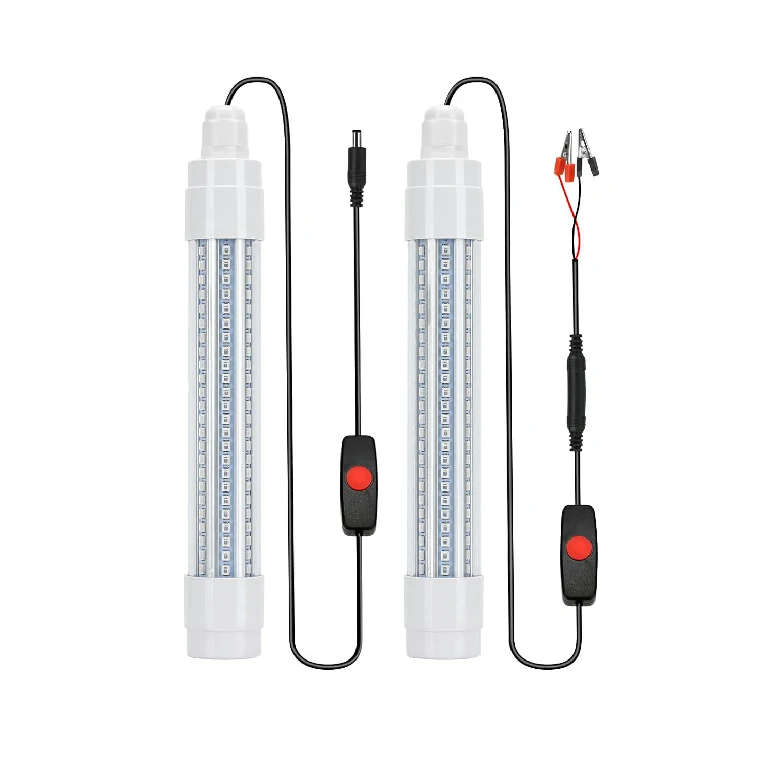
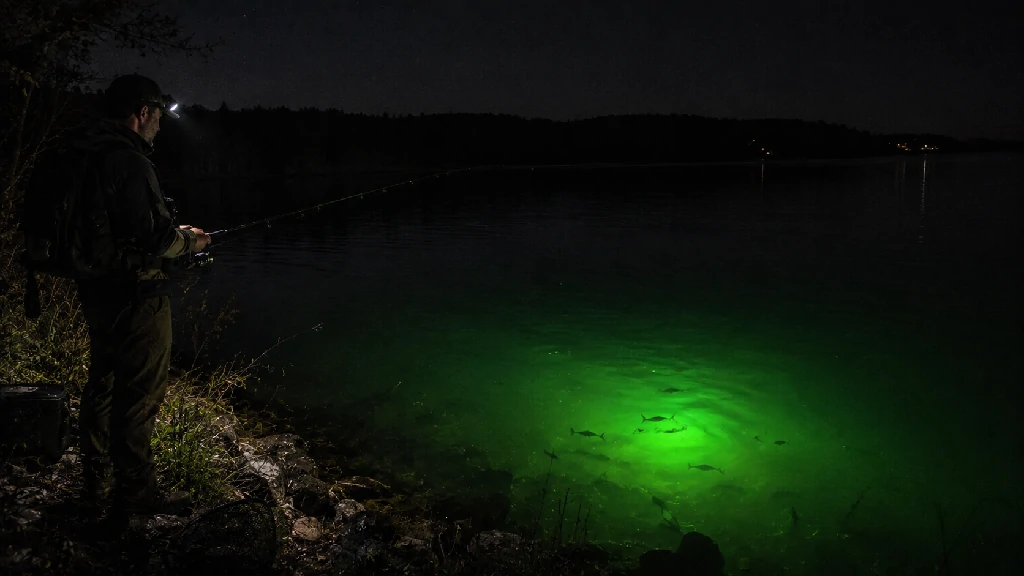
No—a headlamp or handheld flashlight is not a reliable substitute for a fish light. It can reveal fish already present, and a fixed beam may sometimes draw insects or light-responsive organisms. However, task lights normally produce a narrow, moving and intermittent beam. A fish light maintains a stable field long enough for aquatic organisms to respond.
Use a headlamp to handle tackle and move safely; use a fish light to attract or concentrate fish. A purpose-built above-water fishing lamp may also work, but it is not the same as a flashlight repeatedly aimed around the water.
The Difference Is the Light Field, Not the Word “Lamp”
“Night fishing lamp” may describe a headlamp, work light, float light, submersible fish lamp or vessel light. The name alone does not identify its function.
Judge the device by four questions:
- Is its intended function fish attraction or human visibility?
- Is the beam held in one position or swept around by the user?
- Does it create a measurable area of light in the water rather than a small moving spot?
- Can it operate continuously without exposing unsuitable electrical parts to water?
A fish light need not be underwater in every application. The essential difference is that an attraction light creates a controlled, persistent field; a headlamp follows the wearer’s gaze.
Why a Headlamp Beam Usually Underperforms as a Fish Attractor
Part of the Light Is Lost or Redirected at the Surface
Light travelling from air into water is partly reflected and refracted. A NASA ocean-optics protocol notes that transmitted light is then attenuated through the water according to wavelength, path length and water properties. Ripples also change the beam direction.
An above-water fishing lamp can work, but placement, angle, distribution and sustained output matter. Surface glare can make a flashlight look intense while its underwater field remains narrow and unstable.
A Moving Beam Is a Changing Stimulus
A headlamp turns with its wearer; a flashlight is commonly switched and swept. Fish therefore receive abrupt changes rather than one predictable field.
A major review of artificial light in fishing found attraction, aggregation and avoidance, varying by species, life stage, wavelength and intensity. NOAA guidance also warns that sudden exposure can disrupt dark-adapted fish vision. Strobe-light research is not identical to a moving flashlight, but it shows that rapidly changing light can cause avoidance in some species. An unstable beam therefore produces less predictable behaviour than a fixed field.
Seeing a Fish Is Not Proof That You Attracted It
If a fish becomes visible the instant a flashlight reaches the water, the fish may have been there already. True attraction requires movement or redistribution: organisms enter the illuminated area, remain near it, repeatedly return, or form a consistent position relative to the field.
If minnows appear only during a brief sweep and no school develops, visibility changed; local distribution may not have changed.
Can a Headlamp or Flashlight Ever Attract Fish?
Yes, under limited conditions, sometimes indirectly. A lamp held steadily over calm water can attract flying or emerging aquatic insects. A field experiment with lights directly over water found changes in insect movement and attraction among several groups. Fish may then investigate prey near the surface.
A fixed beam may influence light-responsive plankton or fish when it provides sufficient underwater contrast for long enough. Brightness alone cannot predict the result; clarity, background light, current, species and previous exposure also matter.
One successful observation does not make a flashlight a dependable fish lamp. That claim requires repeatable concentration of fish under comparable conditions.
Use This Field Test to Separate Attraction From Visibility
Do not compare two lights one after another on the same night; the first can change organism distribution and contaminate the second test.
Use matched sessions at the same location. Two nights give a preliminary comparison; four nights in an A-B-B-A order are better. “A” is the fixed flashlight setup and “B” the fish light. Keep start time, light position, fishing depth and observation position similar. Record current, clarity, moonlight and boat traffic.
For each session, record five observations:
- Time until the first baitfish enter from outside the visible field.
- Whether the school remains, passes through once or repeatedly returns.
- Approximate residence time within or along the light boundary.
- Whether larger fish establish a repeatable patrol route.
- Whether switching or moving the task light causes fish to scatter or change depth.
Do not use catch count alone. Hook choice, bait and fish appetite affect capture after attraction. A light can concentrate baitfish without producing a bite, while a fish caught immediately may have been present before switch-on.
Which Light Should You Use for Each Job?
| Job | Appropriate tool | Reason |
|---|---|---|
| Tying knots, changing bait and checking equipment | Headlamp on the lowest usable setting | Directs short-term light where the angler needs it |
| Checking the water briefly | Handheld flashlight | Useful for observation, not a controlled attraction field |
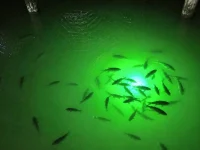
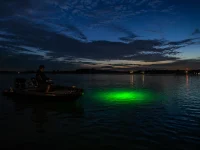
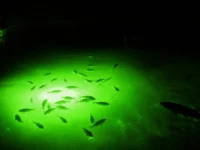
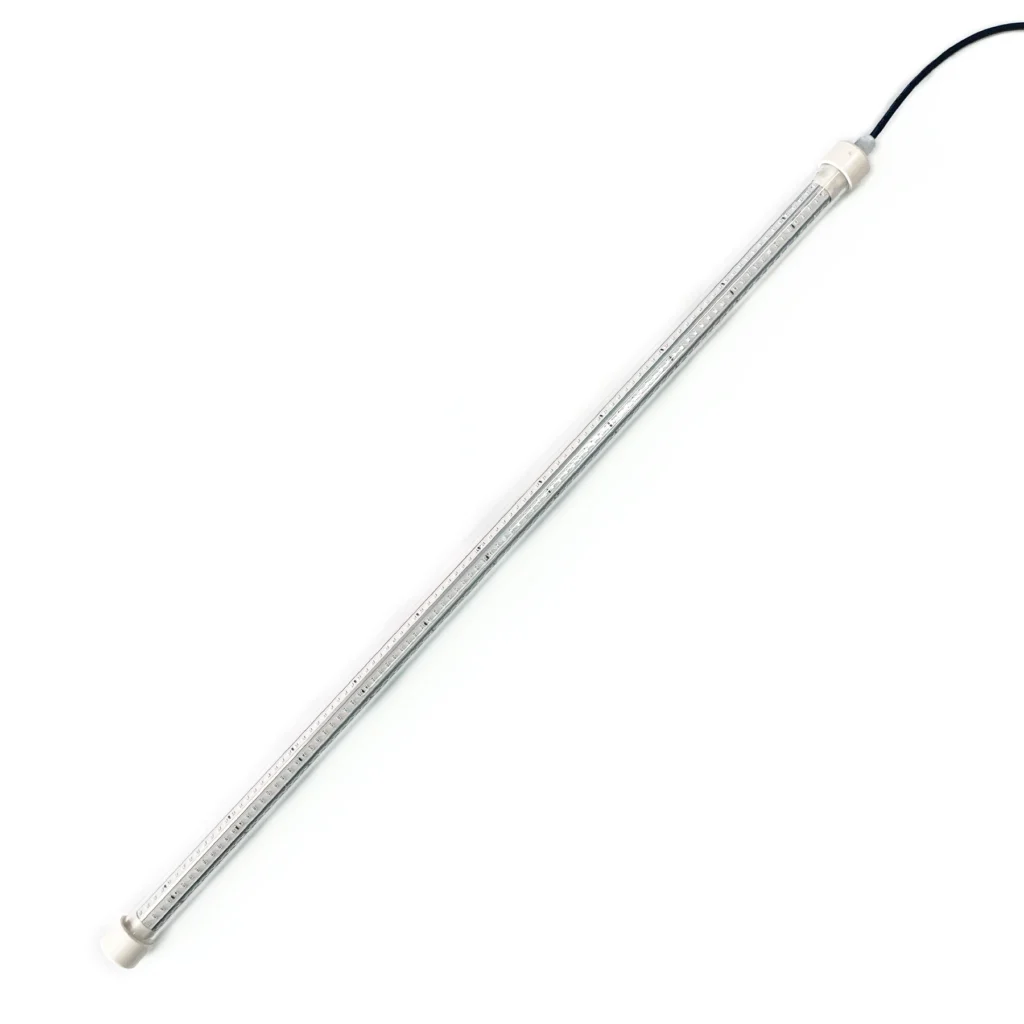
| Concentrating baitfish around a boat, dock or fishing position | Purpose-designed fish light | Maintains a stable field with controlled placement |
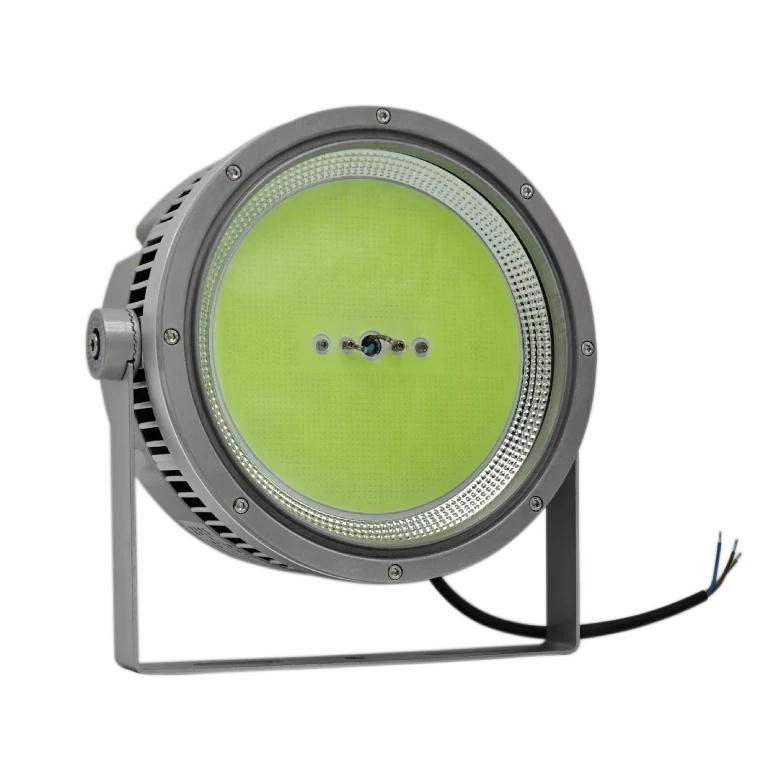
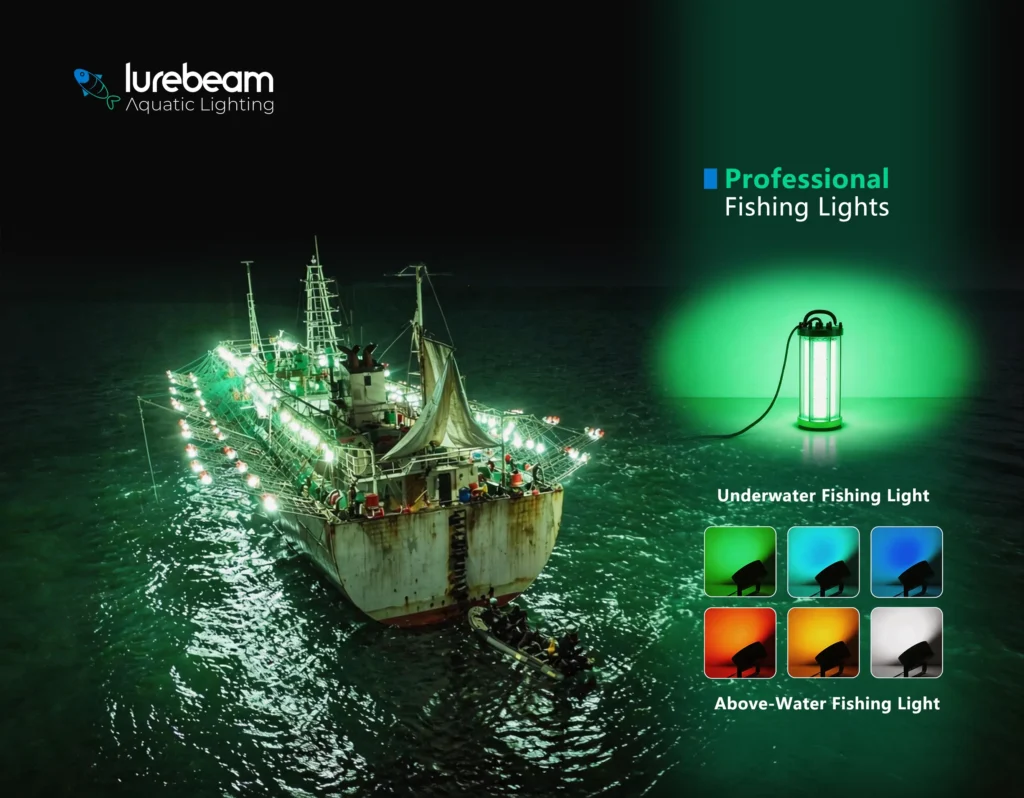
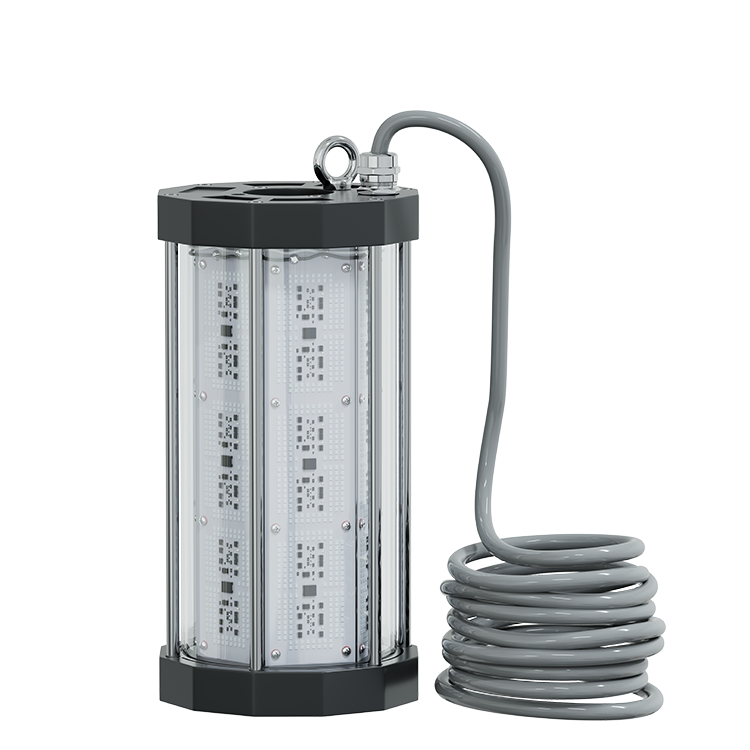
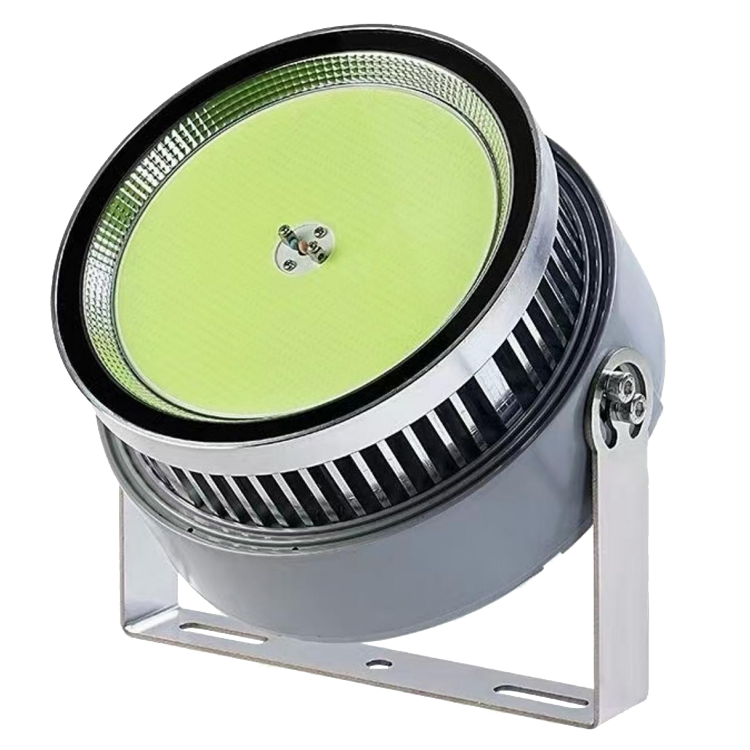
| Large-scale light-assisted fishing from a vessel | Engineered above-water or underwater fishing-light system | Provides sustained coverage designed around the fishing method |
When shopping, do not rely on the phrase “night fishing lamp.” Check whether the specification describes beam distribution, intended deployment, operating time, power supply and water exposure. A high lumen figure does not by itself establish a useful underwater attraction zone.
How to Use Both Lights Without Ruining the Setup
Deploy the fish light first and keep its position and output stable. Route its cable away from casting lines, anchor ropes and propellers. Use the headlamp only when handling equipment or moving around the boat or dock, and aim it away from the attraction zone whenever practical.
Do not repeatedly sweep a bright white beam through a developing bait school. If you must inspect the water, use the lowest useful output and make the observation brief. Red task lighting may help an angler preserve dark adaptation, but do not claim that red is invisible to all fish; spectral sensitivity differs among species.
Keep every non-submersible lamp, battery connection and power supply in the environment for which it was designed. Follow the manufacturer’s instructions and local electrical, navigation and fishing rules. A fish-attraction setup must not obscure required navigation lights or create a cable hazard.
Conclusion
A headlamp or flashlight can occasionally influence insects or fish, but it is not a dependable replacement for a fish light. The problem is not simply lower brightness. It is the narrow, moving and intermittent field, the air-water interface and the difficulty of distinguishing attraction from visibility.
Use task lighting for people and a stable fishing light for fish attraction. If you want to test a flashlight, fix its position and compare it over matched sessions. Count fish entering and remaining in the field—not merely the fish that become visible when the beam passes over them.
Frequently Asked Questions
Will a Green Headlamp Attract Fish Better Than a White Headlamp?
Not reliably. Colour is only one variable. Output, beam angle, movement, duration, water clarity and the target species can matter as much or more. A green headlamp remains a task light unless it is deployed to maintain a suitable attraction field.
Is a Flashlight Pointed Into the Water the Same as an Underwater Fish Light?
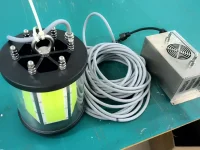
No. The flashlight sends light through a moving air-water boundary and usually creates a narrow spot. A submersible fish light places its source in the water and can distribute light around a larger, more stable zone.
Can a Brighter Flashlight Compensate for Not Using a Fish Light?
Not necessarily. More output can increase glare without creating the required distribution, and some species avoid high intensity. Compare the underwater field and fish response rather than lumen numbers alone.
Can Switching on a Headlamp Scare Fish Away?
It can change the behaviour of some dark-adapted fish, especially when the beam is abrupt, bright or repeatedly swept across them. The response is species- and context-dependent. Use task lighting sparingly around an established attraction zone.
Can an Above-Water Lamp Be a Real Fish Light?
Yes. Purpose-designed surface lamps are used in light-assisted fisheries. Their sustained output, fixed geometry and coverage distinguish them from a handheld or head-mounted task light.
-1-1024x1024.webp)