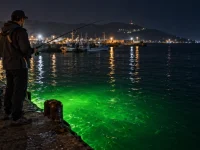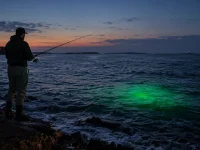
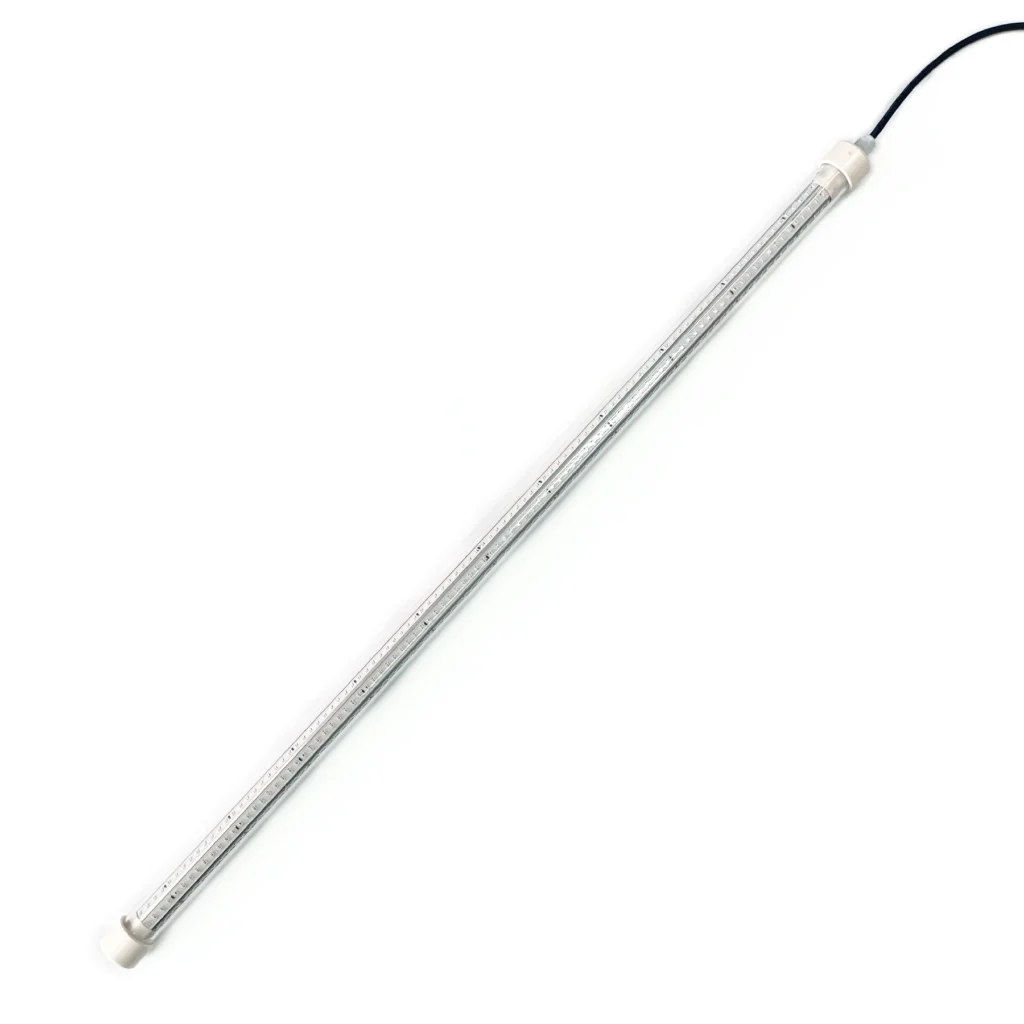
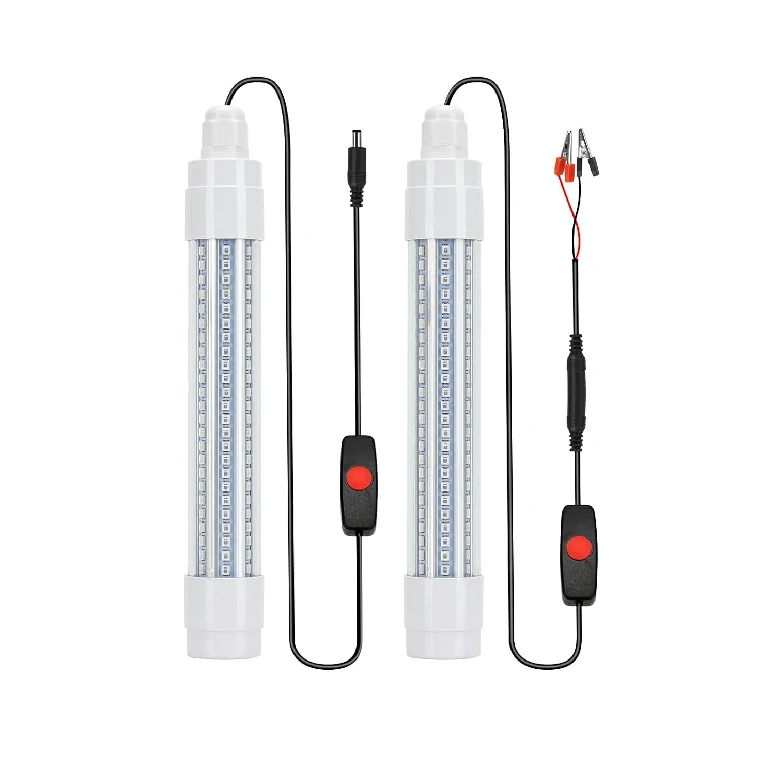
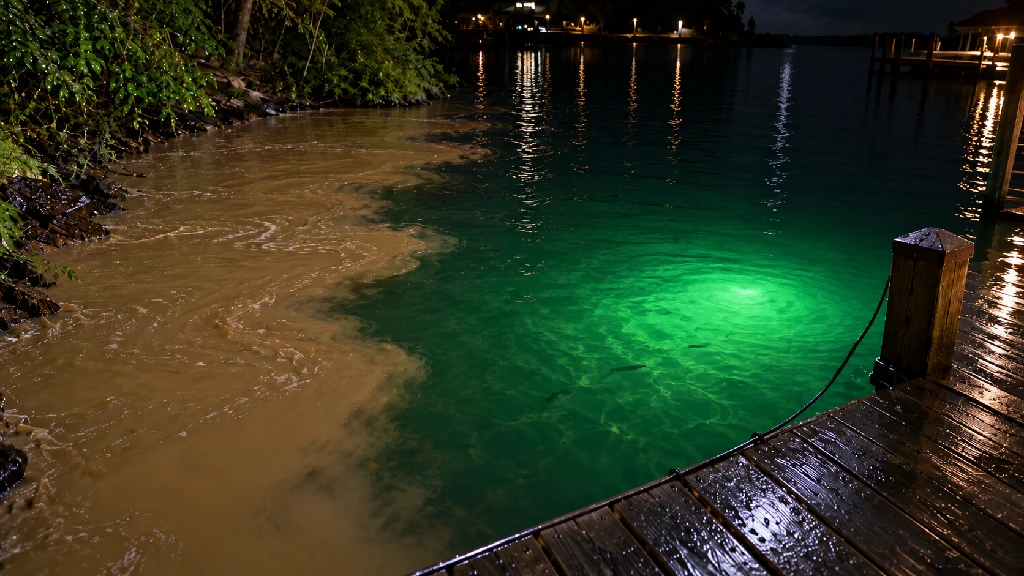
Not necessarily. Keep using the night fishing lamp if it creates a useful light field in the water you can fish. If muddy runoff reduces that field to a small glow around the lamp, move to a safer, clearer position before considering a brighter light. If the water is rising, carrying debris or flowing too strongly for controlled deployment, do not put the lamp in.
What Heavy Rain Changes
Rain does not switch off a night fishing lamp. Suspended sediment and other particles scatter and absorb light, so less light reaches water beyond the immediate glow. The useful measure is not whether you can see the bulb from shore; it is whether the lamp illuminates a stable area that you can actually fish. Water-clarity guidance from the US EPA and NOAA supports this distinction.
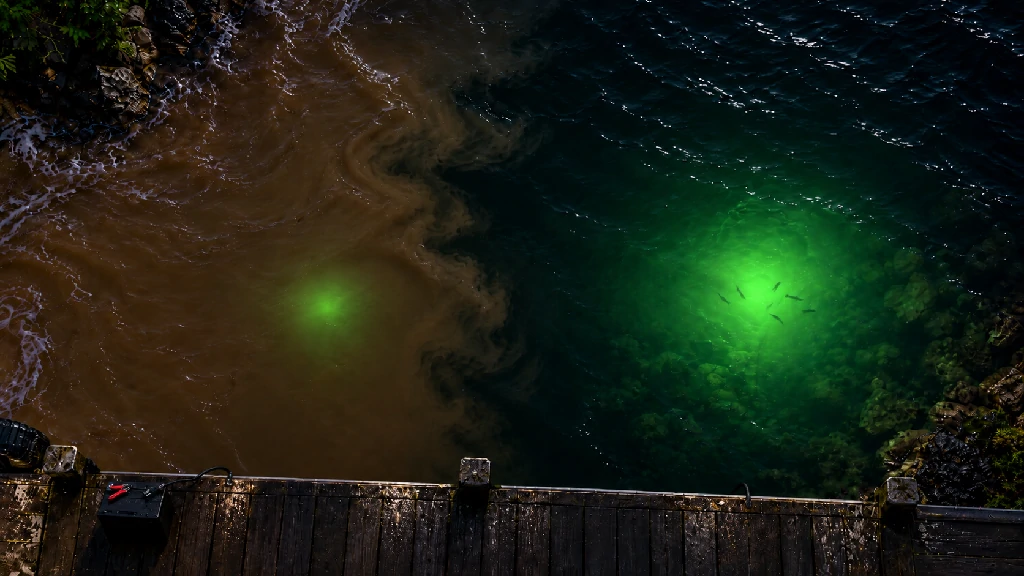
Heavy rain can also change the location of that usable water. Runoff may form a muddy plume while water along a sheltered bank or outside the plume remains clearer. In that case, moving the lamp to the clearer edge is more useful than simply increasing wattage.
Make the Decision at the Water, Not From the Rainfall Total
Start with safety. Do not deploy a lamp into rising water, strong runoff or a debris-filled current. Do not wade into a flooded bank to place or retrieve it. The US National Weather Service warns that floodwater can conceal hazards and that moving water can be dangerous even when it looks shallow.
If the site is safe, compare two spots before committing: the muddy inflow and nearby water outside its plume. Lower the lamp only within its specified depth and power limits. Look for a useful illuminated area where you can present a bait or lure, not just a bright bulb surrounded by brown water. If the light field collapses to a small halo in the inflow but spreads farther in the second spot, fish the clearer position.
Do not drag the lamp along the bottom to “get below” the turbidity. Bottom contact can stir more sediment and expose the cable and housing to snags. Secure the cable, keep the lamp within the manufacturer’s deployment limits, and retrieve it before moving to another position.
Do Not Confuse Brown Water With Muddy Water
Brown colour alone is not proof that a fish light will fail. Dissolved tannins can stain water; suspended sediment reduces clarity by scattering and absorbing light. The US Geological Survey identifies both tannins and sediment as causes of natural water colour. Judge the usable light field at the fishing spot, not the colour of a jar of water or a view from the bank. If the lamp still lights a fishable area, a brown tint by itself is not a reason to abandon the spot.
The Bottom Line
After heavy rain, make the decision in this order: safe access and manageable flow, then a usable illuminated area, then the best position outside any muddy plume. Do not deploy in hazardous runoff. If the lamp produces only a tight glow in turbid water, move to clearer water rather than assuming more power will fix the problem. If the site is safe and the light field remains fishable, the rain alone is no reason to stop using the night fishing lamp.
FAQ
Will a brighter night fishing lamp fix muddy water?
It may brighten the area immediately around the lamp, but it does not remove the particles that absorb and scatter light. Check for a safer, clearer position first. Do not assume twice the wattage produces twice the useful range.
Should I lower the lamp deeper to get below the muddy water?
Not on the assumption that deeper water is clearer. You could place the lamp into suspended silt, bottom mud or debris. Change depth only when you have evidence of a clearer, fishable layer and the model’s instructions permit that depth.
How long after heavy rain should I wait?
There is no reliable universal number of hours. Return when access and water flow are safe and when the lamp can again illuminate a usable fishing area. A sheltered lake may be ready sooner than a creek receiving continuous muddy runoff.
Sources
- US EPA: Water Clarity — why clarity matters for light penetration.
- NOAA: Monitoring Estuaries — turbidity and sediment context.
- USGS: Sediment and Tannin Cause Colour — why brown water is not one single condition.
- US National Weather Service: Outdoor Flooding — floodwater safety.