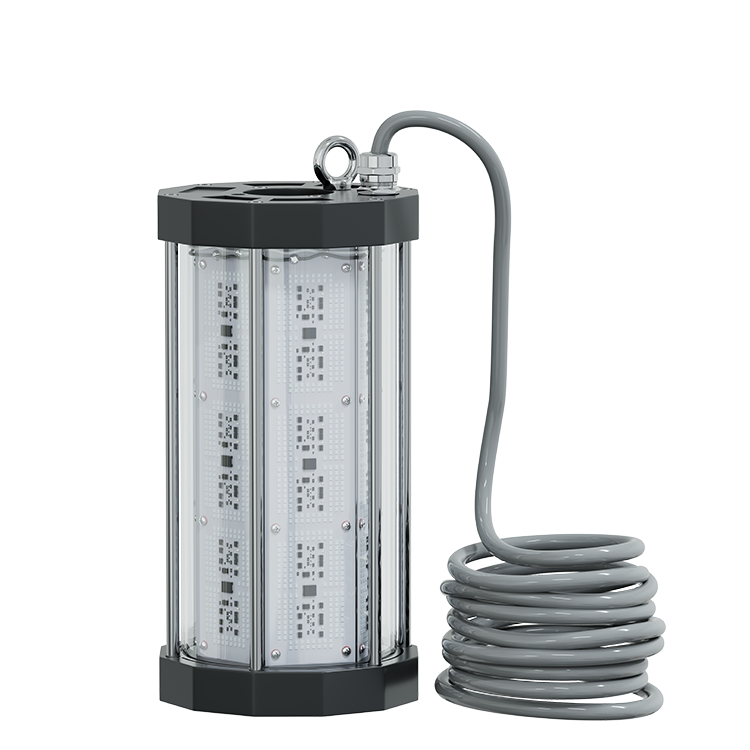
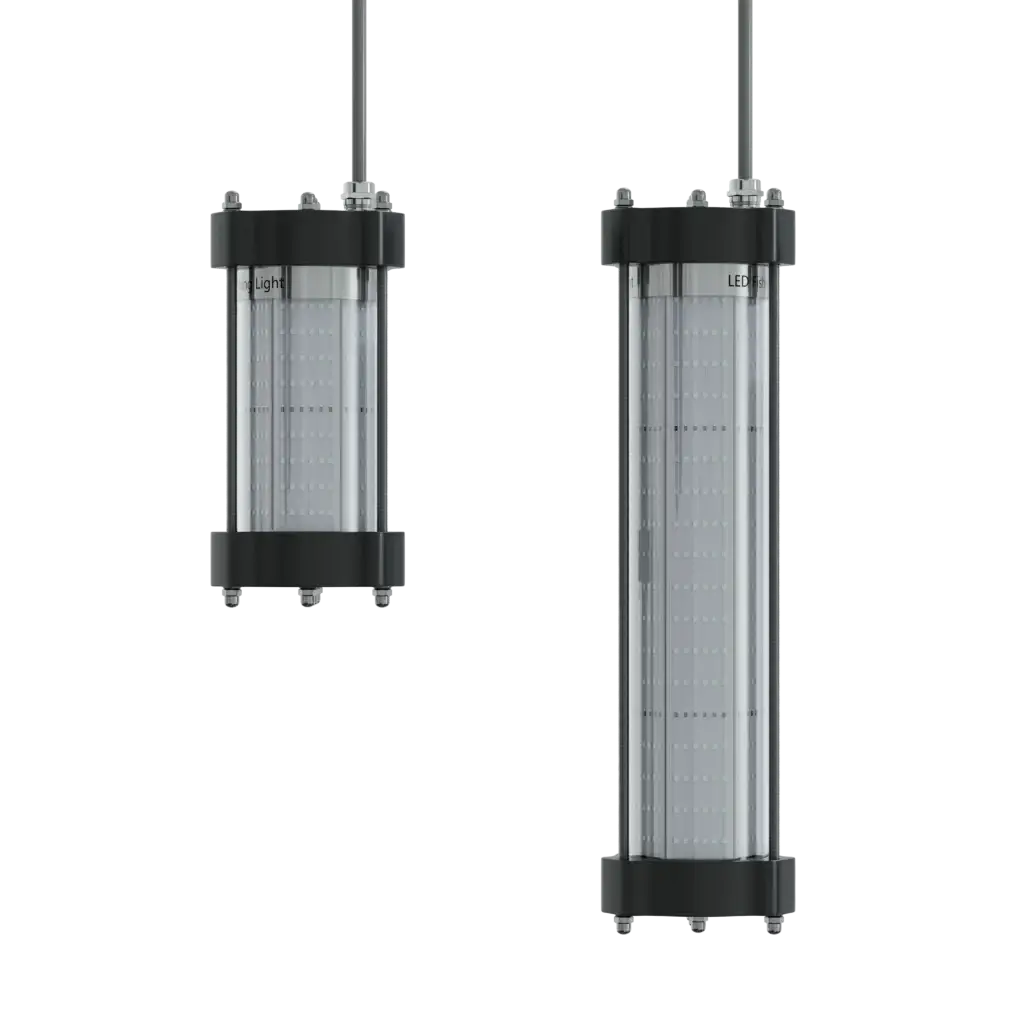
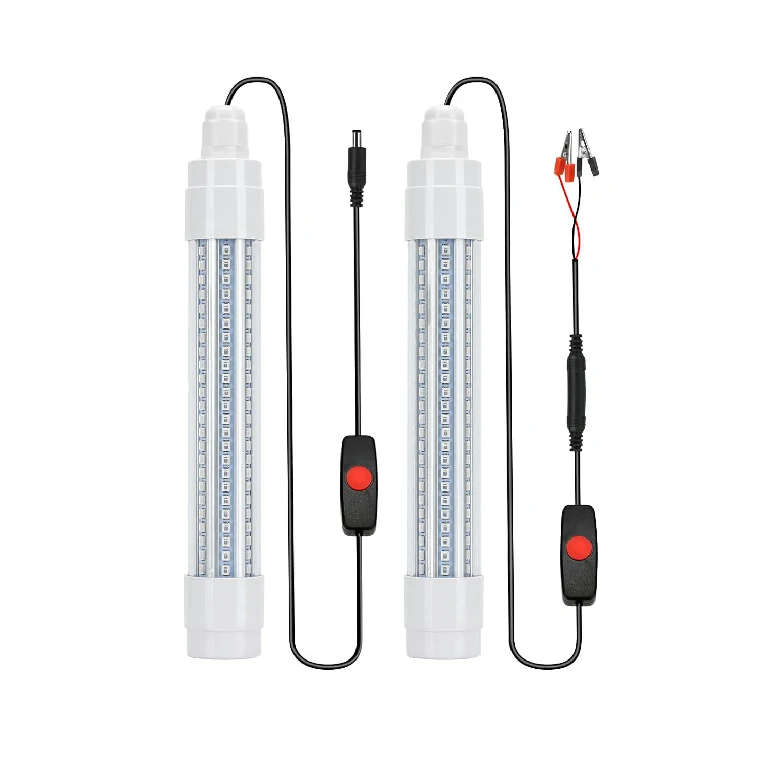
-1024x1024.webp)
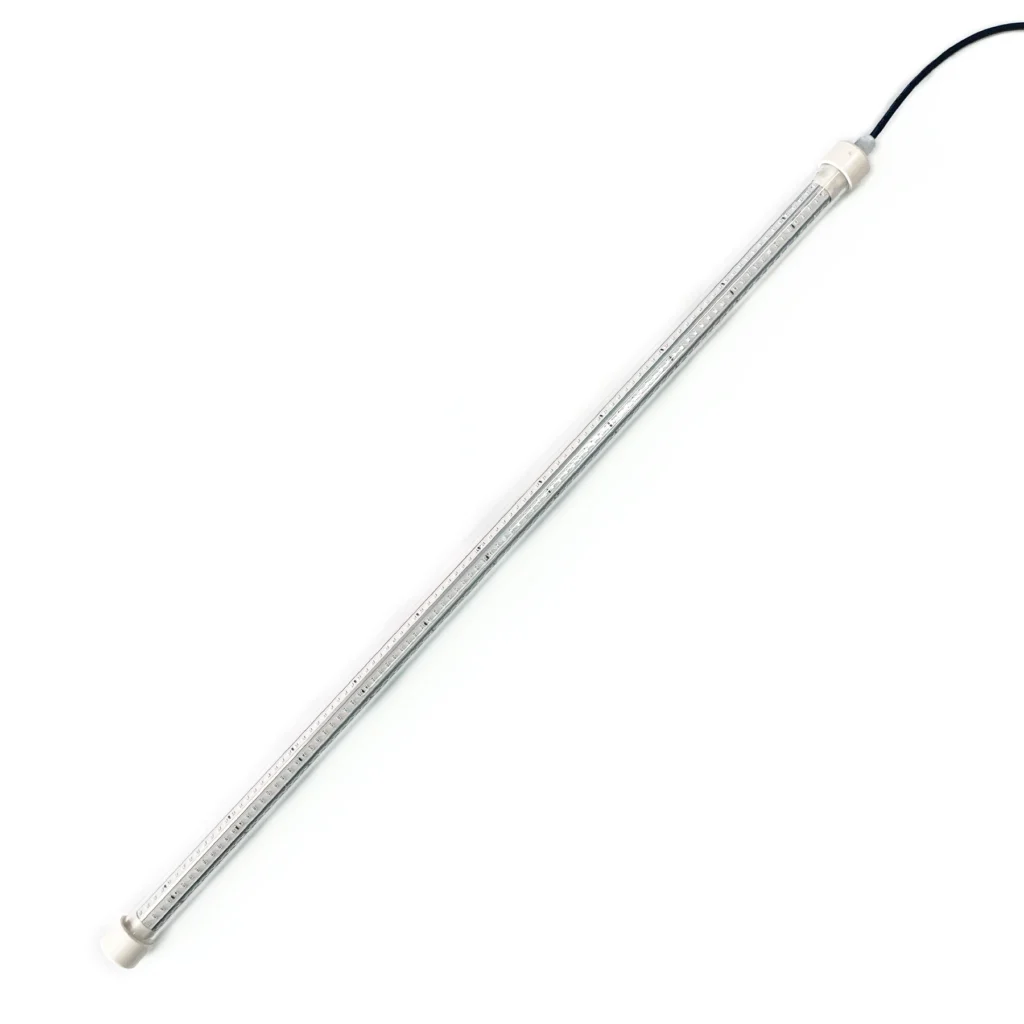
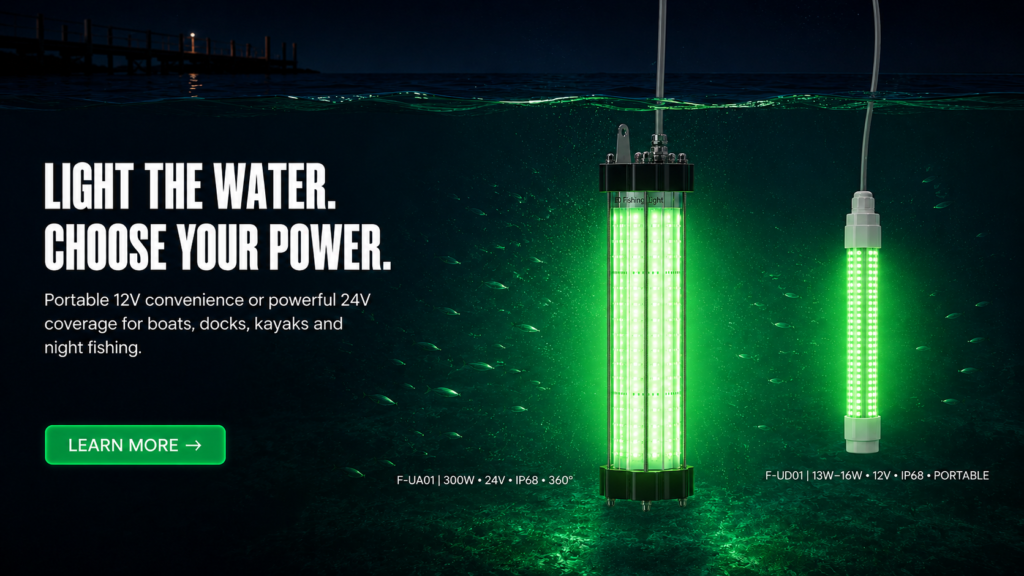
Short answer: do not wait for one magic number. Use a decision window. If the water shows no developing baitfish activity after about 30 minutes, make one controlled correction. Reassess at 45 minutes. By 60 minutes, move if the scene still looks essentially the same as it did before the light was switched on. Stay when the evidence is improving—even if the first clear baitfish school appears late.
The 30-, 45- and 60-minute marks are not biological laws. They are a field protocol for recreational anglers who need to separate a slow-developing aggregation from an unproductive location. The decision should be based on change over time: more small fish, tighter schooling, repeated surface activity, growing sonar density or the arrival of larger marks. A stopwatch without observations cannot tell you whether to stay.
Why There Is No Scientifically Universal Waiting Time
A fishing light changes the local light field; it does not start a fixed countdown that every species follows. Responses vary with the organisms present, their feeding state, water clarity, current, depth, background light and the relationship between the lamp and nearby habitat. Small prey organisms may respond first, baitfish may then exploit the concentration, and predators may arrive later—or not at all.
The FAO’s technical literature on light fishing treats the method as a system involving fish behaviour, environment, vessel operation and gear—not a universal timer. A 2023 study in the Egyptian Journal of Aquatic Research investigated responses under defined light treatments. Neither source supports applying one guaranteed schedule to every waterbody.
That is why “always wait 20 minutes” and “always wait two hours” are both weak rules. The useful question is not how long the light has been on, but whether the biological response is becoming stronger, staying flat or disappearing.
Start the Test Before Switching On the Light
A waiting decision is only meaningful if you know the baseline. Before deployment, spend three to five minutes observing the same area. Record water depth, current direction, wind, nearby structure, moonlight or dock lighting, visible surface activity and the fish-finder screen if one is available. This gives you something concrete to compare with later.
Then place the underwater fishing light at one safe, repeatable depth and keep the boat or dock setup stable. Do not immediately change the lamp depth, brightness, bait, lure, retrieve and boat position together. When several variables change at once, you cannot tell whether the location improved or whether one of your adjustments created the difference.
Use Four Observation Checkpoints
The First 10 Minutes: Stabilise the Test
Use this period to confirm that the light, cable and boat position are stable and safe. Deployment noise, propeller wash and a swinging cable can temporarily disturb the area or make observations inconsistent. Do not make a stay-or-move decision from the first few minutes unless safety, weather or vessel traffic requires it.
Look for early signals, not a finished school: tiny surface dimples that begin repeating, scattered small sonar marks, organisms appearing in the light field or baitfish passing through more than once. One splash or one isolated mark is not a trend.
From 10 to 30 Minutes: Look for Direction
Compare successive five-minute windows. Are small marks becoming more numerous? Are they holding longer instead of crossing once? Is surface activity spreading, concentrating or moving down-current? The first useful sign is often increasing residence time, not an instant dense ball of bait.
Keep waiting when at least two observations point in the same direction—for example, repeated surface flickers plus increasing sonar density. Continue to watch the water beside and below the visible glow. The surface circle is not the entire underwater light field, and current can stretch the developing aggregation away from the lamp.
From 30 to 45 Minutes: Make One Controlled Correction
If activity is clearly building, do not interrupt the test. If the scene is unchanged from the baseline, make one correction that tests the location rather than changing everything. Depending on the site, this might mean adjusting the light to a different safe depth, shifting the presentation down-current, or repositioning the boat a short distance so the light field overlaps a depth change or current break.
Change only one variable and give the corrected setup another 10 to 15 minutes. Follow the product instructions and local boating rules when handling a submerged electrical device or moving an anchored vessel. If conditions do not permit a controlled adjustment, skip it and move safely rather than improvising.
From 45 to 60 Minutes: Stay or Move
Stay when the response is still developing: baitfish numbers or residence time are increasing, a school has begun to hold in one layer, larger marks are appearing around it, or repeated surface activity is becoming more organised. A late response that is gaining strength is more informative than the clock.
Move when both the original setup and one controlled correction remain close to the pre-light baseline. Other reasons to move include baitfish repeatedly passing without holding, current sweeping the entire response beyond the fishable area, or the absence of any developing activity on both the surface and sonar.
Do not relocate randomly. Choose the next position for a reason: a nearby depth contour, current seam, dock edge, channel margin, weed line or other habitat feature appropriate to the target species. On arrival, take a new baseline and repeat the same checkpoints. This turns two locations into a useful comparison instead of two unrelated guesses.
What Different Responses Actually Mean
- No change from baseline: the location, timing or local abundance may be poor. More waiting is not automatically better.
- Brief passes that never hold: fish may be travelling through, or current may be carrying prey beyond the usable light field. Test position before blaming light intensity.
- Baitfish steadily building but no predators visible: the attraction process is developing, but target fish may be absent, deeper or slow to respond. Staying is reasonable while the trend remains positive.
- A stable bait school with larger fish present but no strikes: the location has already produced an aggregation. Moving may discard useful progress; first test fishing depth and presentation. See Fish Around the Light but Not Biting? for a separate diagnostic process.
- A sudden collapse of the bait school: it can indicate predator pressure, a current shift or the school leaving the area. It does not by itself prove that the light failed.
Hydroacoustic research has documented that fish aggregation around a light can change through time rather than appearing as one instantaneous event. One example is published in the Indonesian Journal of Marine Sciences. Such studies support observing a trajectory, but their site-specific results should not be copied as a guaranteed timetable for another species or waterbody.
Keep a Simple Attraction Log
A short log can replace guesswork with evidence from your own fishing area. For each deployment, record:
- location, date and start time;
- water depth, light depth and current direction;
- surface and sonar baseline before the light;
- observations at 10, 30, 45 and 60 minutes;
- the single correction made, if any; and
- whether you stayed, moved and later caught fish.
After several trips, calculate the earliest time when a repeatable baitfish trend appeared—not just when the first fish was noticed. Your own distribution of successful and unsuccessful waiting times, tied to season and location, is more useful than a universal number borrowed from someone fishing a different ecosystem.
Conclusion
Use 30 minutes as the first decision point, 45 minutes as the controlled-correction check and 60 minutes as the practical move point when nothing has improved. These are observation checkpoints, not promises. Stay with a clearly strengthening response; move when the water remains comparable to baseline after one fair test. The trend decides—not the timer alone.
Frequently Asked Questions
Is 30 minutes long enough for an underwater fishing light?
It is long enough for a first assessment, not always a final decision. If activity is increasing at 30 minutes, keep the setup stable. If nothing has changed, make one controlled correction and reassess rather than moving immediately.
Should a recreational angler wait two to four hours?
Only when there is evidence worth waiting for or when the location has another strong reason to hold fish. Several hours without a developing response can consume the entire session. A positive trend justifies patience; an unchanged baseline does not.
What if I do not have a fish finder?
Use repeatable surface observations: small flashes, dimples, baitfish jumps, circling movement and activity down-current of the light. Watch the same area for fixed intervals and distinguish repeated behaviour from isolated splashes.
Should I move if baitfish first appear after 50 minutes?
Not automatically. If their number or residence time is increasing, the location is finally developing and deserves more observation. Move when the response is flat or disappearing, not merely because a preset time has elapsed.