No. A portable fish lamp should be retrieved after every fishing trip. Turning the light off does not make it suitable for unattended, long-term submersion. Between trips, the lamp and its cable remain exposed to abrasion, debris, fouling, changing water levels, boat traffic and unnoticed damage. Leave a fish light underwater only when the complete system—not just the lamp housing—is specifically designed and installed for permanent underwater service.
“Waterproof” Does Not Mean “Leave It There Indefinitely”
A portable underwater fishing light must survive immersion while it is operating. That does not automatically make it a permanent underwater installation. Long-term deployment adds stresses that a normal fishing session does not: the cable can rub against a dock edge, piling, rock or anchor chain; moving debris can snag it; water level changes can pull the cable tight; and marine growth can cover the lens and add load to the cable.
This distinction matters because the weakest part of a submerged setup is often not the sealed lamp body. It may be the cable entry, an inline connector, the shore-side power supply, the attachment point or a section of cable damaged by repeated movement. A rating or product label for the lamp enclosure does not certify every component in a complete unattended installation.
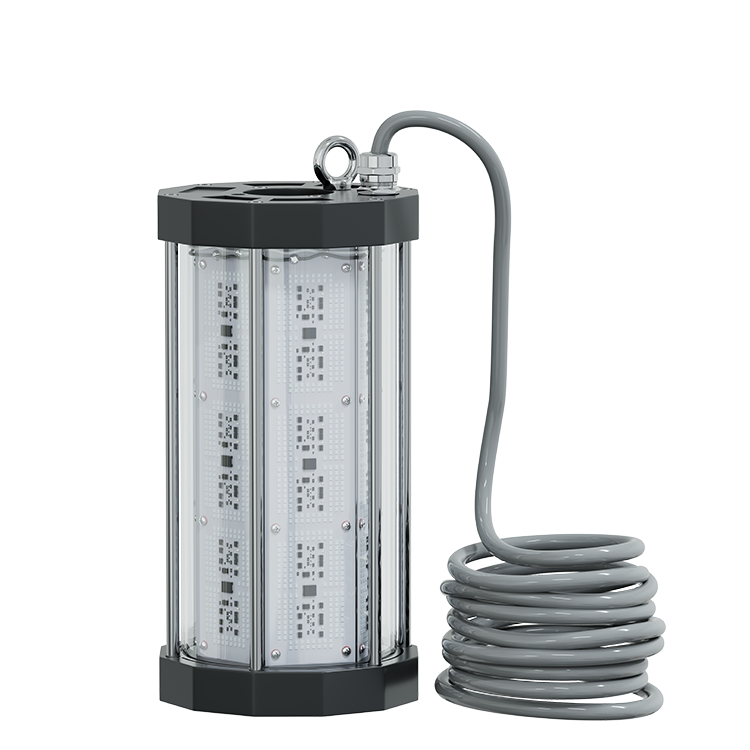
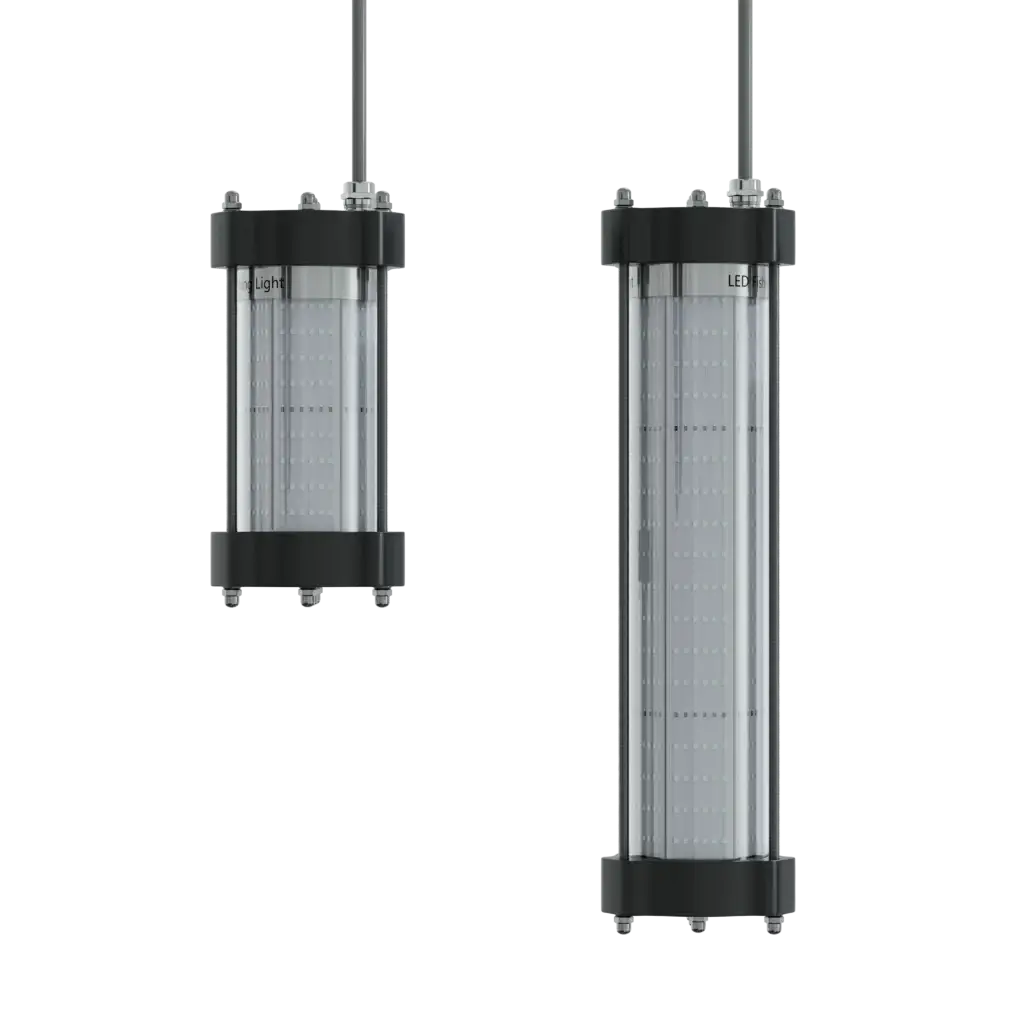
Lurebeam describes its 12V underwater fishing light as portable and specifically notes that it can be retrieved and stored after fishing. The 24V underwater green fishing light is also presented as a portable fishing light. Neither product page authorizes unattended storage underwater between trips, so the correct operating assumption is retrieval after use.
Why Leaving a Portable Fish Lamp Underwater Creates Avoidable Problems
1. Cable damage can develop while nobody is watching
A cable that looks secure in calm water can move for hours as wind, current and wakes change direction. Repeated rubbing at one point can damage the outer jacket. A cable stretched across a slip can also become a hazard for propellers, fishing lines, mooring ropes and people working around the dock.
Before leaving the area, remove the lamp and route the cable out of the water. Do not use the electrical cable as a permanent mooring line, and do not suspend the lamp from a connector or plug. Lift it only by the manufacturer-approved support or retrieval point.
2. Biofouling reduces useful light output
Algae, microorganisms and small marine organisms begin colonising wet surfaces quickly. The Australian Institute of Marine Science identifies biofouling as a persistent problem for marine instruments because growth can interfere with exposed surfaces. A film on the lens scatters and absorbs light, changing the useful light field that attracts plankton and baitfish.
This is not only a saltwater issue. Freshwater slime and mineral deposits can also reduce output. Retrieving the lamp after each session lets you rinse the lens before deposits harden and inspect it under good light instead of discovering the problem during the next night-fishing trip.
3. Debris and changing water levels can reposition the light
A submerged fish lamp left beside a dock does not stay in the same operating geometry automatically. Falling water can place it on mud, rock or vegetation. Rising water can pull on a cable fixed too tightly above the surface. Floating weeds, leaves, fishing line and plastic can collect around the housing or cable.
The result is not merely cosmetic. A lamp lying against the bottom may direct most of its light into sediment, while a lamp lifted close to the surface can create glare and a smaller useful underwater zone. Retrieval prevents an unattended setup from becoming badly positioned before the next trip.
4. Unattended electrical equipment removes your chance to respond
During a fishing session, you can switch off the system if a cable is damaged, a connector becomes wet or the lamp shifts into an unsafe position. Between trips, there is no operator to notice those changes. Disconnecting the battery or power supply removes electrical energy, but it does not stop chafe, corrosion, fouling or physical damage.
Electrical equipment around docks and water must follow the manufacturer’s instructions and applicable local rules. The U.S. Coast Guard warns that electrical faults around water can expose swimmers and boat users to serious shock hazards. Rules differ across the United States, Australia and Europe, so permanent dock wiring should be designed and checked by a qualified marine electrician familiar with the local requirements.
Portable Use and Permanent Installation Are Different Systems
A portable fish lamp is deployed for a supervised fishing session, powered through its intended low-voltage supply, retrieved when fishing ends, inspected and stored dry. A permanent underwater fish-light installation is engineered to remain in place. It needs a fixed mounting method, protected cable routing, suitable underwater connections, overcurrent and leakage protection where required, and a maintenance plan.
Use this five-point test before treating any fish light as permanent:
- Explicit authorization: the manufacturer states that the complete model may remain continuously submerged and unattended.
- Complete-system coverage: the cable, splices, connectors, power supply and controls are specified for their actual locations—not only the lamp housing.
- Mechanical support: the lamp has a fixed mount or dedicated support that prevents movement and does not place tension on the electrical cable.
- Protected routing: the cable cannot contact propellers, fishing lines, sharp edges, mooring hardware or public access areas.
- Compliant installation: the circuit and protective devices meet the rules that apply at that dock, marina or waterfront property.
If one of these conditions is missing, treat the unit as portable and retrieve it after every use.
What to Do at the End of Each Fishing Trip
A consistent retrieval routine takes only a few minutes and makes faults easier to find before the next trip.
- Clear the fishing area. Reel in lines and confirm that the lamp cable is free of anchor ropes, dock hardware and the propeller.
- Switch off and isolate power. Follow the product instructions before handling the lamp or connectors.
- Lift from the correct point. Use the designated retrieval line, handle or support. Never pull a heavy or snagged lamp by its power cable.
- Inspect the full cable. Look for flattened sections, cuts, swelling, exposed conductors, loose strain relief and corrosion at connectors.
- Clean the lens. Rinse away salt, mud and organic matter with fresh water. Use only cleaning methods compatible with the housing and lens.
- Dry and store without tight bends. Coil the cable loosely, protect the connector and keep the lamp away from fuel, heat and heavy objects.
After saltwater use, follow a more deliberate cleaning routine; see Lurebeam’s underwater fishing light maintenance guide. Agriculture Victoria also recommends cleaning marine equipment to manage biofouling and reduce the transfer of marine organisms between locations.
When Should You Stop Using the Lamp?
Do not redeploy a portable fish lamp if the cable jacket is cut, the conductor is visible, the strain relief has separated, a connector is cracked, water appears inside the housing, the lens is loose, or the unit behaves intermittently. Drying the outside does not repair internal water ingress or damaged insulation.
Disconnect the system and follow the manufacturer’s service instructions. Repairs to sealed housings, underwater connections or mains-powered supplies should be handled by the manufacturer or a qualified technician. Do not wrap damaged cable with ordinary household tape and return it to the water.
Bottom Line
Retrieve a portable fish lamp after every fishing trip. This protects the cable, keeps the lens clean, prevents the unit from being moved by water or debris, and gives you a chance to find damage before the next deployment. Continuous submersion is appropriate only when the manufacturer approves the complete system for permanent use and the installation has been engineered for that location.
Frequently Asked Questions
Can I leave a portable underwater fishing light in the water overnight?
You can operate it through a supervised overnight fishing session if that use matches the product instructions. Retrieve it when the session ends. “Overnight operation” and “unattended storage between trips” are not the same use.
Is it safe to leave the lamp submerged if the battery is disconnected?
Disconnecting the battery removes power, but the lamp is still exposed to cable chafe, fouling, debris, corrosion and movement. Retrieve it unless the complete system is approved for permanent installation.
Does freshwater allow a portable fish light to stay submerged longer?
Freshwater generally causes less salt deposition, but it does not eliminate fouling, abrasion, snagging or water-level changes. The retrieval rule remains the same for a portable fish light.
How often should a permanent dock fish light be inspected?
Follow the manufacturer’s maintenance schedule and local electrical requirements. Inspect sooner after storms, flooding, impact, abnormal operation or any event that may have moved the light or damaged its cable.

-1-1024x1024.webp)