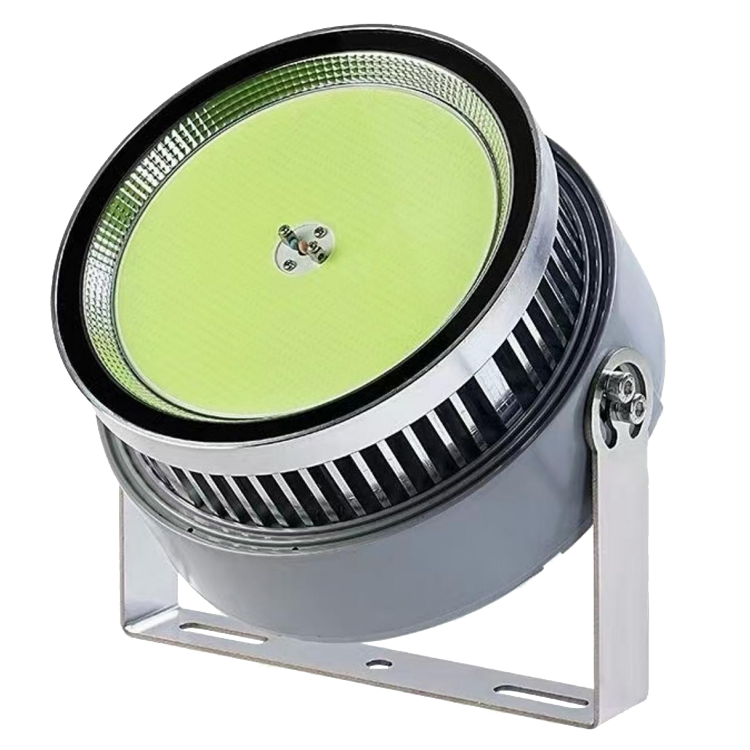
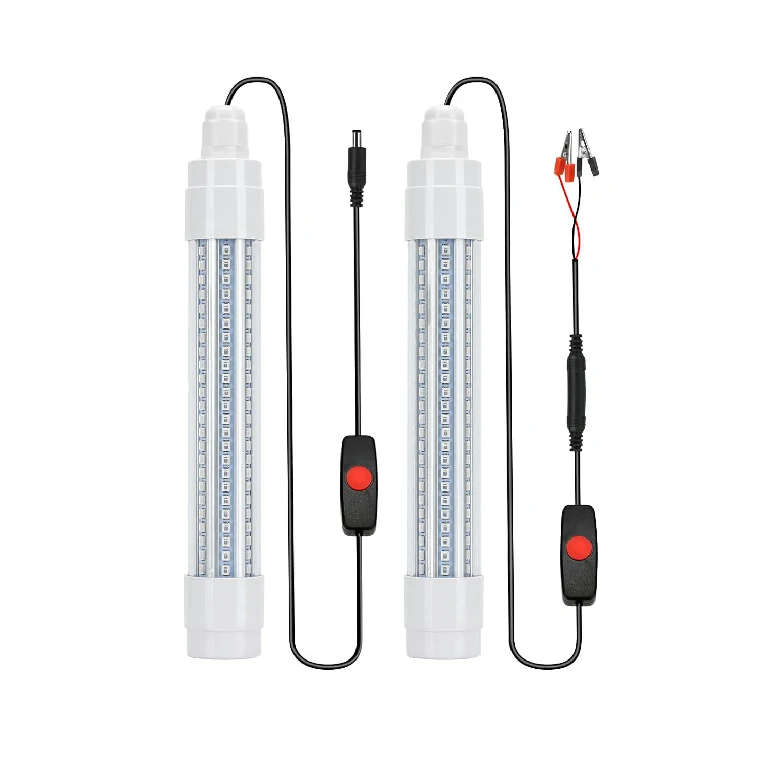
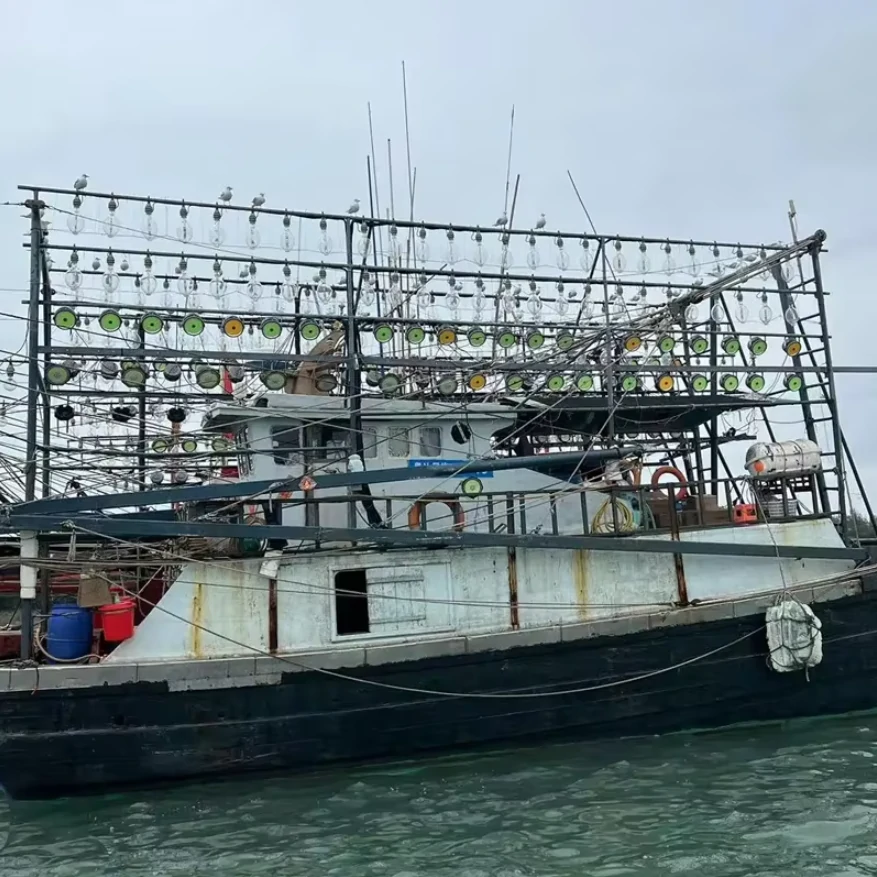
A practical squid fishing light layout starts with the vessel and fishing method—not with a target number of lamps. Map the working side, hauling zone, obstructions, generator capacity and required navigation lights first. Then choose fixture output, beam distribution, mounting height and aim so the combined light field supports the fishing operation without creating avoidable dark gaps, glare or electrical overload. The final design should be treated as a testable starting configuration, because water clarity, sea state, target species and vessel geometry all affect results.
1.Define the Operating Objective Before Selecting Lights
Write down what the light system must achieve during one complete fishing cycle. Identify where squid should be concentrated relative to the jigging lines or hauling point, which side of the vessel must remain workable, and whether the boat changes its lighting pattern during attraction and capture. Record the usual fishing depth, water conditions, trip duration and available setup time. This short operating brief prevents a common purchasing error: comparing lamps only by wattage while ignoring where their light needs to reach.
2.Turn the Vessel into a Scaled Layout Map
Create plan and side views of the deck. Mark the jigging or hauling stations, gunwales, masts, booms, antennas, exhaust outlets, wheelhouse windows, navigation lights and every proposed mounting point. Add mounting height, distance between points and the intended downward and outward angles. Also mark places where crew need an unobstructed line of sight.
Do not assume symmetrical mounting produces symmetrical water coverage. A wheelhouse, boom or high gunwale can block part of a beam. Before installation, check each proposed line of aim from the fixture position and identify surfaces that may reflect light into the bridge or working stations. The layout drawing should show coverage zones and overlap, not merely rows of lamp symbols.
3.Match the Fixture to the Geometry and Electrical System
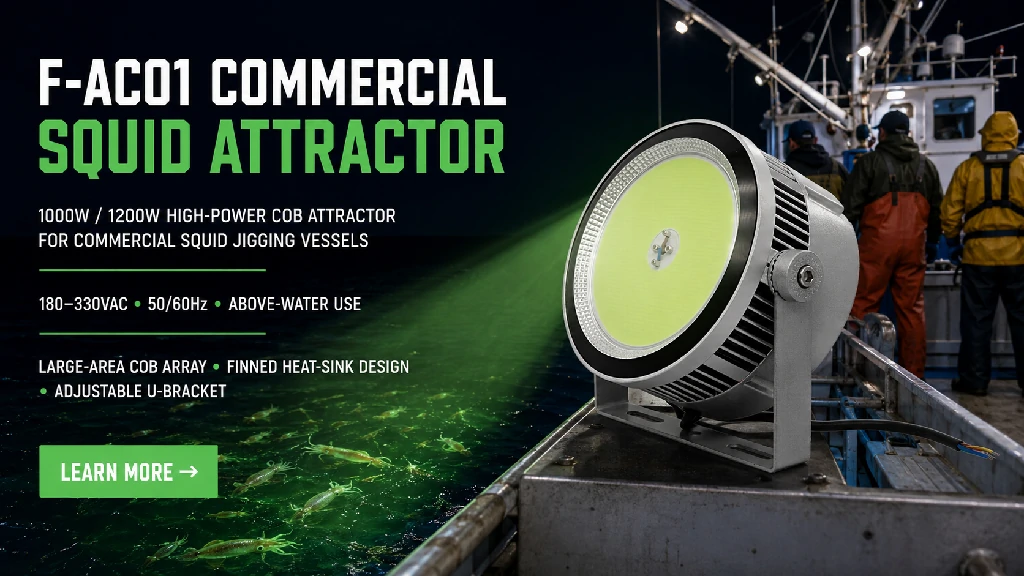
Only compare fixtures after the mounting geometry is known. Useful specifications include actual input range, rated power, beam or optical distribution, colour options, enclosure rating, dimensions, weight and mounting method. Ask the supplier for the current datasheet, photometric information and installation instructions; a wattage figure alone cannot describe the light pattern on the sea surface.
For example, Lurebeam lists its F-AC01 squid lights for boats as above-water, bracket-mounted COB LED fixtures in 1000 W and 1200 W versions, with an AC 180–330 V, 50–60 Hz input and an IP65 enclosure rating. Those values help define a shortlist, but the vessel’s supply, mounting structure and required coverage still need engineering review. IP65 is an enclosure rating for this above-water product; it does not make the fixture submersible.
4.Design a Light Field, Not a Wattage Total
The layout goal is a controlled, usable light field around the fishing zone. Check how adjacent beams overlap, where shadows form, how much light escapes beyond the working side and whether reflected glare reaches crew. More connected watts do not automatically produce better coverage.
A 2025 Fisheries Research study modelled the three-dimensional light field of one squid-fishing vessel and showed that mounting height, spacing, inclination, vessel geometry and fixture photometrics interact. Its numerical optimum applied to the tested boat and lamps, so it should not be copied as a universal spacing rule. An earlier Sea of Japan vessel trial likewise found materially different distributions for LED and metal-halide systems. Together, these studies support a practical rule: evaluate the combined distribution on your boat instead of ranking systems by lamp count or nameplate power alone.
5.Complete the Electrical and Structural Checks
Calculate connected load as the rated input power of each fixture multiplied by its quantity, then add every load that may operate at the same time. Do not estimate AC current from watts and nominal voltage alone when power factor, driver efficiency and starting behaviour are unknown. Obtain verified current data from the current manufacturer documentation.
A qualified marine electrician or engineer should confirm generator continuous capacity, distribution-board capacity, protection, conductor sizing, voltage drop, isolation, earthing or bonding, connectors and shutdown arrangements under the applicable vessel rules. The mounting structure must also withstand fixture weight, vibration and vessel motion while maintaining the manufacturer’s required cooling clearances. Route cables away from chafe, heat and moving gear, and keep electrical connections out of direct spray where the installation instructions require it.
6.Protect Navigation Lights, Lookout and Crew Vision
Fishing lights must not obscure required navigation lights or make it harder to identify them. They should also be positioned and shielded so that glare does not impair the bridge watch or deck crew. In the United States, 33 CFR 83.20 restricts other lights that could be mistaken for required lights, impair their visibility or interfere with a proper lookout. Australia implements collision-prevention requirements through Marine Order 30; the United Kingdom’s COLREG implementation contains the same core principle. These examples are not a substitute for the rules applying to the vessel’s flag, operating area, port and fishery.
7.Commission the Layout with a Controlled Sea Trial
Record the initial configuration before the first trial: active fixtures, mounting positions, aim angles, operating sequence and generator load. During each trial, log voltage, load, abnormal temperature or vibration, weather, sea state, moon conditions, water clarity, fishing depth, operating time and catch per unit effort. Use the vessel’s normal catch measure consistently.
Change one major variable at a time—such as aim, active lamp group or operating sequence—so the result remains interpretable. Repeat promising configurations across several comparable trips before treating them as an improvement. A single strong or weak night may reflect squid availability, current or weather rather than the lighting change. Keep the final layout drawing, electrical schedule and tested settings together so the crew can reproduce the configuration and technicians can troubleshoot it later.
Conclusion
A defensible squid fishing light layout connects four things: the fishing objective, vessel geometry, verified fixture data and available electrical capacity. It also protects required lights and human vision. Build the first design on paper, have the structural and electrical work reviewed by qualified professionals, and improve the system through documented trials. That process produces a layout the crew can operate, evaluate and maintain—not merely a larger collection of lamps.
Frequently Asked Questions
How many squid fishing lights does a commercial boat need?
There is no reliable universal number. Quantity depends on the vessel’s working length, mounting positions, fixture distribution, desired coverage and electrical capacity. Start with a scaled coverage plan and supplier photometric data, check the resulting load, and validate the proposed number during commissioning.
Is a higher total wattage always better for squid fishing?
No. Total wattage describes electrical input, not where the light reaches or whether glare and shadows reduce the usable field. Beam distribution, aiming, mounting geometry and water conditions all matter. Additional power also increases demand on generation and distribution equipment.
Can an IP65 above-water squid light be submerged?
No. An IP65 rating does not classify a fixture for continuous submersion. Install an above-water product only in the orientation and location allowed by its current instructions, and confirm spray exposure, connectors and cable entries with the supplier before installation.
Which light colour should a squid boat choose?
Do not assume one colour is universally best. Species, water clarity, operating depth, fixture spectrum and fishing method can change the outcome. Shortlist colours supported by local operating experience and product data, then compare them with controlled trials while keeping the other major variables stable.

-1024x1024.webp)
-1-1024x1024.webp)