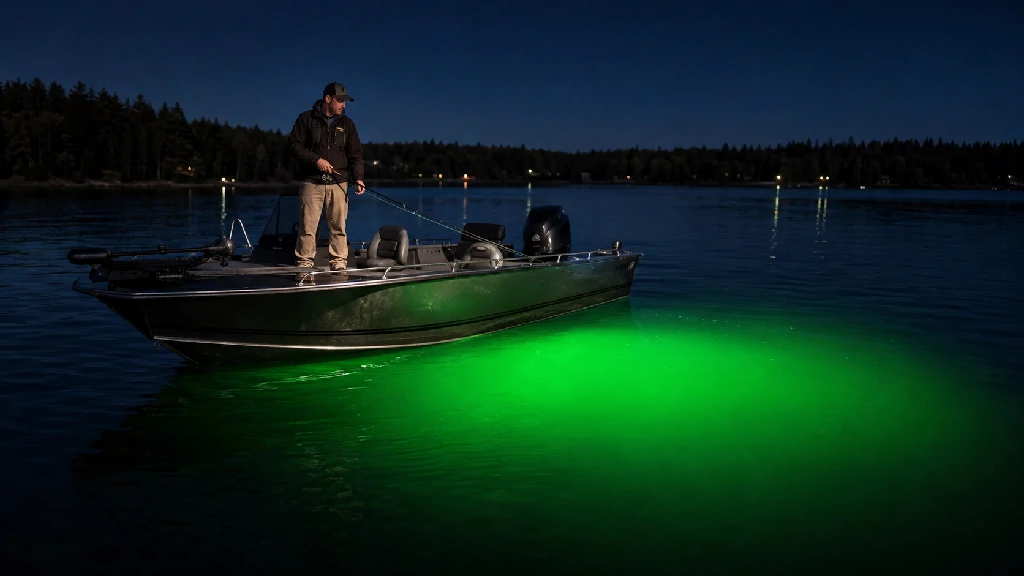
Choosing between a 12V and a 24V underwater fishing light is not simply a question of which voltage is “better.” The practical choice depends on three things: the attraction zone you want to create, the power source already available, and the current your wiring can safely carry. A compact 12V light can be the sensible option for a kayak, dock, or small boat. A high-output 24V system may suit a larger attraction zone, but it demands substantially more battery energy and a properly designed circuit.
This guide gives you a repeatable way to compare the two. It uses real Lurebeam product specifications as examples, but the calculations work with any light when you know its rated voltage and wattage.
Start with the Fishing Job, Not the Voltage Label
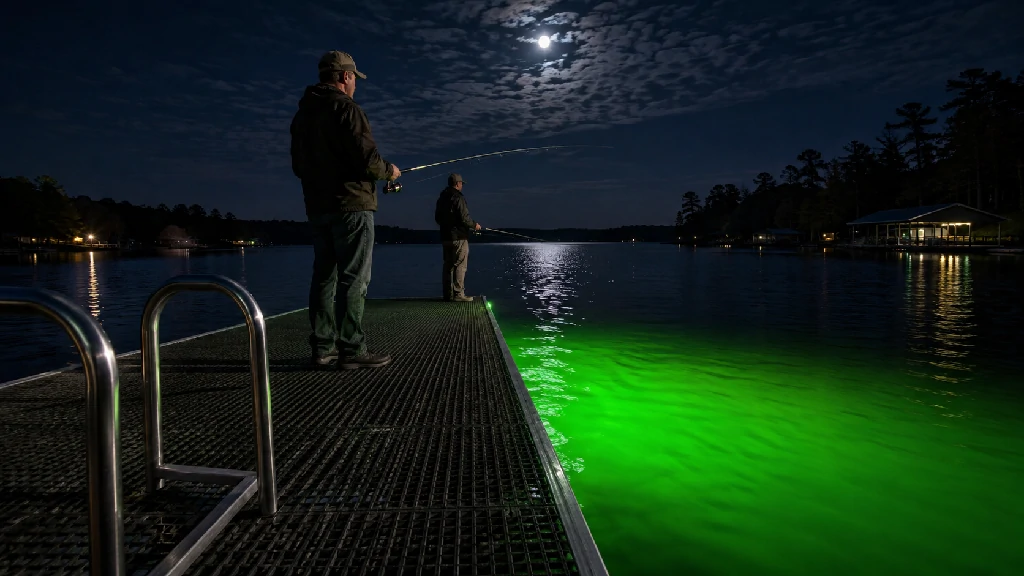
First define how you will fish. If you carry the light to a pier, launch from a kayak, or fish for a few hours from a small boat, portability and low energy use may matter more than maximum output. If you need to establish a broader attraction zone beside a larger boat or in deeper water, you may accept a heavier battery bank and higher current in exchange for more output.
Light-assisted fishing works by changing how organisms distribute around a light field; the response can involve plankton, bait organisms, and target species. An ICAR-Central Marine Fisheries Research Institute policy brief documents the long use of light in fishing and the shift from flame and conventional electric lamps to LEDs. That history supports the method, but it does not guarantee the same catch result in every water body. Water clarity, depth, current, season, background light, and fish activity still affect the outcome.
Compare the Actual Load, Not Voltage Alone
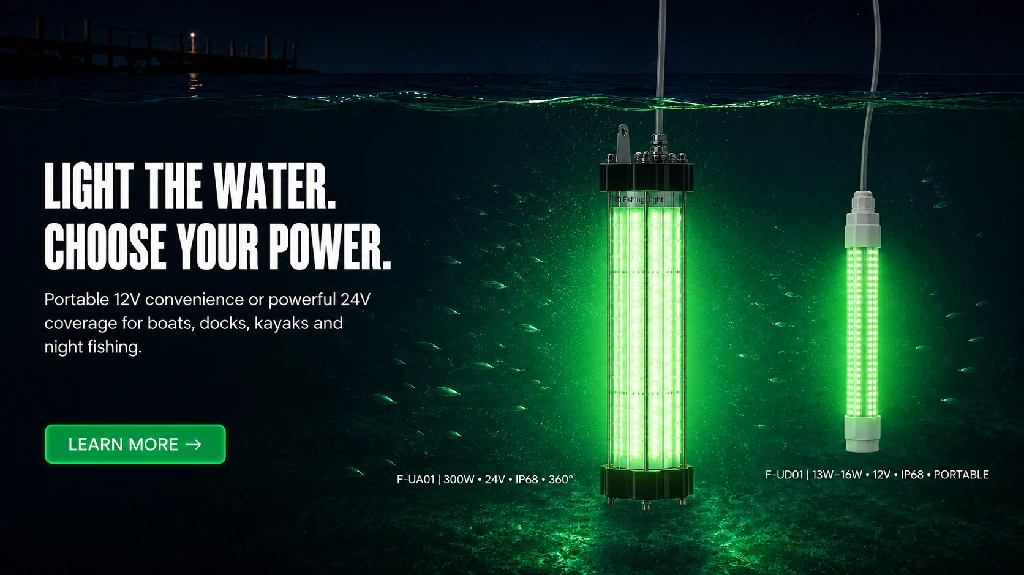
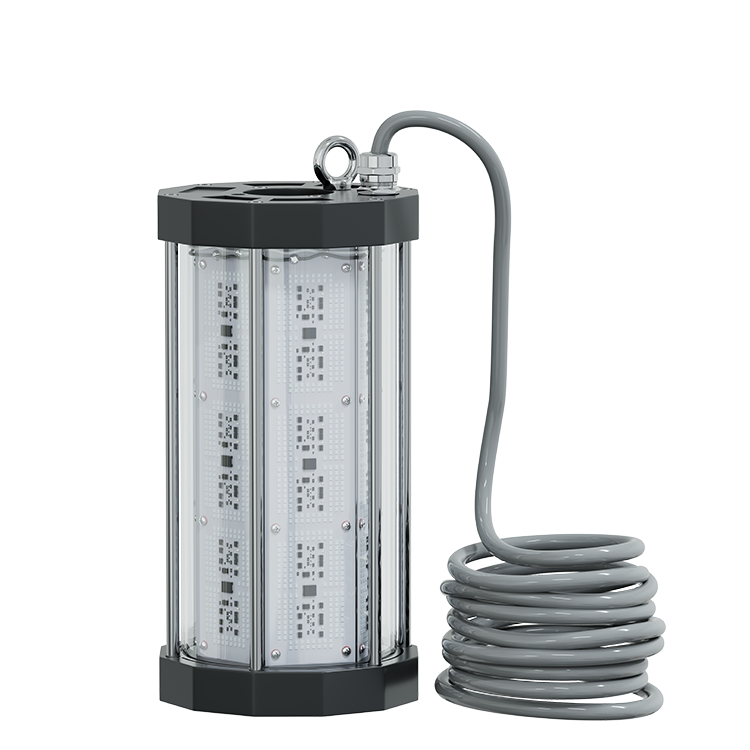
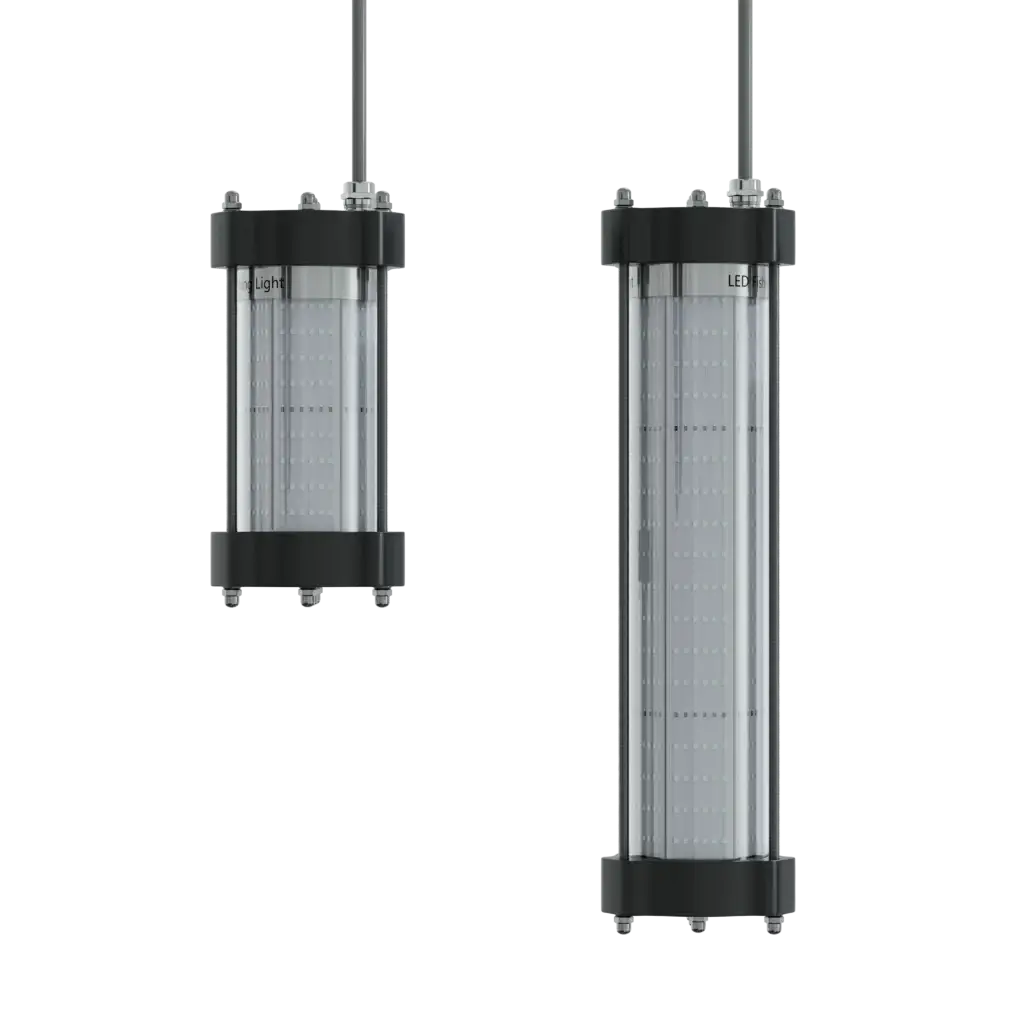
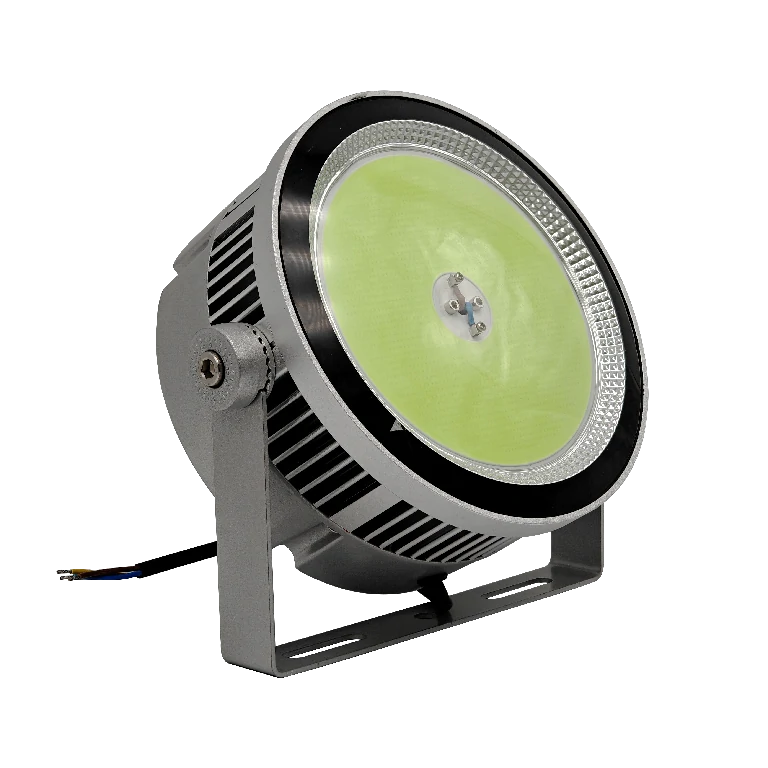
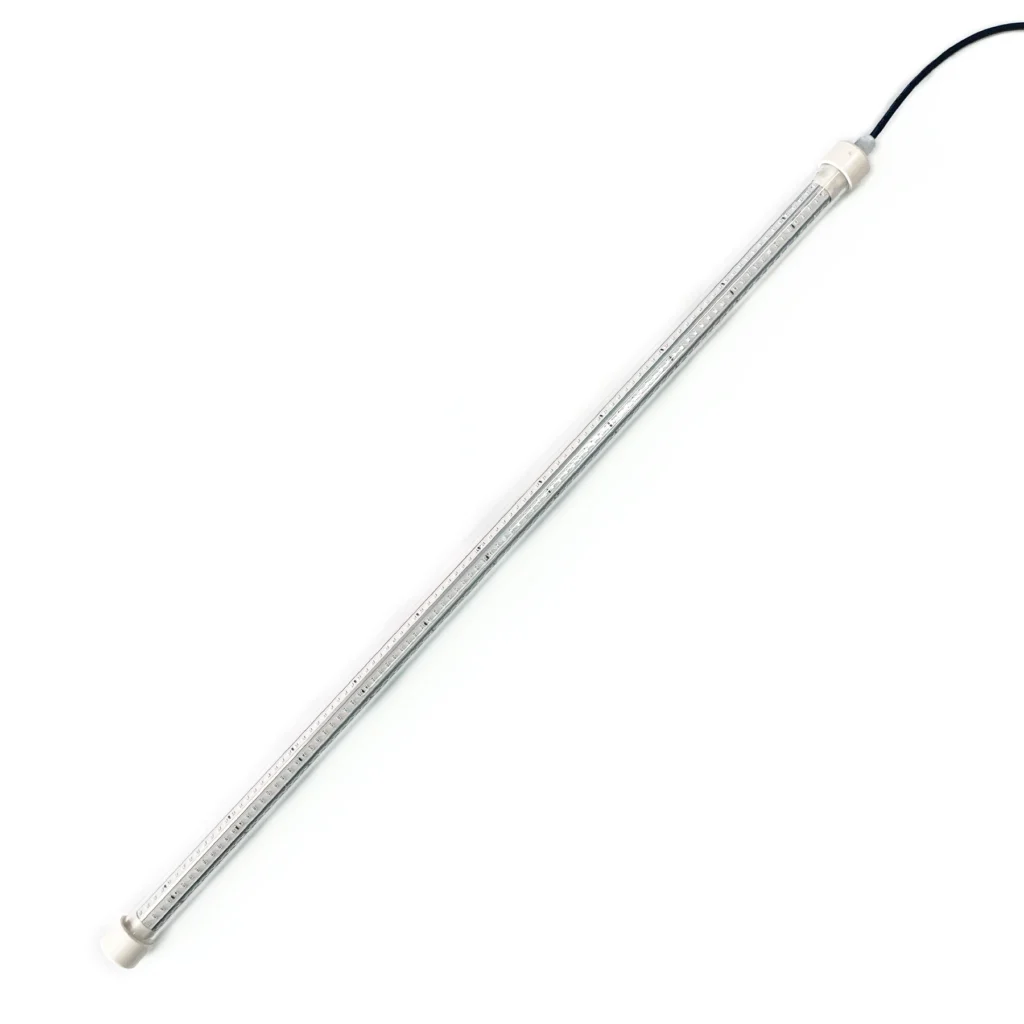
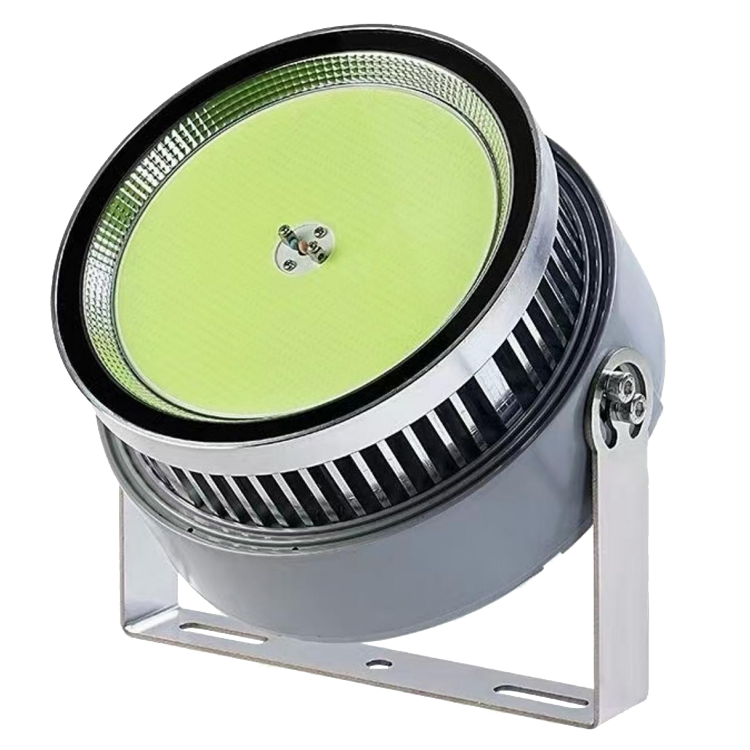
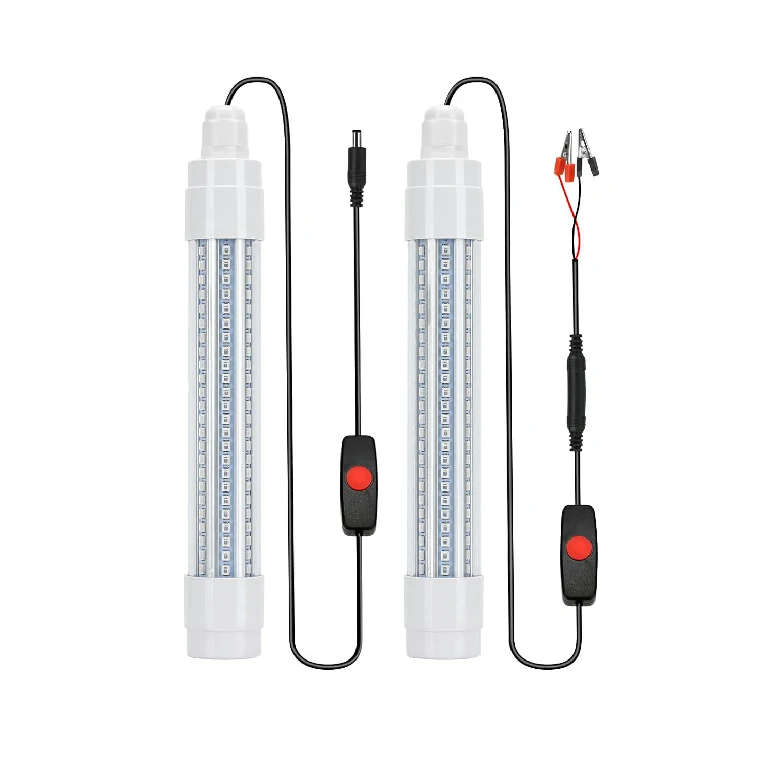
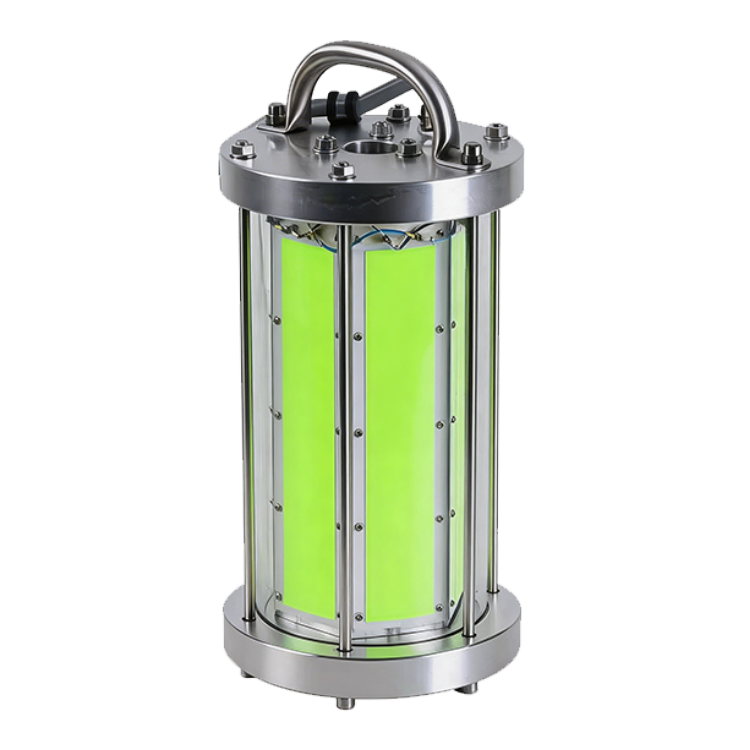
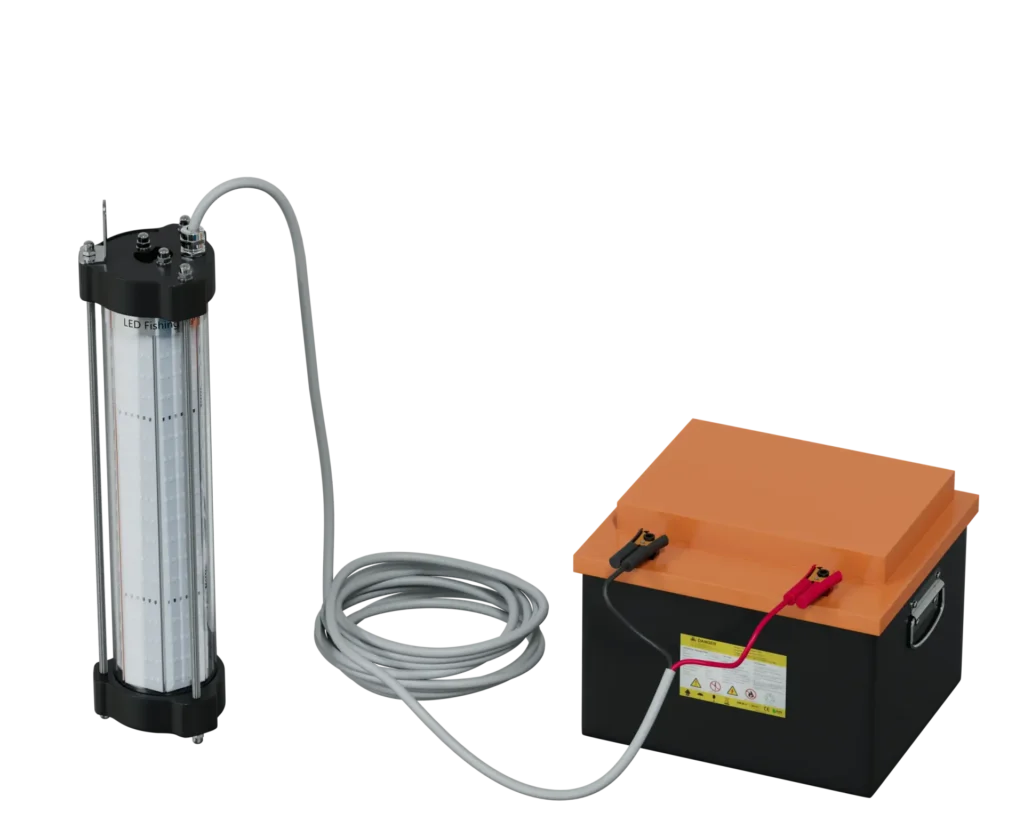
Lurebeam’s two recreational examples serve different deployment scales. The F-UD01 12V underwater fishing light is rated at 13W or 16W, uses a 5 m (16.4 ft) cable, and is presented as a compact option for recreational use. The F-UA01 24V underwater fishing light is offered in versions rated at 180–200W and 270–300W, with a 10 m (32.8 ft) cable. Both pages state IP68, but the 24V product is in a much higher power class.
| Example | Rated input | Rated power | Approximate current at rated power |
|---|---|---|---|
| F-UD01 | 12V DC | 13W / 16W | 1.08A / 1.33A |
| F-UA01 | 24V DC | 180–200W | 7.5–8.33A |
| F-UA01 | 24V DC | 270–300W | 11.25–12.5A |
Current is estimated with amps = watts ÷ volts. These figures are planning estimates, not measured operating data. Actual current can vary with supply voltage, driver efficiency, temperature, and product tolerances.
Estimate Battery Runtime Before You Buy
Convert the battery rating into watt-hours before comparing systems:
nominal watt-hours = battery voltage × amp-hoursThen estimate runtime:
estimated runtime = usable battery watt-hours ÷ light wattageFor example, a nominal 12V, 50Ah battery stores about 600Wh. If a battery manufacturer allows 80% usable capacity, that leaves about 480Wh. A 16W light would have a simple mathematical estimate of 30 hours. A nominal 24V, 50Ah bank stores about 1,200Wh; at the same illustrative 80% usable capacity, a 300W light calculates to about 3.2 hours.
Do not treat those numbers as promised runtime. Battery chemistry, age, temperature, discharge rate, wiring loss, and the manufacturer’s recommended depth of discharge all matter. Use the usable-capacity figure supplied for your specific battery, include a reserve for starting and essential electronics, and avoid running the fishing light from a starting battery if doing so could leave the boat unable to start.
Account for Cable Loss and Circuit Protection
Long cables add resistance. Voltage drop rises with current and with the total length of the outgoing and return conductors. That is why a high-power light cannot be connected safely by copying the cable or fuse used for a small portable model. Select conductor size from the product instructions, circuit current, round-trip cable length, insulation temperature rating, installation environment, and an accepted marine standard.
For U.S. boats within its stated scope, 33 CFR §183.425 requires insulated stranded-copper conductors and limits current by conductor size and temperature rating. 33 CFR §183.455 addresses overcurrent protection for ungrounded current-carrying conductors and generally places the fuse or circuit breaker at, or close to, the power source. The regulation’s scope is limited; it is not a substitute for the product manual, ABYC guidance, or qualified installation advice.
Use a fuse or breaker sized to protect the conductor—not merely one large enough to stop nuisance trips. Protect terminals against accidental shorts, secure the battery, support the cable against chafe, and keep connections intended to remain dry out of splash and bilge water. IP68 stated for a submerged lamp does not automatically make every clip, plug, switch, splice, or battery connection suitable for immersion.
A Practical Decision Rule
Choose a compact 12V system when your priority is portability, you already have an appropriate 12V source, and a low-power attraction zone fits your fishing method. Confirm that the battery can support the planned session without consuming the reserve needed for propulsion or essential equipment.
Consider a 24V high-output system when you deliberately need the larger power class, can carry the necessary battery capacity, and have a 24V circuit designed for its current and cable run. Do not buy a 24V light and improvise a connection to a 12V battery. Do not connect a 12V light directly to 24V. A voltage converter is only appropriate if its input range, continuous output, surge capacity, protection, cooling, and marine installation are all suitable; otherwise choose a light that matches the available supply.
Before deployment, verify six items: rated voltage, rated wattage, expected current, usable battery energy, conductor and overcurrent protection, and whether every component is rated for its actual exposure. Lower the light using its designated support or hanging point, not by pulling on electrical conductors, and follow the manufacturer’s procedure for energizing, retrieving, and rinsing the equipment.
Conclusion
The right voltage is the one that matches a complete, workable system. For portable recreational fishing, a low-power 12V light can reduce battery and wiring demands. A 24V light becomes useful when the fishing plan genuinely calls for a higher-output attraction zone and the boat can support the corresponding energy, current, cable, and protection requirements. Compare watts, amps, runtime, and installation—not voltage in isolation.
Frequently Asked Questions
Can I Run a 24V Underwater Fishing Light from a 12V Battery?
Not directly. The supply voltage must match the light’s rated input. An engineered DC-to-DC converter may be possible, but it must handle the full continuous load and be properly protected and installed. For most portable setups, using the matching battery system is simpler and more reliable.
Does 24V Automatically Mean a Brighter Fishing Light?
No. Voltage alone does not determine optical output. Compare rated power, optical design, emitting area, driver performance, and verified photometric data when available. In the Lurebeam examples above, the 24V model is more powerful because it is designed in a different wattage class—not merely because its voltage is higher.
How Large a Battery Do I Need?
Multiply the light’s wattage by the planned operating hours, then divide by the usable fraction of the battery capacity and add an appropriate reserve. Check the battery manufacturer’s discharge limits and account for other loads on the same bank. If the battery also starts the engine, protect the starting reserve.
Is an IP68 Fishing Light Enough for Saltwater Use?
IP68 addresses an enclosure’s dust and water-ingress classification under stated test conditions; it does not, by itself, establish long-term corrosion resistance or make every external connection immersible. Confirm the product’s stated saltwater application, inspect seals and cable entries, keep non-submersible connections dry, and follow the manufacturer’s cleaning and maintenance instructions.