-1024x1024.webp)
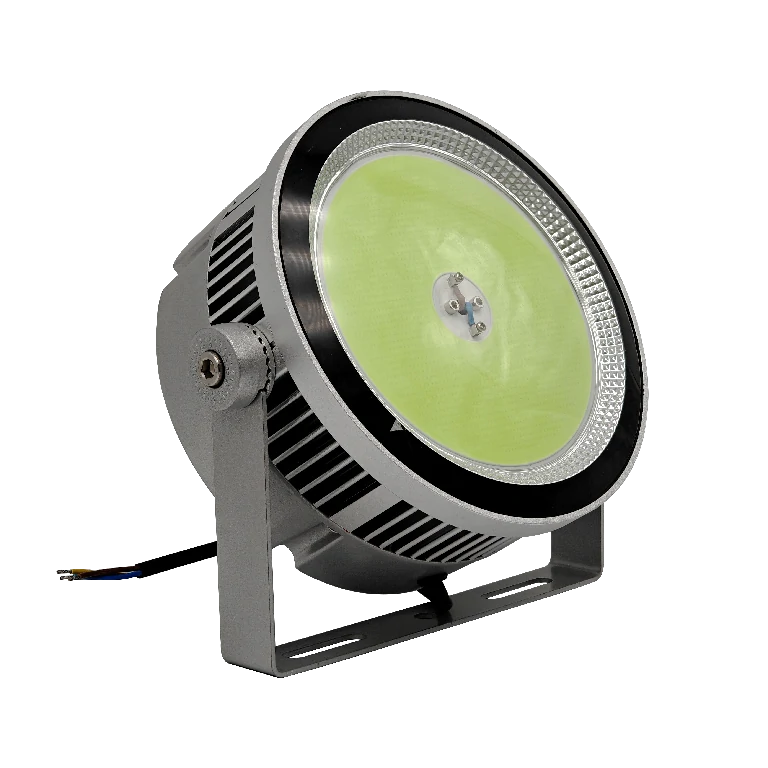
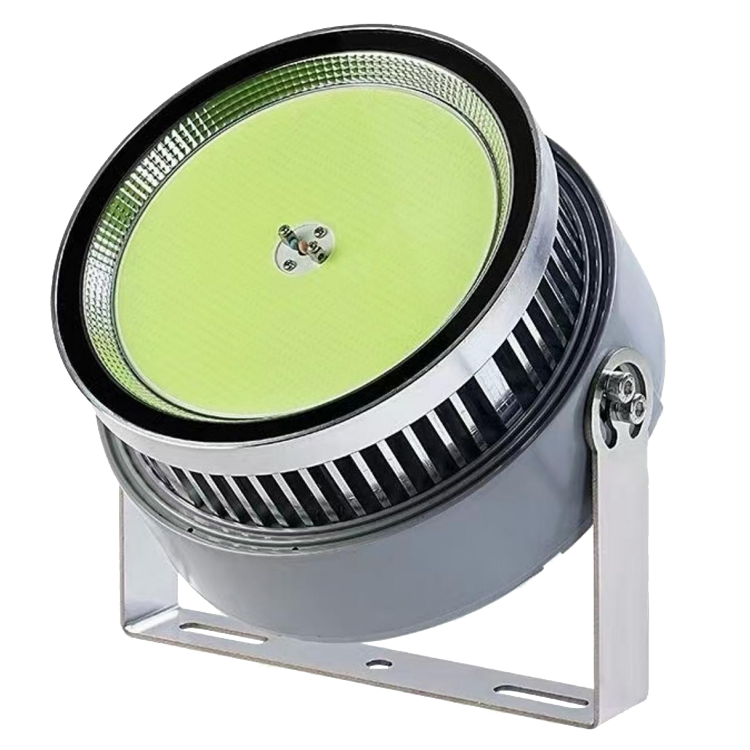
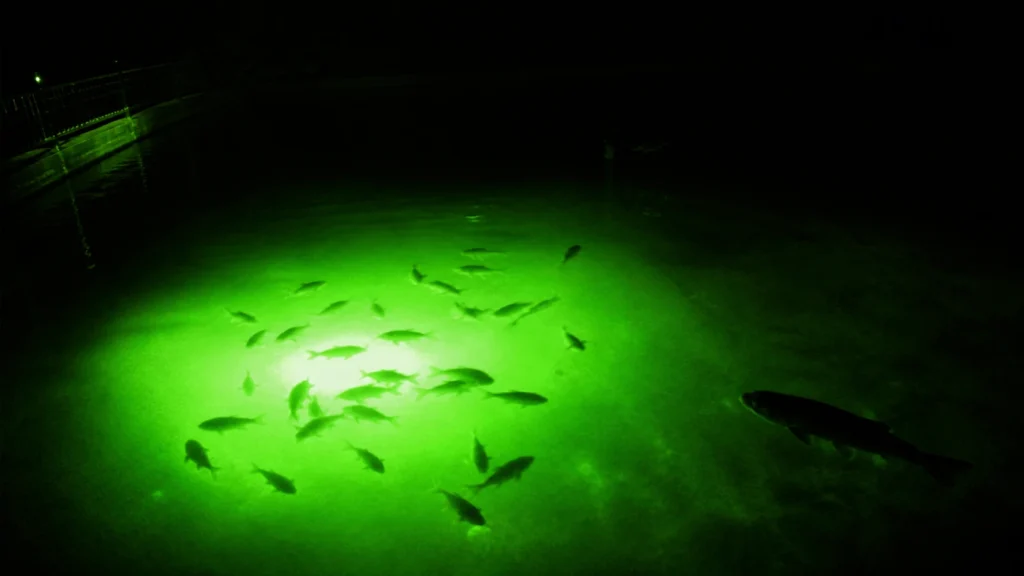
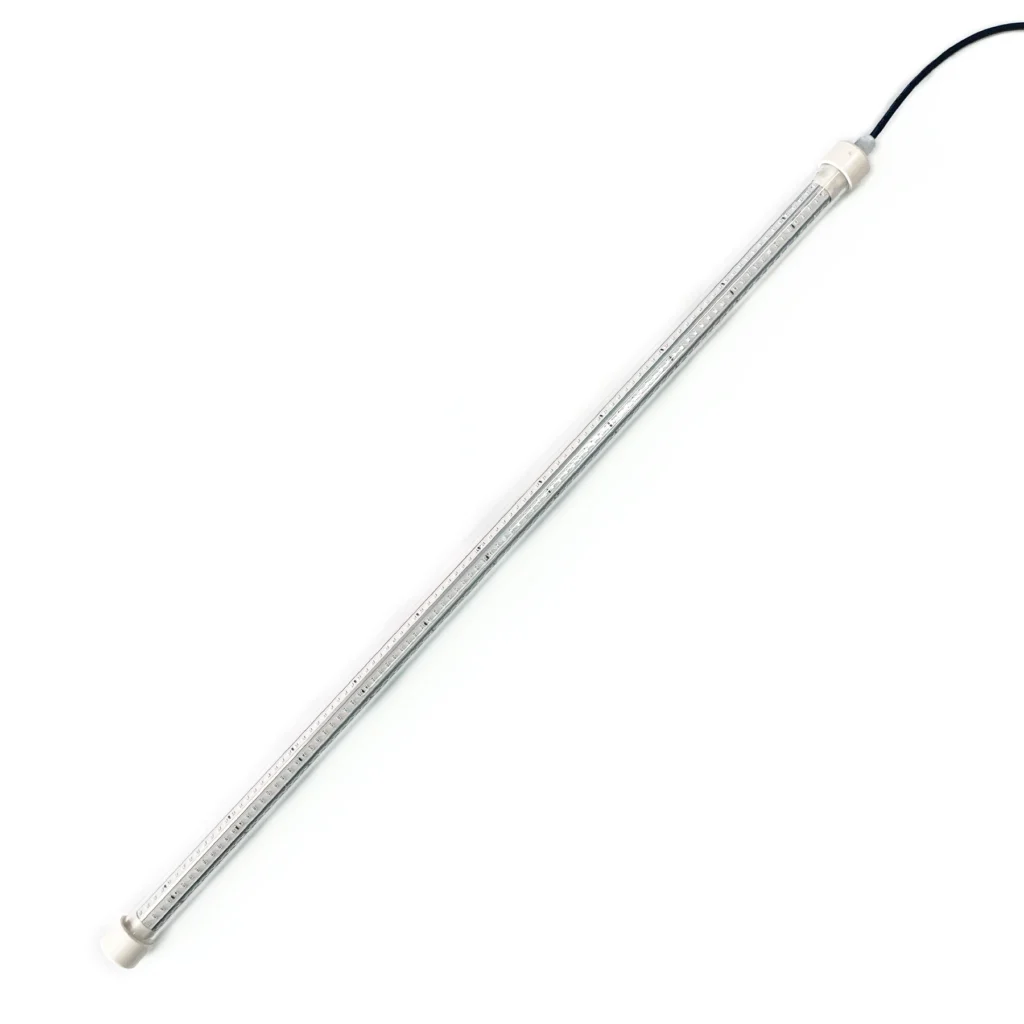
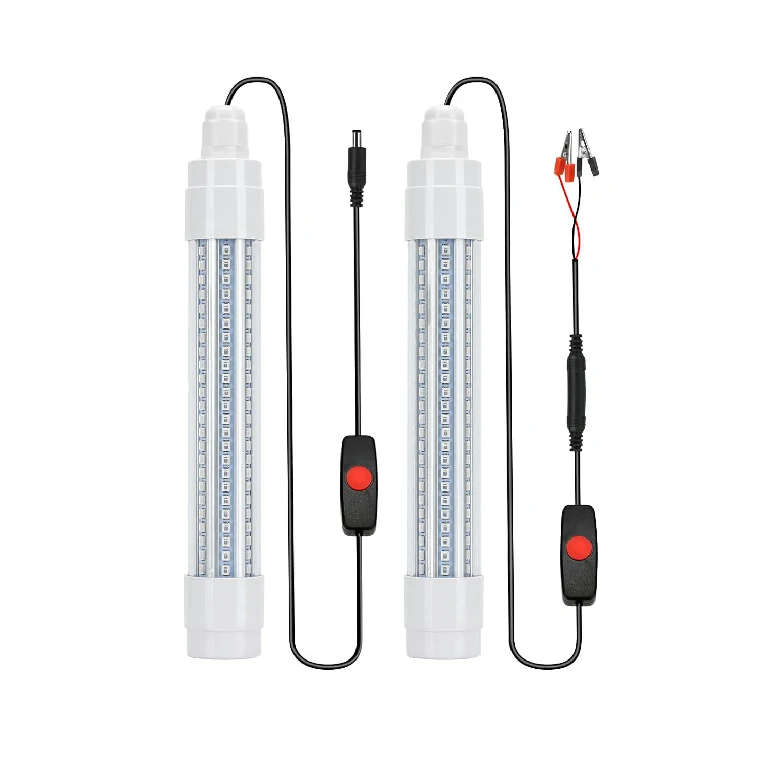
A fishing light attractor can bring plankton, small baitfish and sometimes larger predators into the same area, but aggregation is not the same as feeding. If fish are visible around the light and your hook remains untouched, do not immediately change the lamp. First determine where the sequence has stopped: Are only tiny organisms present? Have baitfish formed a stable school? Are target fish holding at a different depth? Are they following but rejecting the bait?
The fastest way to improve the session is to change one fishing variable at a time. Start with bait position, then depth, drift and presentation. Adjust the light only after those easier explanations have been tested. This approach turns “the fish are here but will not bite” into a problem you can actually diagnose.
Why Attraction Does Not Guarantee a Bite
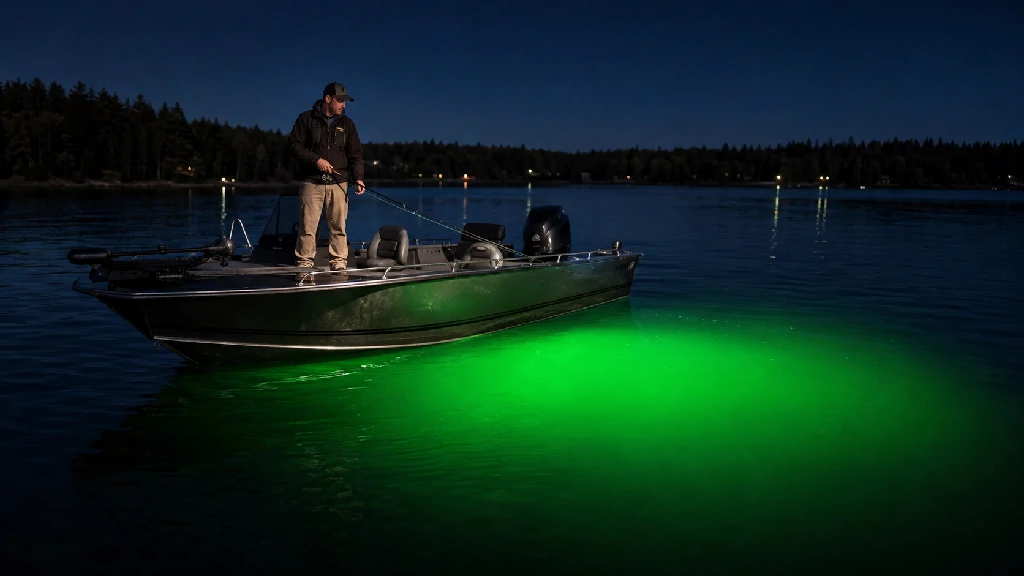
Artificial light can change the distribution and behaviour of aquatic animals, but the response varies by species, life stage, habitat and light conditions. A scientific review of artificial light in fishing notes that underwater lights are used to attract baitfish and target species, while also emphasising that visual sensitivity and behavioural responses differ among animals.
Field evidence is equally specific rather than universal. A study of illuminated estuary infrastructure found increased local abundance of both prey and larger predatory fish when the light was on, with changes in predator behaviour. That result shows that light can restructure a feeding opportunity; it does not mean every fish entering the illuminated area is hungry, feeding at your hook depth or interested in your bait. The light creates a place to fish. The angler still has to present the right target in the right part of that place.
1. Identify What Is Actually Gathering
Do not treat every flash or shadow as a target fish. Observe the light field for a few minutes and place the activity in one of three stages:
- Micro-life only: insects, plankton or very small scattered shapes are present, but no organised bait school has formed.
- Baitfish established: small fish are repeatedly circling, holding or moving together as a school.
- Predators present: larger marks, sudden baitfish compression, chasing or repeated passes appear around the school.
This classification tells you what to change. With micro-life only, more patience or a better location may be needed. With a stable bait school but no predator signs, search outside and below the visible school. With predators present but no strike, focus on bait size, depth, speed and hook presentation rather than blaming the light.
2. Fish the Whole Attraction Zone, Not Just the Bright Centre
The brightest water is the easiest part for an angler to see, so it naturally receives too many casts. Fish may instead hold beneath the visible layer, pass through the edge or approach from darker water. Research showing that artificial light changes both prey and predator abundance supports treating the light field as a structured area, not a single point.
Make three controlled presentations: one through the bright zone, one along the light-to-dark transition and one below the visible baitfish. Keep the lure or bait clear of the lamp cable. Watch where baitfish tighten, scatter or change direction. Those reactions can reveal a predator’s approach even when you cannot see the larger fish directly.
This is a field-testing tactic, not a claim that every predator always patrols the edge. If the centre produces the only activity, follow the evidence in front of you.
3. Put the Bait at the Fish’s Depth
Seeing fish near the surface can hide a second layer below them. If a fish finder is available, use it to compare the depth of the bait school with larger returns. Without sonar, count the lure down, use a float stop or adjust leader length so each presentation covers a known level rather than repeating the same unknown depth.
Work in a simple sequence: just above the baitfish, through the school, then below it. Keep the other variables stable for several casts at each level. If bites come only at one depth, record it. That observation is more useful than assuming the lamp must be lowered or raised every time fish fail to bite.
4. Let the Presentation Follow the Current
The illuminated patch at the surface does not show the complete underwater path of plankton, scent or bait. Current can carry small organisms and a hooked bait away from the lamp, while fish may hold where food reaches them with less effort.
Before casting, watch a float, bubbles or suspended particles near the surface to estimate direction. Then present the bait so it moves naturally through the active zone instead of pulling straight across the flow. If using a stationary bait, check whether it is hanging outside the depth or direction where the baitfish are holding. When the current changes, reassess the fishing line before moving the light.
5. Change the Bait Before Changing the Light
When target fish are present but refusing the offering, compare your bait with what they are chasing. Check size, silhouette, movement and speed. A lure that is much larger than the gathered baitfish, or moving much faster than them, can look disconnected from the feeding opportunity created around the light.
Make one change at a time. Try a smaller profile, a slower retrieve, a controlled pause or a natural bait placed at the observed depth. If fish follow but turn away, change presentation before colour. If there are no follows and no predator signs, changing lures repeatedly may not solve a location problem.
Avoid interpreting one strike as proof. Repeat the successful presentation enough times to determine whether it created a pattern or only a single event.
6. Keep the Test Stable and Know When to Move
Constantly lifting the lamp, changing colour, moving the boat and switching bait destroys the comparison. Give the attraction zone a stable observation period, then make one planned adjustment. There is no universal waiting time because species, season, current, water clarity and local fish density differ.
Use this decision sequence:
| What you observe | Next action |
|---|---|
| No organised baitfish activity | Check location, current and light depth; change one item |
| Stable baitfish, no predator signs | Search the edge and deeper water; reassess the location |
| Predators present, no bite | Change bait size, depth, speed or pause |
| One bite, no repeat | Reproduce the same presentation before changing anything |
| Activity disappears after current changes | Re-map the drift and fish position |
NOAA-hosted guidelines for evaluating artificial light in fisheries emphasise defining the objective, recording context, using an appropriate test design and interpreting results against a stated measure of success. Those guidelines address fisheries research rather than recreational angling, but the testing principle is useful: define what success means and avoid changing several variables together.
After two controlled adjustments produce no bait school, predator sign or repeatable bite, moving is often more informative than continuing to alter the same setup. The light cannot gather target fish that are not using that water at that time.
Conclusion
When fish gather around a light but do not bite, separate attraction from feeding. Identify which animals are present, cover the centre, edge and lower layer, align the bait with depth and current, then adjust size and movement one variable at a time. Change the light only after the fishing presentation has been tested.
The goal is not to find a magic setting. It is to build a repeatable sequence that tells you whether the problem is fish presence, fish position or bait presentation. That knowledge remains useful on the next night and at the next location.
Frequently Asked Questions
How long should I wait before fishing around the light?
There is no universal number. Begin observing immediately, but judge progress by the formation of a bait school and signs of larger fish rather than the clock alone. Keep the setup stable long enough to see whether activity is developing.
Should I cast directly into the brightest water?
Test it, but do not fish only there. Also cover the light-to-dark transition and the water below the visible baitfish. Let observed reactions and bites identify the productive zone.
Should I change the light colour when fish will not bite?
Not first. If target fish are present, test bait depth, size, speed and movement before changing colour. Otherwise you will not know whether any improvement came from the light or the presentation.
Why do baitfish gather but larger fish never appear?
The target species may be absent, holding deeper, approaching outside the visible zone or not feeding at that time. Search adjacent depths and the transition zone with controlled presentations. If there are still no predator signs after limited adjustments, change location rather than assuming more light will solve it.